

She brought fentanyl to the hospital to save her son. Idaho treated him as a trafficker.
After Isaac Berger overdosed, his mother gave hospital staff the pills she found in his room. She says it became the biggest regret of her life.


After Isaac Berger overdosed, his mother gave hospital staff the pills she found in his room. She says it became the biggest regret of her life.

Advocates and experts say that reflects the challenges rural families have getting health and social safety net services

The school board said state law limits the district from taking action against the former principal, despite community demands to fire him.

A judge said the alleged domestic violence Deborah Albin experienced did not meet Oregon law’s strict criteria to avoid a mandatory-minimum sentence

On July 31, as she waited for an Oregon judge to decide her prison sentence for the death of her baby, Deborah Albin opened up for the first time in court about her partner’s violence.
She told the Benton County judge that she had been choked and threatened by her daughter’s father, including one night when she fled and hid from him in a ditch with mud and blood on her body. When she tried to leave their home, she said he destroyed her phone with an ax, “shredded or smashed” irreplaceable family heirlooms, and “shoved” her into his car and brought her home again.
“For years, I've been told I'm not the typical domestic violence victim because I fought back, had the money and family support available to leave,” Albin read at her sentencing hearing, her voice thick with emotion. “There had been numerous times I thought he would kill me, and after a while, I gave up trying to leave.”
In June, a jury found Albin guilty of first-degree manslaughter and criminal mistreatment in the 2023 death of her 2-month-old daughter, Opal. Prosecutors had argued that Albin failed to protect Opal from alleged abuse by the baby’s father, Andrew Oaks, and failed to get her proper medical care. She spoke at her sentencing hearing after her family urged Benton County Circuit Judge Matthew Donohue to consider the impact of the alleged domestic violence and reduce her prison sentence.
But Donohue said Albin’s situation did not meet the strict criteria under Oregon law to avoid a mandatory-minimum sentence for manslaughter, and he sentenced her to the minimum of 10 years in prison. The Oregon Supreme Court ruled in 2009 that a judge can only reduce a minimum sentence for a first-time offender if the minimum would “shock the moral sense” of reasonable people.
“I am neither denying that Miss Albin suffered from domestic violence, nor that that caused her significant duress as far as determinations on whether to leave the relationship,” he said. “But again, we have a 2-month-old who wound up dying as a result of Miss Albin's actions, including but not limited to, leaving Opal in the unsupervised care of what she knew was her abuser.”
 Kaylee Tornay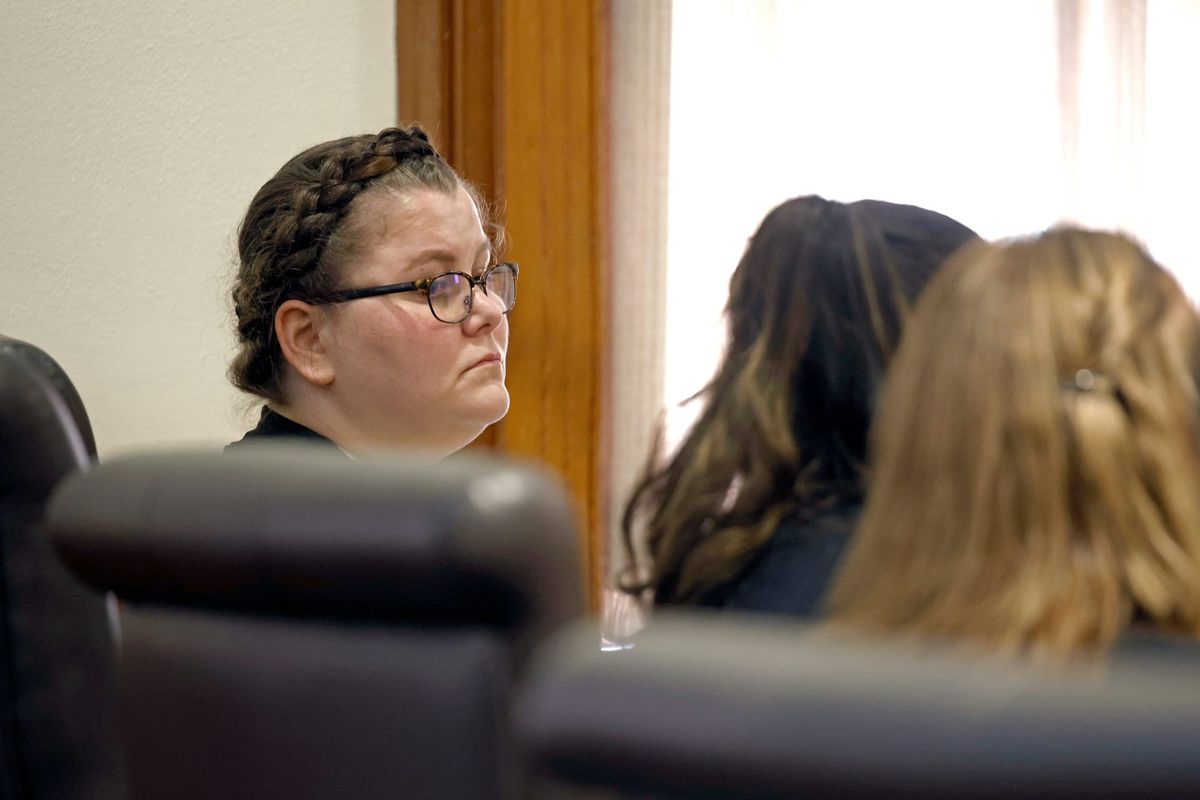
Oaks has denied harming Albin or Opal. He faces murder and manslaughter charges related to Opal’s death and his trial is scheduled for April. His lawyer declined a request for comment.
Albin was sentenced to 18 months for each of her criminal mistreatment convictions, which she can serve at the same time as the manslaughter sentence.
Benton County prosecutors had asked for Albin to receive 12 years, out of a possible 30-year maximum sentence. Matthew Ipson, senior deputy district attorney, said Albin could have taken other actions to protect Opal besides leaving the relationship, such as alerting her family or Opal’s pediatrician about Andrew’s alleged abuse and drug use.
“There are a number of things that Miss Albin could have done and Opal would still be alive, short of just leaving,” Ipson said.
Several of Albin’s friends and family who crowded into the courtroom for her sentencing Friday wore purple T-shirts to raise awareness of domestic violence. In addition to testimony from Albin’s pastor and her grandmother, a juror also came forward to say she felt the trial process had not allowed her to consider the impacts of domestic abuse in rendering a verdict.
There was “never any doubt” among the jurors “that Opal was the victim of crime,” said Leslee Lucas, the juror.
“There were no instructions allowing us as jurors to decide that some clemency was needed for the parent of this child who had also been the victim of crime on a long-term basis,” Lucas said. “There's a burden to our society, her family, us, the judicial system, that led to Opal’s death, as well as Deborah’s criminal neglect.”
 Kaylee Tornay
InvestigateWest previously reported how the prosecution of Albin mirrors similar “failure to protect” cases around the country, which commonly involve mothers who were abused by the partner accused of abusing the child. Some states have adopted affirmative defenses protecting a parent’s right to raise domestic violence evidence or sentencing reforms requiring judges to consider it as a mitigating factor, but Oregon does not have such laws.
The jury convicted Albin after a nine-day trial in which it heard only a small portion of the evidence of abuse and threats by Oaks against Albin throughout the course of their relationship. After the court ruled Albin could only discuss alleged domestic violence incidents that occurred after she became pregnant — which excluded at least seven police calls documenting incidents in which Oaks threatened to kill Albin and himself, and smashed her car window as she tried to leave an argument — she decided not to testify at the trial.
Benton County prosecutors argued that Albin prioritized her romantic relationship at the expense of her newborn infant, and said her partner’s violent behavior should have been a sign that he wasn’t safe to be around children. They cited text messages between the couple in which Albin confronted Oaks about using drugs in the house and once tossing Opal “like a rag doll.”
Albin’s attorneys have argued that the mother did seek help, citing a doctor’s appointment 10 days before Opal’s death in which a pediatrician didn’t note anything unusual, other than a potential issue with how her spine was growing.
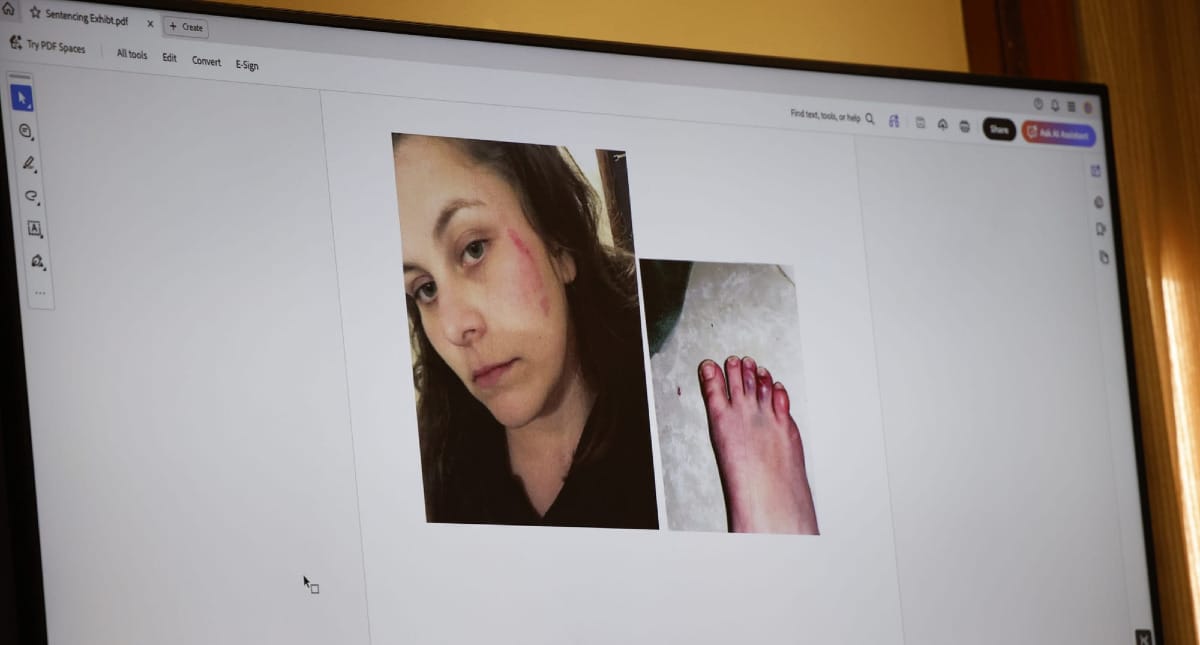
Speaking to InvestigateWest from the Benton County jail after the guilty verdict, Albin said she has long struggled with identifying herself as a victim or survivor of domestic abuse. It’s taken time, separation from Oaks and the support of loved ones to understand the gravity of the relationship, Albin said, describing it as an “everyday battle of rewiring my thoughts.”
“And it's the same thing with losing a child,” Albin said. “It took me a long time to not wake up angry. I was so angry that I woke up another day to have to figure out how to live with knowing that she's not here.”
Albin said she now regrets not testifying at her trial. She thinks it could have helped the jury to better understand her mindset and decisions during Opal’s life. Albin’s legal team intends to appeal the conviction.
After Albin was convicted, prosecutors dropped a separate felony case alleging she hindered the prosecution of Oaks. The charge stemmed from the time of his arrest in July 2024, when law enforcement said they found Albin living with him in violation of a no-contact order. Prosecutors also accused Albin of trying to help Oaks evade arrest, citing text messages in which she told him officers were at the door.
Albin said she’s leaning into her faith in God for encouragement and hope as she prepares to serve her sentence.
“I'm just sad that I'm missing potentially the few years that I have left with my grandparents, watching my siblings grow up, get married, have babies, my nieces and my nephews growing up,” she said. “That just makes me really sad.”

The story you just read is only possible because readers like you support our mission to uncover truths that matter. If you value this reporting, help us continue producing high-impact investigations that drive real-world change. Your donation today ensures we can keep asking tough questions and bringing critical issues to light. Join us — because fearless, independent journalism depends on you!
— Jacob H. Fries, executive director
DonateCancel anytime.

After Isaac Berger overdosed, his mother gave hospital staff the pills she found in his room. She says it became the biggest regret of her life.

An InvestigateWest review shows how Washington police agencies keep hiring cops accused of serious misconduct

Advocates are pushing for a survivor justice law like those in other states, but a two-thirds legislative majority presents a major hurdle

Tribal police in Washington hire officers fired elsewhere at a rate four times higher than their share of the workforce
After Isaac Berger overdosed, his mother gave hospital staff the pills she found in his room. She says it became the biggest regret of her life.

Advocates and experts say that reflects the challenges rural families have getting health and social safety net services

The school board said state law limits the district from taking action against the former principal, despite community demands to fire him.

Emails show how Canyon County probation officers are helping immigration authorities — including making a list of foreign-born individuals
Subscribe to our weekly newsletters and never miss an investigation.
Our work has inspired new state laws, exposed government failures and impacted local communities in powerful ways. These stories wouldn't be told without InvestigateWest, and we couldn't do it without our generous supporters.
Cancel anytime.