

Mercer Island School District settles sex abuse claim for $1.5M
A former student alleged district administrators failed to intervene and protect her from being sexually abused by an English teacher
A former student alleged district administrators failed to intervene and protect her from being sexually abused by an English teacher

Despite concerns newsroom staffers shared with InvestigateWest and RANGE, the nonprofit taking over Spokane’s daily paper plans to keep Curley in a leadership role


As Klickitat County Sheriff Bob Songer retires, candidates have distanced themselves from some — not all — of Songer's most controversial positions

Conviction shows how Oregon law holds parents to the same standards as those in states that explicitly criminalize failure to protect children from abuse

An Oregon jury convicted a Corvallis mother of manslaughter and criminal mistreatment in her infant daughter’s death, without hearing most of the evidence that showed she had also allegedly been abused by the baby’s father.
The June 2 verdict found Deborah Albin, 30, guilty of failing to provide not only needed medical care, but protection from abuse by the girl’s father, Andrew Oaks. The nine-day trial primarily centered on whether Albin knew and responded to her daughter Opal Oaks’ deteriorating health, which prosecutors said was caused by physical abuse and drug use by Andrew. An autopsy found Opal died from complications of multiple rib fractures, with acute methamphetamine toxicity listed as a significant condition.
“Miss Albin was silent,” Benton County deputy district attorney Matt Ipson said in his closing argument. “Opal needed a protector, and what she had was a bystander.”
InvestigateWest previously highlighted the parallels between Albin’s case and other failure to protect prosecutions targeting mothers, many of whom are domestic violence victims prosecuted over their partner’s abuse of their children. Much of the history of domestic violence — which Albin's attorneys had argued was crucial in understanding her decisions at the time — didn't make it to trial after prosecutors successfully limited that evidence. Instead, Albin's attorneys argued before the jury that she was overwhelmed by her tumultuous relationship and that even Opal's doctor didn't spot signs of her injuries before the 2-month-old stopped breathing and was rushed to an emergency room on Feb. 26, 2023.
Defense attorney Rina Morales-Holmes told jurors that “Miss Albin was a postpartum woman trying to adjust to her new life with a newborn while navigating her frustrations with Mr. Oaks — frustrations that he was an immature parent and that he was absent, not frustrations that he was physically abusing Opal.”
The jury, which deliberated just two hours before reaching a verdict, found that Albin knew her daughter was being abused but failed to act. Prosecutors' evidence that Albin was aware of abuse consisted of three text messages about an incident two weeks before Opal's death, in which Albin told Andrew that she saw him "toss our daughter around like a rag doll."
Prosecutors did not ask any witnesses whether the incident could have caused Opal’s broken ribs, however, and Dr. Carol Chervenak, a child abuse expert, testified her fractures were in various stages of healing and likely indicated Opal was squeezed. The defense denied the tossing incident was violent, casting it as rough play inappropriate for an infant. But jurors rejected that characterization in finding Albin guilty of failing to provide protection from abuse.
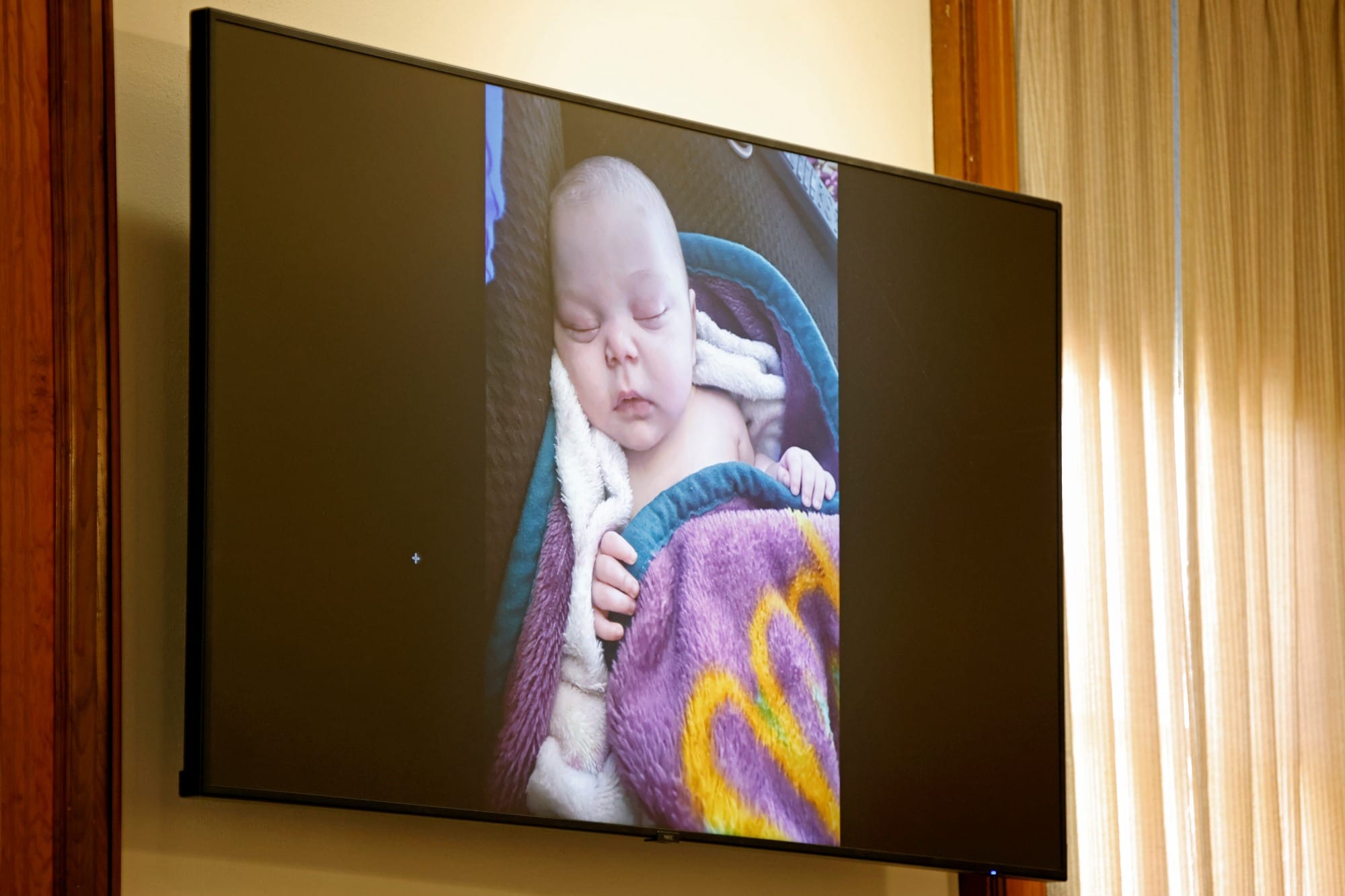
“Protecting a child is not optional,” Ipson said in an email to InvestigateWest. “The verdict reflects a fundamental principle of the law: parents have a duty to protect their children, particularly infants who are entirely dependent on adults for their safety and care.”
The conviction shows how the law in Oregon holds parents to the same standards as those in states that have explicit “failure to protect” laws. In addition to the manslaughter charge, Albin was convicted of two counts of criminal mistreatment, a broad law penalizing parents and other caregivers for failing their legal duties. Such laws are passed and prosecuted with the stated goal of making children safer, though critics say they are disproportionately leveraged against mothers and oversimplify how domestic violence can affect a parent’s ability to intercede for their child.
Because the defense could only mention violence that allegedly occurred after Albin became pregnant with Opal, jurors were presented with almost no examples of the threats and violent encounters captured in text messages and police reports over several years. That includes an incident in November 2019 when a neighbor reported to police that Andrew had threatened to kill Albin and himself during an argument.
Defense attorneys touched on domestic abuse only briefly during testimony from Dr. Andrea Merg, a licensed psychologist. Merg answered questions about how power and control can generally function in intimate relationships, and stated that Andrew’s and Albin’s text messages showed “extreme examples” of ups and downs that could signal dynamics of power and abuse. But the defense chose not to ask about her 2025 finding she made diagnosing Albin with complex PTSD, a condition often diagnosed in individuals who have endured repeated trauma, though pretrial motions described her findings as “highly relevant and crucial” to Albin’s defense. Albin herself considered testifying at trial, her attorneys said, but ultimately decided not to.
“I was really limited on what I could and could not present,” said Morales-Holmes, Albin’s attorney. “And I think that it's pretty clear from how the trial went and how the evidence came out that anything I did, they were going to try and manipulate, in the guise of putting context on things. Dr. Merg testified as to the common misconceptions about domestic violence, and I think that if you don't truly understand what domestic violence is, it's hard for you to understand the choices that somebody makes in that relationship.”
Instead, it was the prosecution, not the defense, that highlighted a Feb. 12, 2023, text in which Albin accused Andrew of “choking me out in front of our daughter” throughout the trial, using it to argue that Albin knew he was violent and a threat to their daughter. Ipson, the prosecutor, said the choking incident was “another indication to her that this is not somebody who is safe to be around children.”
Andrew's case is also ongoing in Benton County with no trial date set. He faces charges of second-degree murder, manslaughter and criminal mistreatment. He has denied harming his daughter or Albin.
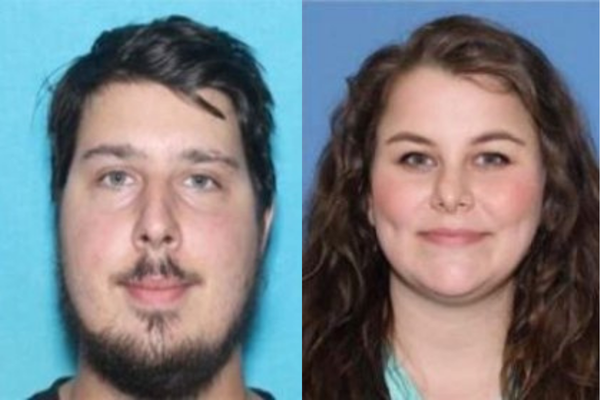
Much of Albin’s case focused on the allegation that she failed to get Opal medical attention, the basis of the manslaughter charge, a felony that carried the possibility of the most prison time. Benton County prosecutors called more than a dozen witnesses over six days, several of whom testified that Deborah could and should have consulted a doctor about Opal’s illness and shared information about drugs in the home with healthcare providers. A child abuse expert testified that Opal’s health conditions, including acute and chronic pneumonia and a partially collapsed lung, would have caused noticeable difficulty breathing.
“She would have had a terrifically difficult time getting enough air,” said Chervenak, medical director for the ABC House, the local child abuse intervention agency for Benton County. “She would have looked like she was struggling to breathe.”
Four of Opal’s grandparents, however, told the jury that Opal appeared to be a happy, healthy baby with no obvious health problems. Barbara Oaks, Andrew’s mother and a registered nurse, testified that a week before Opal died, she had noticed Opal’s breathing sounded more rapid, but when she discussed it with Albin, they agreed it wasn’t unusual for a newborn to breathe that quickly and the baby didn’t appear to be in distress. As a mandatory reporter, Barbara Oaks said she would have reported any concerns of child abuse.
Two doctors called by the defense also testified that they wouldn’t expect a first-time mother such as Albin to be able to tell if their infant had broken ribs or methamphetamine exposure based on Opal’s medical records.
“Infants have a surprising ability to compensate, and that's one of the reasons why, as a pediatric emergency medicine doctor, you have to be diligent in caring for infants,” said Dr. Omar Washington, a pediatric emergency room physician. “Because the signs that they're ill can be subtle.”
Morales-Holmes emphasized that Albin took Opal to her regular pediatrician appointments, including one 10 days before Opal’s death. Her pediatrician noted no signs of illness, breathing difficulty or injury at that appointment. But prosecutors argued that wasn’t enough: Dr. Tatiana Brinckerhoff, Opal’s pediatrician, told the jury Albin raised no concerns about drug exposure or the time she saw Andrew tossing the baby “like a ragdoll.” Brinckerhoff said she would have made a report to Child Protective Services if Albin had mentioned Opal had been tossed around.
Albin’s face was expressionless as Benton County Circuit Judge Matthew Donohue read the jury’s verdict, but she began crying minutes later. She cried at several points during the trial, especially while witnesses described the day that Opal died. Morales-Holmes embraced her for a long moment after the jury left the courtroom following the verdict.
In interviews with InvestigateWest before trial, Albin had said she hoped it would be a chance to tell more of the story of her and Andrew’s relationship and of Opal’s life.
“I have been champing at the bit to be able to tell my story, as well,” she said. “By not telling it in the past, yeah, I guess it could be taken as me protecting Andrew, but it was also me just shielding myself from the uncertainties. But as time has moved forward, when now I can't talk about it, that's all I want to do.”
Albin has no criminal history, but the jury agreed to the prosecution’s request that sentencing enhancements be applied on the basis of Opal’s “particular vulnerability” due to her age. Those enhancements open up the possibility that Albin could receive the maximum sentence for each conviction — 30 years in prison altogether. A sentencing hearing has not yet been scheduled.
Albin also faces an additional felony charge of hindering prosecution in a separate case. The charge stems from the time of Andrew Oaks’ arrest in July 2024, when law enforcement said they found Albin living with him in violation of a no-contact order, and texts on her phone telling him officers were at the door. A trial has not yet been set in that case.

The story you just read is only possible because readers like you support our mission to uncover truths that matter. If you value this reporting, help us continue producing high-impact investigations that drive real-world change. Your donation today ensures we can keep asking tough questions and bringing critical issues to light. Join us — because fearless, independent journalism depends on you!
— Jacob H. Fries, executive director
DonateCancel anytime.

As Klickitat County Sheriff Bob Songer retires, candidates have distanced themselves from some — not all — of Songer's most controversial positions

State agencies don’t know how many inmates face more prison time because they couldn’t access programs prescribed by parole commissioners

Gov. Bob Ferguson has rejected everyone the state board recommended for commutation

After Isaac Berger overdosed, his mother gave hospital staff the pills she found in his room. She says it became the biggest regret of her life.

A former student alleged district administrators failed to intervene and protect her from being sexually abused by an English teacher

Despite concerns newsroom staffers shared with InvestigateWest and RANGE, the nonprofit taking over Spokane’s daily paper plans to keep Curley in a leadership role
As Klickitat County Sheriff Bob Songer retires, candidates have distanced themselves from some — not all — of Songer's most controversial positions
State agencies don’t know how many inmates face more prison time because they couldn’t access programs prescribed by parole commissioners
Subscribe to our weekly newsletters and never miss an investigation.