Newsroom staffers tell InvestigateWest and RANGE that concerns about Curley’s leadership festered until his August suspension — weeks before the paper was set to transfer to his nonprofit
She brought fentanyl to the hospital to save her son. Idaho treated him as a trafficker.
After Isaac Berger overdosed, his mother gave hospital staff the pills she found in his room. She says it became the biggest regret of her life.
A photo of Isaac Berger with his cat, Frownie, is propped up in his bedroom near his college diploma and a state math competition trophy. A mathematical formula found by police on his computer seemed to calculate how many pills Isaac could take each day without dying. (Whitney Bryen/InvestigateWest)
Alone on the couch in her rural Idaho living room, Cyndy Piez sat stunned waiting for news about her son.
Then her phone dinged.
Her 30-year-old son was fighting for his life.
“On an IV and oxygen right now,” the text from her husband said. “Doctor will be here soon.”
Cyndy hurried to the dresser in her son’s room where a few days earlier she had noticed him “acting sneaky.” Inside the pocket of a red windbreaker jacket she didn’t recognize, Cyndy found an old prescription bottle filled with mysterious blue pills. She didn’t know if he had taken any, or if they were the reason for his glassy-eyed, blank stare earlier that day. But if they were, she thought, maybe they could help save his life.
She shoved the bottle in her purse and drove to the hospital.
In most states, Cyndy’s effort to help doctors understand what her son had taken might have ended with treatment. But this was Idaho — one of at least nine states that automatically treat fentanyl possession above a certain threshold as trafficking, stripping people who seek help for an overdose of protection from criminal punishment. In Idaho, those caught with at least 4 grams of fentanyl — about four sugar packets — are considered drug traffickers and face a minimum of three to 10 years in prison, even if there’s no evidence that the person was selling or distributing drugs.
It’s a state where success in the fight against fentanyl is measured in drug busts; where the response to addiction increasingly relies on criminal punishment over treatment; and where, in Cyndy’s case, a mother’s attempt to save her son became the biggest regret of her life.
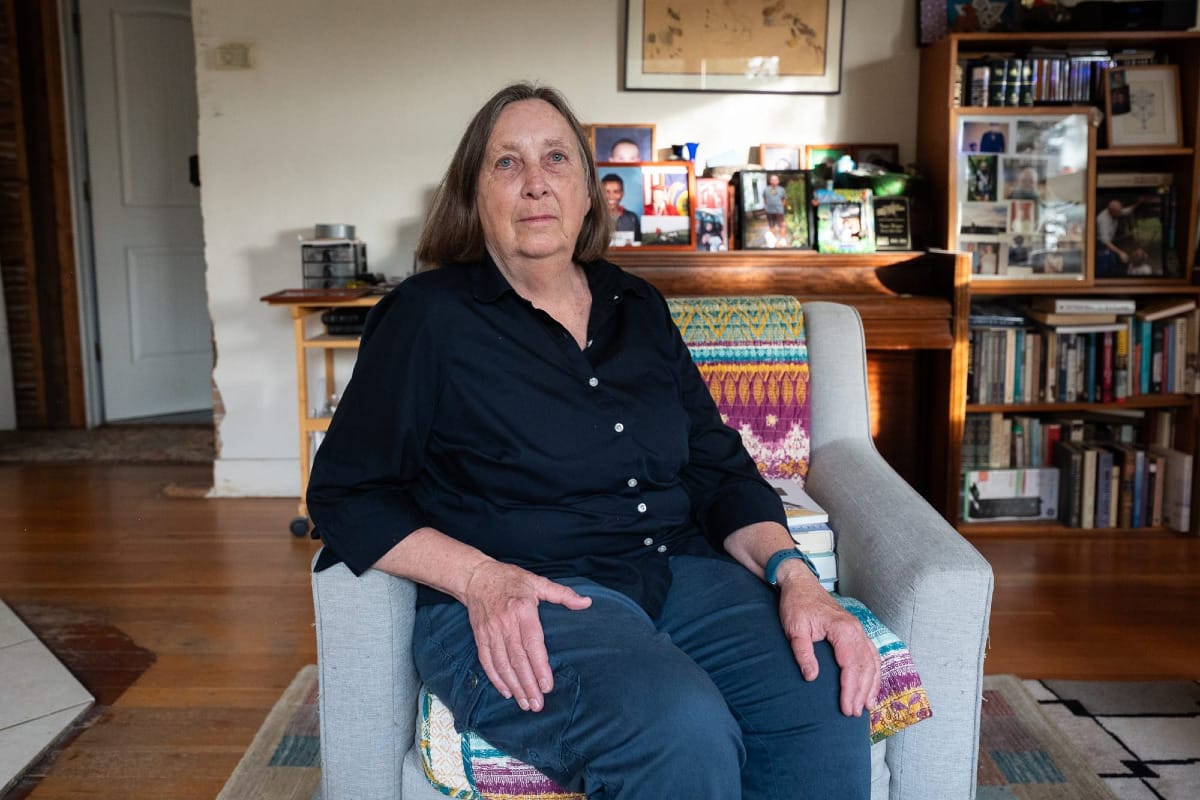
Photographs of her son, Isaac, decorate the piano in Cyndy Piez’s living room in Troy, Idaho. It’s the same room where she realized her son struggled with substance abuse, and the room where she learned he was fighting for his life. (Whitney Bryen/InvestigateWest)
When she arrived at the hospital on May 10, 2025, Cyndy stopped at a nurses’ station and placed the bottle containing more than 200 pills on the counter.
“I’m here for Isaac Berger,” she said.
One of Isaac’s nurses, Holly Strong, had been expecting her. Strong took off the cap and inspected the pills noting the variations of blue, a stamped “M” on one side and “30” on the other. She asked Cyndy if she could dispose of them.
“Yes, get rid of it,” Cyndy told her, according to medical records, before rushing off to find her son.
Instead, Strong called the police.
That Saturday morning, Cyndy’s husband, Ken Berger, had found Isaac in his bedroom, slumped over and barely conscious. While Cyndy waited at home, Ken drove Isaac to a rehabilitation center that he’d found online in the nearby university town of Moscow near the Washington state line. The address was wrong. Then Ken went to the Latah Recovery Center, which he’d driven by before. But it was Saturday and it looked closed. Plus, it was a counseling center, Ken thought, and by this point his son could barely stand. So Ken rushed to the nearest emergency room.
Struggling to bear the weight of his 200-pound son, Ken staggered through the doors of Gritman Medical Center, where Strong, a registered nurse for seven years, was overseeing all emergency nursing staff.
A mother herself, Strong had been caring for Isaac for nearly two hours by the time Cyndy arrived with the prescription bottle she found in her son’s room.
“The poor mom had no idea what it was,” Strong told a Moscow police officer, according to body camera footage. “I took the lid off and instantly recognized it.”
It was fentanyl.
Federal privacy rules generally prohibit health care providers from sharing a patient’s medical information with law enforcement without their permission. They allow, but don’t require, information to be shared with police in limited situations such as an imminent threat, a gunshot or stab wound, a suspected crime at the hospital — most commonly an assault on a hospital worker — or a suspicious death. Absent those circumstances, health care providers are not allowed to report a patient’s diagnosis or treatment to police simply because they overdosed.
In Isaac’s medical records, Strong, who declined to comment for this article, wrote that even though she had permission from the pharmacy to dispose of the pills in a waste bin, she contacted police to take care of the “copious amount” of fentanyl. Strong noted that she did not provide patient information to officers and that the prescription label on the bottle was “blacked out with permanent black marker to protect patient information.”
That wasn’t true, according to police records. Evidence photos show no black markings on the pill bottle, which clearly display Isaac’s full name and a prescription for anti-anxiety medication. And in her report to police, Strong named Isaac and said he was admitted for what she believed was a fentanyl overdose. She told police she held onto the pills until an officer arrived at the ER, then handed them over as evidence.
Fentanyl has become a growing problem in Idaho over the past five years, contributing to more overdose deaths than any other drug across the state, according to the most recent data from the Idaho Department of Health and Welfare. Since it’s synthetic, fentanyl is cheap to make and often hidden in other drugs, leaving users unaware of what they’re taking or how much. Capt. Shane Anderson, who oversees drug calls at the Latah County Sheriff’s Office, said since 2021 fentanyl seizures have nearly doubled each year. He estimates that the county has an average of two fentanyl overdoses each week, though people don’t always report overdoses to police. With no detox centers in the area, Anderson said that unfortunately, those who overdose often end up in jail, “because they can sober up.”
Less than two hours after Strong handed the bottle to police, Moscow Police Officer Kristopher Sneve called her back. Sneve, who was named officer of the year in 2025 and celebrated for making more driving under the influence arrests than any other officer that year, reassured Strong that she had done the right thing by reporting Isaac.
“I’m glad I wasn’t wrong to call,” Strong said, apologizing for her kids’ babbling in the background. “It seemed like an awful lot (of pills).”
“We are really, sincerely trying to figure out where he got them,” Sneve said.
“Absolutely,” Strong said. “I hate to see this on rinse and repeat.”
“And us too,” Sneve said. “We just want to get this stuff out of town.”
At the hospital, medical staff reassured Ken that his son “wasn’t going to get in trouble,” Ken said. One officer told Cyndy “we can’t arrest people for calling in a medical overdose.”
But then Sneve began questioning Cyndy about the pills. She asked if Isaac was in trouble. “Kinda,” Sneve said before providing her with information about addiction treatment.
“Obviously, this is a terrible circumstance, but it might be kind of a blessing in disguise,” Sneve said. “Maybe a wake-up call for him and hopefully get him some help.”
When his son overdosed on fentanyl last year, Ken Berger took Isaac to Gritman Medical Center emergency room for help. A nurse who was treating Isaac reported him to police. (Whitney Bryen/InvestigateWest)
As Isaac continued to slip in and out of consciousness, an officer from the Latah County Sheriff’s Office directed Cyndy and Ken away from their son’s bedside to a small exam room down the hall. Deputy Ryan Morbeck took over Isaac’s case because the pills had been found at their home in Troy, outside Moscow city limits. Morbeck was a couple of years younger than Isaac and had a similarly round face.
“We are going to arrest him for the trafficking amount of fentanyl,” Morbeck said, according to body camera footage. “But we will wait until he’s medically cleared to go to jail, that way he gets the help he needs right now.”
Ken looked at his wife, then turned back toward Morbeck.
“What do you mean, ‘go to jail?’”
Isaac had never been to jail before. His only prior charge was in college when police found marijuana in his shared dorm room. That charge was dismissed after Isaac passed a series of random drug tests.
Raised by teachers, Isaac shared his parents’ interests in math and science. He was bullied in school but found solace in running track, which “really fit in with his liking to be outside and just sort of moving through the world in that way,” Cyndy said. Isaac’s perfect score on the ACT exam yielded a scholarship from Arizona State University, where he majored in microbiology and minored in math. After graduating, Isaac moved back into his childhood bedroom in Troy. He took a job in the produce department at Winco and worked his way up to manager, where the hours grew longer and the responsibilities more stressful.
In 2023, Cyndy said, Isaac lost interest in his hobbies. He stopped watching nature documentaries with his dad. He drank more and gained weight. And he started lashing out at Cyndy, refusing to acknowledge her at the grocery store and snapping at her when she spoke to him.
This, she would later learn, was the same year that Isaac opened a cryptocurrency account, which he used to buy drugs online. One summer during college, Isaac had worked with a colleague of Cyndy’s at the University of Idahodeveloping a mathematical formula that predicted the impact of Tylenol and alcohol on liver damage. After his overdose, detectives discovered a similar calculation on his computer. Isaac told doctors at Gritman hospital that he was self-medicating for anxiety and depression, according to his medical records. He told his attorney he was taking five to 15 pills a day.
“The detective said he had been sort of using that (formula) to monitor his usage,” Cyndy said, “so that he didn’t die.”
“Of course, we didn’t know that at the time.”
Photos of Isaac Berger are displayed around the home in Troy, Idaho that he shared with his parents into adulthood. (Provided)
In early May 2025, an employee at Winco told Cyndy that Isaac hadn’t worked there in a while. When Cyndy and Ken confronted Isaac, he was incoherent and slurring his words. Over the next week, Isaac slipped in and out of a stupor, and Ken began to suspect he was using drugs. Each time they asked if Isaac had taken something, he denied it.
“We knew something’s going on, but I would have never in a million, billion years thought fentanyl,” Cyndy said. “We would have never thought he would do that. We were clueless.”
As Cyndy and Ken stood under the fluorescent lights of the hospital exam room awaiting officer Morbeck’s answer, they again felt clueless.
The pills weighed more than 23 grams, or about 0.8 ounces, Morbeck told them. In Idaho, that amount meant Isaac would be charged with felony drug trafficking, he said.
After declaring he was taking their son to jail, Morbeck said, “I’ve gone to houses before where someone essentially died and we found drugs inside the house, but we couldn’t do anything with it because they called us there to help them.”
“That’s kind of what this is like,” Ken pressed.
“Kind of,” Morbeck said. “But then, the amount of pills he had pushed past that.”
Get the inside scoop in your inbox, free.
Subscribe to our weekly newsletters and never miss an investigation.
Early the next morning, on Sunday, a doctor got Isaac ready to be discharged. It had been about 12 hours since Isaac was admitted to the emergency room, and while he was standing and no longer slurring his words, he still “wasn’t all there,” Ken said.
The doctor provided Isaac and his parents with pamphlets for counseling and addiction treatment.
“I thought, ‘Oh, good. They came to their senses. They’re gonna let us take Isaac home, so we can get him help,’” Ken said.
Then the doctor walked out. And the sheriff’s deputies walked in.
“It felt like vultures descending on a carcass,” Ken said.
Cyndy instinctually wedged herself between Isaac and the two deputies, telling them, “He won’t talk without a lawyer.” Then, Ken and Cyndy watched helplessly as Morbeck and another deputy read Isaac his rights, handcuffed him and led him out of the hospital to a patrol car.
Isaac was booked into the Latah County Jail, a facility later closed for failing to meet state safety standards where he was under the care of guards who weren’t certified in first aid.
Isaac spent the next 30 hours in a dark, concrete cell with a mattress on the floor awaiting his arraignment.
In January 2024, Republican state lawmakers Rep. Ted Hill and Sen. Todd Lakey, both representing areas around Boise, introduced legislation that would charge people caught with fentanyl as drug traffickers and impose mandatory minimum prison terms.
“We want to scare away the cartels. We want to scare away the scumbags,” Hill said after sharing that his nephew died from a fentanyl overdose in 2016. “Bottom line: We need to support law enforcement.”
It was the latest in a series of bills in Idaho meant to curb drug use by sharpening criminal penalties, an approach that national research shows does not typically work. In a 2017 letter to President Donald Trump’s Commission on Combating Drug Addiction and the Opioid Crisis, the Pew Research Center reinforced “a large body of prior research” finding that more imprisonment does not reduce illegal drug use. The most effective response combines law enforcement efforts that target traffickers and provide alternatives to prison for people who are using but not selling drugs, the research found.
Hill and Lakey said their 2024 legislation, House Bill 406, would “shut down the cartels” and would not affect low-level fentanyl users who would benefit more from addiction treatment than prison. But the law does not differentiate between them. The legislation borrowed language from similar laws already in place for methamphetamine, heroin, cocaine and marijuana — laws that helped drive Idaho’s incarceration rates to among the nation’s highest, according to a 2025 report by the Idaho Justice Project.
Within a month of being introduced, Gov. Brad Little signed the bill into law.
The law, however, conflicts with the state’s good Samaritan protections, causing confusion among police who were unsure whether they could arrest Isaac.
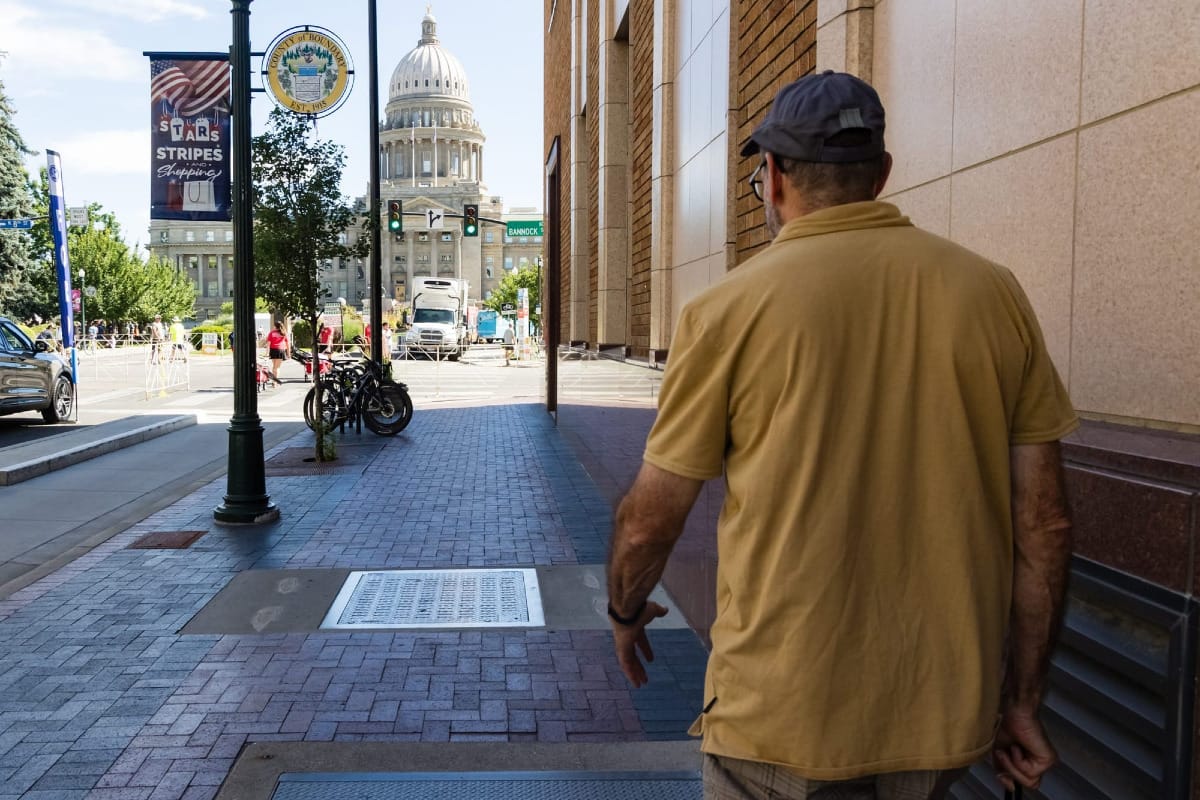
Ken Berger walks toward the Idaho State Capitol in Boise. Ken’s son, Isaac, who was arrested at Gritman Medical Center after being treated for an overdose and was the first person in Latah County to be charged with trafficking under a new law that harshened penalties for people possessing fentanyl. (Otto Kitsinger/InvestigateWest)
The Good Samaritan law, also referred to as medical amnesty, prevents witnesses and people who are overdosing from being charged with drug possession when they call for help. It does not protect people from trafficking or other felony drug charges. Severe penalties for fentanyl possession in Massachusetts, Kansas, Alabama, North and South Carolina, Nevada, Oklahoma and Arkansas create the same gap in protections that Isaac faced, InvestigateWest found after analyzing Legislative Analysis and Public Policy Association studies on both laws.
Cyndy wasn’t considering those nuances when she rushed to the hospital with a bottle full of pills that could help providers save her son.
“I just did not understand how serious it would be if I took the pills in,” Cyndy said. “I just did not know.”
The Latah County prosecutor’s office, under the direction of prosecutor Bill Thompson, who was elected in 1992, charged Isaac with felony fentanyl trafficking.
Isaac was the first person in Latah County to be charged under the new law. The prosecutor’s office filed the least punitive charge they could, which carried a three-year minimum prison sentence.
When Cyndy arrived at the county jail with bail, Isaac told her he had no memory of going to the emergency room or being arrested.
Earlier that morning, Capt. Anderson had just returned from vacation when he arrived at the jail and saw Isaac for the first time. “He was messed up,” Anderson said. “He was not OK.”
Anderson questions whether 12 hours was long enough for Isaac to recover at the hospital before going to jail. But that’s not his call.
“We can’t make the hospital hold them,” he said.
After Isaac was released to Cyndy, the pair walked upstairs to the probation office. Isaac was dazed and expressionless, nodding as a probation officer provided instructions he didn’t seem to comprehend. The probation officer said Isaac was experiencing withdrawal symptoms, Cyndy recalls, and urged her to “take Isaac back to the ER this instant.” After a quick checkup and prescriptions to help with nausea and other withdrawal symptoms, Isaac was discharged the same day.
Since this was Isaac’s first offense in Idaho, his attorney, Robyn McPherson, was hopeful that the prosecutor would reduce the charge to possession and allow Isaac to be on probation while he received addiction treatment.
“We had this huge treatment plan and as soon as Isaac could start doing it, he was doing it,” McPherson said. “He was going through the process of it, so we could have done that from day one had they not taken him into custody.”
In May, the week after he was released from jail, Isaac met with an addiction counselor and was lining up treatment options to present in court. He seemed to be getting sicker, Cyndy said, “but I just thought it was withdrawal.” On Friday — one week since the overdose — Cyndy found Isaac in his bed shaking, “like he was having a seizure.” She called 911. An emergency helicopter transported Isaac to Kootenai Health hospital in North Idaho, where Cyndy and Ken learned from doctors in the intensive care unit that Isaac had developed rhabdomyolysis — a rapid deterioration of muscle tissue often associated with long periods of immobilization and more recently tied to fentanyl use.
Cyndy counted the hours her son had been confined to a bed, unable or unwilling to move: about 40, starting in the hospital until she bailed him out of jail. That could be the cause, the doctors said.
“The ICU doctors, they were totally, utterly shocked, all of them, that he was put in jail,” Cyndy says.
By that point, the damage had been done. At Kootenai Health, Isaac’s health continued to deteriorate, perplexing doctors, Cyndy and Ken recalled. He developed a nervous system disorder that made it difficult to regulate his blood pressure and heart rate. He experienced paranoia from delirium, caused by long hospital stays. Tubes were helping him breath and eat. And he was unable to stand or speak. After Isaac was discharged from intensive care, Cyndy spent the next several weeks watching her 30-year-old son relearn things she’d taught him as a toddler: “How to pick up a cup, pick up a spoon. How to walk and talk. All of it.”
Isaac Berger’s tennis shoes and the cane he relied on after complications from a fentanyl overdose remain in the corner of his bedroom. (Whitney Bryen/InvestigateWest)
With his felony charge looming, Cyndy attended Isaac’s court hearings online from his hospital room, and she sent videos of Isaac’s progress to his attorney. At each hearing, the case was delayed. But the charge remained.
When Isaac returned home in July, nearly two months later, he walked with a cane and wore only slip-on shoes because he couldn’t tie his laces. But for the first time since his overdose two months earlier, Cyndy saw glimpses of her son. On July 30, 2025, Cyndy went to tell Isaac goodnight and found him asleep on the couch next to his dad where the pair had been watching nature documentaries. Not wanting to disturb him, she quietly backed out of the room and went to bed. Early the next morning, Cyndy was startled by Ken’s cries.
“Isaac! Isaac! Isaaaaaac!”
She ran to Isaac’s room, where Ken was talking to a 911 operator who instructed them to move Isaac from his bed to the floor and begin CPR. Ken and Cyndy’s hands overlapped as they pressed into Isaac’s chest. But there was no breath.
“I went to give him some air and the sound was appalling,” Cyndy said. “It was echo-y, like he was hollow.”
“I knew he was dead. You couldn’t be alive and sound like that.”
When Latah County sheriff’s Detective Rowdy Paul arrived at the house that morning, a sergeant went to get Isaac’s parents who were lying next to his body grieving.
As officers searched and photographed the house, Cyndy and Ken told Paul that nine days earlier their son had gone to Moscow for an appointment at the Latah Recovery Center and a narcotics anonymous meeting, according to police records. Isaac had been alone for a few hours that day. And he was acting odd, “unable to focus on questions, and his head was nodding up and down as if he were falling asleep,” Isaac’s dad explained. Paul later wrote in his police report that he suspected Isaac had relapsed on fentanyl.
Then, Cyndy handed Paul a receipt for a mailbox that Isaac had rented in Moscow, dated April 17, 2025 — less than a month before the first overdose that sent Isaac to the emergency room. Paul asked if Isaac had ever disclosed where he got the drugs. Cyndy said he ordered it off the dark web. Paul knew then that finding the person who sold drugs to Isaac would be difficult.
“When it comes to the dark web stuff, that’s a huge roadblock in our area,” Paul said. “It's so far out of the scope that we're able to handle.”
After Paul had finished interviewing Cyndy and Ken, another deputy handed him a single blue pill found on the floor in Isaac’s room. Paul instantly recognized the “m” stamped on one side as fentanyl.
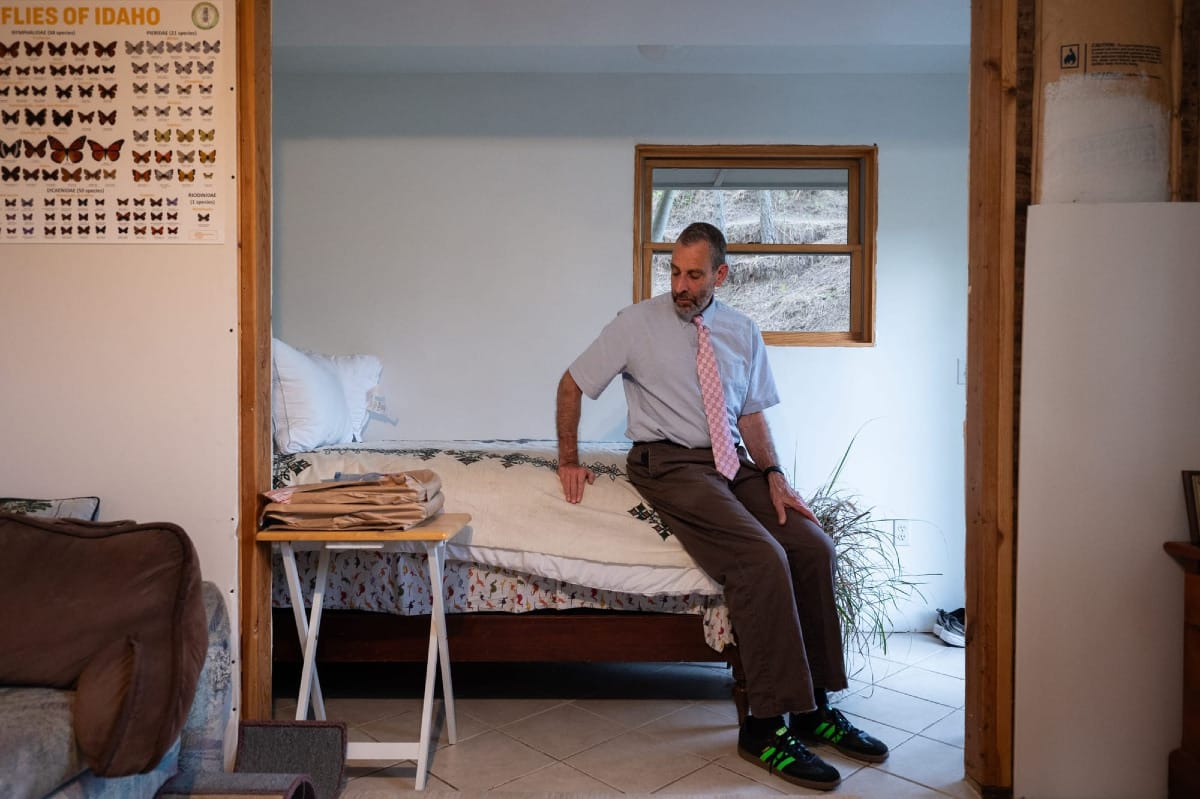
Most mornings, Ken Berger sits on his son, Isaac’s bed. It’s where Ken feels close to Isaac yet also where he is reminded that there was so much about Isaac he didn’t know. (Whitney Bryen/InvestigateWest)
Paul followed what leads he could. He drove with another officer to Spokane, Washington, about an hour north of Moscow, to observe Isaac’s autopsy, which later confirmed their suspicions — he had died of fentanyl poisoning.
The next day, Paul interviewed Isaac’s counselor at the Latah Recovery Center who described Isaac as very calm and excited to gain more independence once his health improved. Isaac didn’t have many friends in the area, the counselor told Paul. His last session with Isaac was the same day Isaac’s parents noticed he was acting odd. But, the counselor said, “nothing stood out about Isaac’s demeanor,” police records show.
Paul also looked into Isaac’s mailbox. A search warrant revealed that 40 packages were delivered to Isaac’s mailbox, and a postal inspector told Paul that several deliveries came from addresses in New Mexico and Southern California that were already under investigation for drug distribution.
Paul determined that Isaac did not buy more drugs after his arrest, and he found no evidence that Isaac “knew someone locally who was going to hook him up,” according to his report. Instead, Isaac likely relapsed on drugs that had remained hidden in his room, which police decided not to search after Isaac’s arrest despite receiving permission from his parents.
Despite Isaac’s charge, Paul tells InvestigateWest that he did not believe Isaac had been selling or distributing drugs.
Whoever had trafficked the fentanyl that killed Isaac wasn’t in Idaho, Paul said.
“The only option was stuff coming from out of state,” he said.
About a month after Isaac’s death, Cyndy and Ken began seeing a therapist, one who also counseled people sentenced to Latah County’s drug court — an alternative to prison that was never offered to Isaac.
Cyndy’s grief began to turn to anger. She realized her son didn’t just make a bad decision. He was sick. And the people who could have helped him chose instead to punish him.
“Being able to say loudly and confidently that it is a disease is my way of saying he was a wonderful, bright, curious person,” Cyndy said, “not some monster.”
McPherson, Isaac’s attorney, said police told her they had never seen that much fentanyl in a single bust. She and Isaac’s parents believe that detail swayed the decisions of medical staff, police and prosecutors, which delayed treatment for Isaac and ultimately contributed to his death.
Isaac’s parents suspect that Gritman emergency providers violated the federal Health Insurance Portability and Accountability Act, or HIPAA, when they reported Isaac’s overdose, handed over the pill bottle and notified police that he was being discharged. In an email, hospital officials declined to comment on the allegation.
The Idaho Board of Nursing does not provide any guidance to its licensees about if or when to report overdoses to law enforcement, but it does “prioritize medical intervention, patient privacy, and public health safety protocols over criminal reporting,” according to an emailed statement.
Gritman Medical Center officials would not say what, if any, guidance it gives to staff about reporting overdose patients to law enforcement. An email from the hospital’s communications team stated that “Gritman did not change its policies or guidance as a result” of Idaho’s 2024 fentanyl law.
“Because of Gritman’s inability to make a policy that protects people seeking help, now people who hear of this will not seek help,” McPherson said.
“They didn’t have to call the police,” she said. “They didn’t have to lie to his parents, and Isaac didn’t have to be released to jail that night. Even if HIPAA wasn’t violated, patient trust was violated.”
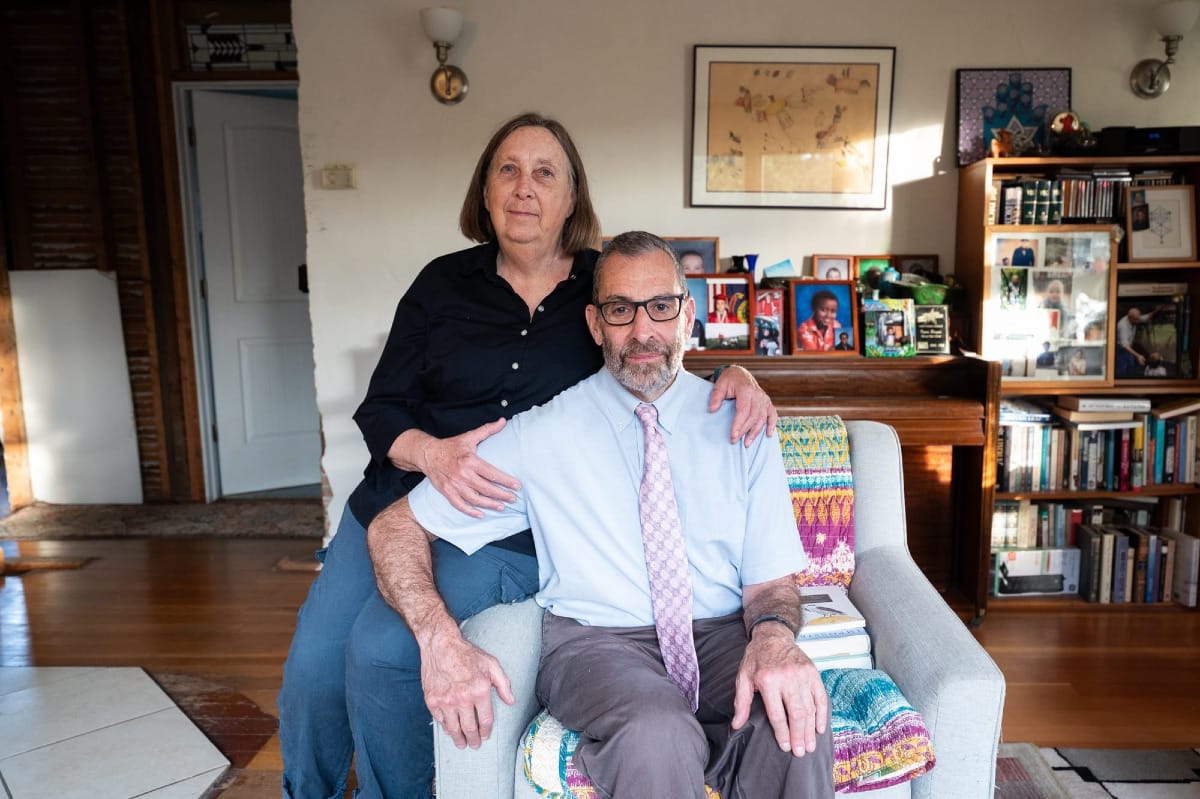
From their home in Troy, Idaho, Cyndy Piez and Ken Berger described how a 2024 state law mislabeled their son as a drug dealer and hindered his ability to get the help he needed. (Whitney Bryen/InvestigateWest)
Ken wishes everyday that he had taken Isaac eight miles west to a hospital across the state line. Maybe medical staff in Washington would have disposed of the pills instead of turning them over to police. Maybe Isaac would have received help he needed.
Pullman Regional Hospital said in an email that staff are required to report limited information to law enforcement if they suspect a patient is a victim of abuse, neglect, domestic violence, sexual assault or exploitation. But not an overdose.
“It’s important we care beyond treating an emergency like an overdose,” the hospital wrote. “We partner with our local Recovery Center, EMS and employ social workers to support patients and their families with treatment and addiction resources. If people don’t have a primary care doctor, we help them establish care so that we’re treating the person, not just the crisis.”
One year after Isaac died, in the same room where Cyndy was unable to revive her son, she points to a photograph of Isaac posing with his cat, Frownie, at his feet.
“She was a neighborhood stray who just attached herself to Isaac,” Cyndy said, smiling as tears filled her eyes.
Isaac was a sweet, silly and smart child, she remembers. He loved to read, even from a young age. When she picked him up from kindergarten, Cyndy often found Isaac surrounded by his classmates who were listening to him read, she said. And Calvin and Hobbes was his favorite.
“When he was young, he sort of thought of himself as Calvin,” Cyndy said. Isaac was intelligent and imaginative, but a lack of motivation kept him from reaching his potential.
Cyndy is consumed with questions that will never be answered: What if she’d recognized his addiction sooner? Or given the nurse only one pill? Or refused to cooperate with police? Would Isaac be alive?
“I basically killed my son, that’s exactly how I feel,” Cyndy said. “No parent should ever have to feel this way.”
Despite a four-month investigation, Detective Paul was unable to identify the dealer who sold drugs to Isaac. The case was closed in December.
No one was prosecuted for selling drugs to Isaac or for his death.
Correction: A line has been removed from this story that mistakenly referenced a deadline for filing a complaint with the Idaho Board of Nursing. There is no deadline.
Whitney Bryen reports on injustice and vulnerable populations for InvestigateWest. A journalist since 2010, she is dedicated to raising marginalized voices and holding power to account especially at the intersection of mental health and criminal justice.
The story you just read is only possible because readers like you support our mission to uncover truths that matter. If you value this reporting, help us continue producing high-impact investigations that drive real-world change. Your donation today ensures we can keep asking tough questions and bringing critical issues to light. Join us — because fearless, independent journalism depends on you!
Newsroom staffers tell InvestigateWest and RANGE that concerns about Curley’s leadership festered until his August suspension — weeks before the paper was set to transfer to his nonprofit