

Prison overcrowding is keeping Idaho women behind bars even after they’re granted parole
State agencies don’t know how many inmates face more prison time because they couldn’t access programs prescribed by parole commissioners
State agencies don’t know how many inmates face more prison time because they couldn’t access programs prescribed by parole commissioners

Newsroom staffers tell InvestigateWest and RANGE that concerns about Curley’s leadership festered until his August suspension — weeks before the paper was set to transfer to his nonprofit


The board of 5Rock Ranch nearly shut it down more than a decade ago, but former residents say harmful practices continue

State agencies don’t know how many inmates face more prison time because they couldn’t access programs prescribed by parole commissioners

It was Friday the 13th when Andrea Johnson heard the news from a friend over a muffled telephone receiver from the county jail in Cascade, Idaho. After 16 months behind bars, Johnson had been granted parole.
“I was anxious, but I was hopeful,” Johnson, 46, said. “I was excited. Why wouldn’t they let me out?”
But there was a catch, her friend said in March: Johnson would have to spend at least another year locked up.
Idaho parole commissioners gave Johnson a “tentative parole date” of March 8, 2027. The commission decided that she wouldn’t be released on parole until she completed grief counseling for the death of her infant daughter — which Johnson said triggered her addiction and led to her conviction for drug possession — and a class on managing substance use disorder.
But Johnson, who was left in jail because state prisons didn’t have room for her, had no access to those programs. That’s why she couldn’t complete them before parole commissioners reviewed her case. They gave her no timeline for when she would be able to access them, despite state law designed to prevent inaccessible programming from standing in the way of parole.
The Idaho parole commission’s use of “tentative parole dates” like Johnson’s is part of a self-perpetuating cycle, in which parole delays are both the result of the highest women’s incarceration rate in the nation and contribute to it. Because of Idaho’s overcrowded prison population, some women can’t access the programming that commissioners expect them to complete before they’re released. And because they can’t access it, those women remain incarcerated longer, delaying access for other women who need the same programs.
Wanda Bertram, a spokesperson for the Prison Policy Initiative, which advocates for reducing mass incarceration nationwide, said people who are stuck behind bars waiting for access to programs but are otherwise deemed fit for parole are “some of the lowest hanging fruit” for reducing prison populations.
State law requires the Department of Correction to ensure that lack of access to programs isn’t the main reason keeping inmates from parole. But neither the department nor the Commission of Pardons and Parole knew how many inmates face such delays. InvestigateWest analyzed seven years of parole data, finding that women were marginally more likely than men to have their parole postponed, forcing women to spend additional months and sometimes more than a year behind bars at taxpayers’ expense — up to $36,500 per year for each woman who’s delayed.
 Whitney Bryen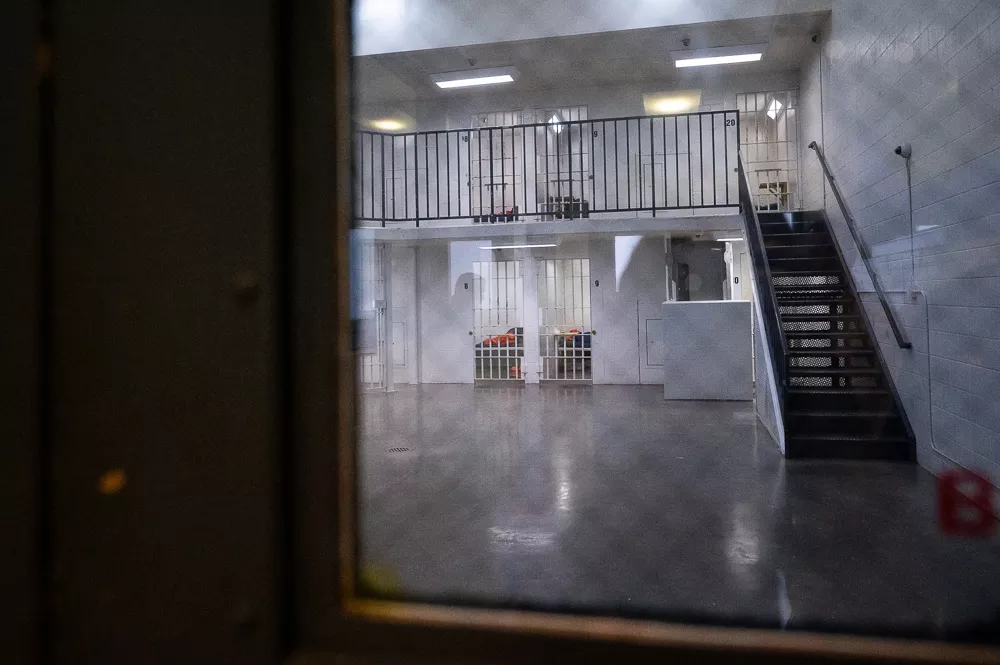
It costs more to incarcerate women than men, according to a 2026 analysis by the Council on Criminal Justice, a national nonprofit that studies and advocates for criminal justice policies. Stephanie Kennedy, an author of the study and research director of the council’s Women’s Justice Commission, said parole decisions should be determined by public safety and an inmate’s progress while incarcerated — not by the facility where they’re housed. Decisions like Johnson’s flip the script, making it more “about whether the facility is offering, can offer, and can put people through those programs” rather than the person, she said.
The parole commission’s executive director, Christine Starr, said in an email that granting a tentative parole date can provide an incentive for inmates to be on their best behavior and work extra hard in the months leading up to their release.
“It incentivizes good behavior, it sets expectations and provides a clear pathway for success,” Starr said. “It gives individuals something to work toward and it is a wise use of taxpayer money/workload management.”
But some women said it feels more like false hope, increasing their anxiety as one misstep could cause commissioners to reverse their decision further delaying their release.
“I feel discouraged and defeated,” Johnson said. “This is not conducive to recovery or a successful life. If anything, I feel less desire to succeed.”
When an inmate is within the last six months of their “fixed term” — the portion of their sentence that must be served in prison — Idaho law requires the commission to assess whether that person should be released on parole and serve the rest of their sentence in the community.
“Ultimately, the Commission needs to have evidence and the belief that an incarcerated individual is safe to be in the community,” Starr said.
In many cases, the seven commissioners, who are appointed by the governor, end up issuing a tentative parole date because they’re hearing a case before the person has finished serving their mandatory prison sentence, Starr said. Other times, prolonged prison time is a choice by commissioners.
Commissioners can impose conditions requiring an inmate to participate in rehabilitation programs or treatment before they’re released on parole. Commissioners occasionally allow inmates to be released on parole without completing the expected programming, Starr said, but it’s rare.
Completing a class that’s designed to reduce recidivism is one of several factors that can signal to commissioners an inmate is safe to release to community supervision, Starr said. Plus, programs are free to people while they’re incarcerated. Starr said similar subsidized treatment is difficult to find outside of prison and “always in high demand.” And many people who have been incarcerated cannot afford to pay for it.
State law requires the Department of Correction to create “sufficient programming opportunities” to ensure that lack of access “is not the primary cause in delaying parole eligibility.”
But the state’s data and tracking of the issue is sparse.
Annual reports published by the department and the parole commission identify at least 52 people since 2019 whose release to parole was delayed because they were unable to complete programming. But those reports only account for inmates convicted of property and drug crimes who were released to parole for the first time — a narrow snapshot of the overall prison population. Department of Correction spokesperson Ryan Mortensen said in an email that the agency does not track programming delays for all inmates.
On Sept. 15, 186 women in state custody were housed in county-run jails that don’t offer the same programs as prisons, according to the Department of Correction. Eighteen of those women have a parole hearing scheduled within the next six months. Jails are designed as temporary detention centers frequently lacking adequate medical and mental health care, visitation, education and rehabilitation opportunities for long-term prisoners.
InvestigateWest analyzed all parole decisions made by the commission since Idaho’s incarceration rate for women first topped the nation. From 2019 to 2025, commissioners granted parole to women at a higher rate than men, according to data obtained through a public records request. But those women were more likely to have their parole delayed.
Of more than 2,400 women who were granted parole during that time, 19% received a tentative release date that was more than six months after their hearing. That means at least 463 women who were granted parole were forced to stay in prison beyond their fixed sentence. The reasons for those delays are unclear because the commission has not historically tracked that information.
This year, the commission began tracking the conditions it imposed on people with tentative parole dates, which provide some insight into the reasons for delays. According to records provided to InvestigateWest, from January through August, commissioners most often cited good behavior as a condition for release. More than one-third of the 251 people whose parole was delayed more than six months had only one condition listed — “complete assigned programming.” The records provided by the commission do not say whether those people have access to that programming.
Starr, who was appointed director in 2024, said the reasons for setting a tentative parole date are varied and didn't know how many women were being held longer merely because they couldn't access required programming.
“The commission may want to see a longer period of sobriety,” she said. “They may want to see programming completed or a demonstration that the person can have good behavior for a defined period of time.”
Idaho’s prison system relies on five core rehabilitation programs to teach and encourage new behavior and reduce recidivism. Prisoners seeking parole for the first time are typically expected to complete a life-skills class called “Thinking for a Change,” while four other programs are tailored to repeat offenders and inmates convicted of drug offenses, sex offenses and violence.
Research shows that these programs do reduce recidivism for some graduates. But Kennedy, the research director for the Women’s Justice Commission, said the programs are not as effective for women because they were not designed with women in mind.
And while programs that account for incarcerated women’s higher rates of trauma and mental illness, experiences with domestic violence and sexual assault do exist, they can be costly to implement, she said.
Johnson was on parole for a previous drug conviction when she was arrested in November 2024 after her parole officer found methamphetamine in her jacket pocket. She was sentenced to four years — one year behind bars and three at the commissioners’ discretion — and commissioners pushed back her parole review.
Johnson asked the Department of Correction in January 2026, two months before her parole review, when she was going to be moved to a prison. She knew this was where she could take the classes and complete other tasks that commissioners would expect of her. The department’s response days later explained that prisons were at 99% capacity.
On a call with a reporter, Johnson read from the letter: “With your first possible release date being so far out, you are on the lower priority to move.”
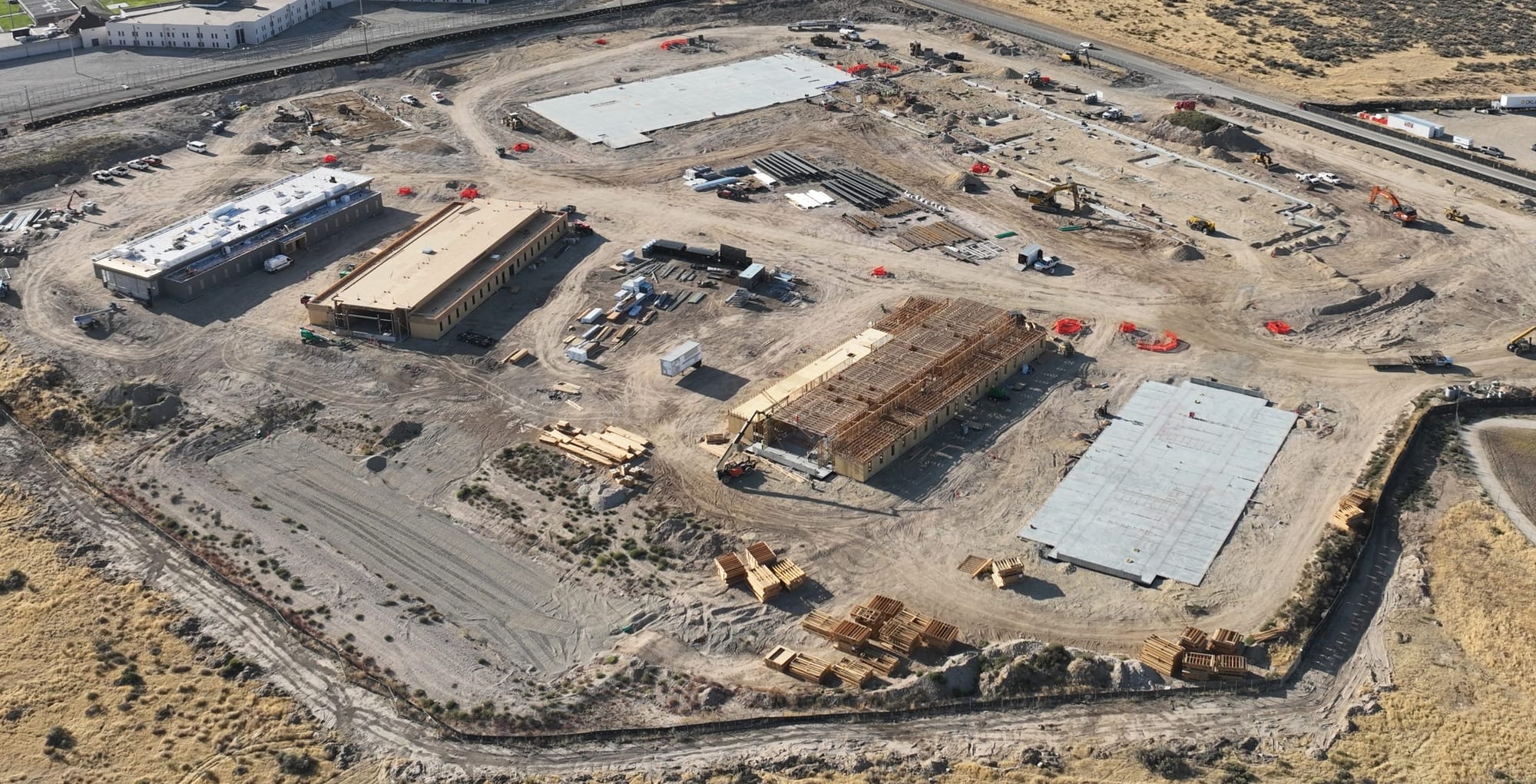
A new women’s prison that broke ground last fall just south of Boise will provide an additional 560 beds for women in state custody. But the project, which is now estimated to cost $183 million, won’t begin housing inmates until the end of 2027.
The project will “ease strains on placement and programming availability,” Department of Correction spokesperson Mortensen said. The department works “continuously to ensure residents are transported into IDOC custody as quickly as a bed is available so they can receive the programming, counseling, and support required for release.”
Meanwhile, each inmate housed in a county jail costs the Department of Correction $55 per day for the first week and $80 a day after that. That’s more than $29,000 per inmate, per year. It’s cheaper than the $100 per day price tag to house them in prison, though that does not account for the additional time inmates spend incarcerated if access to programming delays their release.
Parole costs the state $9 per day.
 Whitney Bryen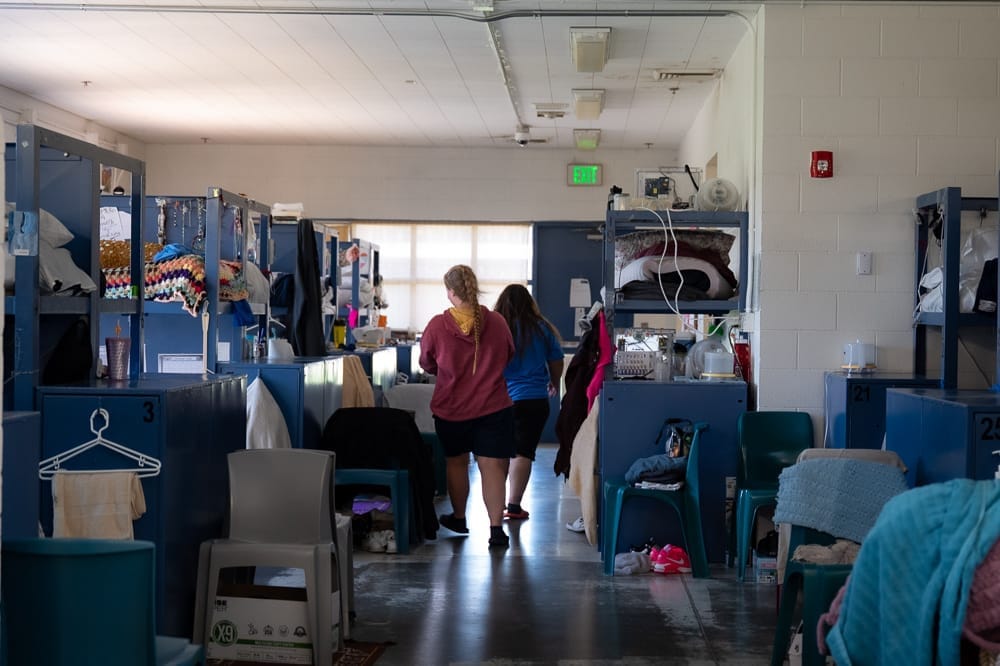
If Johnson is released on her tentative date in March 2027, she will have spent a year and nearly four months of her discretionary sentence behind bars costing the state approximately $41,215 — nearly 10 times more than if she were on parole.
After the parole commission delayed her release, Johnson remained in the Valley County jail.
The silver lining of the commissioners’ decision, she thought, was that she would be quickly transferred to a state facility where she could enroll in counseling and classes. She could show the commission that she was ready to go home, to heal, to change.
But month after month, as Johnson remained in jail, that hope faded, too.
“My depression and disappointment shut me down for a while,” Johnson said. “It’s a daily struggle.”
Starr said tentative parole dates can reduce excessive rescheduling of reviews and hearings, which can be stressful for inmates and their families. But Johnson said what’s more stressful is knowing that she can’t access what she needs to earn her release.
On Aug. 12, 156 days after the parole hearing, Johnson was finally transported to a women’s prison in Pocatello where she enrolled in grief counseling and began the class assigned by commissioners. She was expected to complete them in December, nearly three months before her scheduled release. But Johnson was transferred again in September to a prison in Boise, stalling her progress.
As of Sept. 24, Johnson did not know when she would be able to restart the assigned class or counseling – or if she’ll be able to complete them before her tentative release date and avoid spending even more time behind bars.
This reporting was made possible in part by funding from the Poynter Institute.
The story you just read is only possible because readers like you support our mission to uncover truths that matter. If you value this reporting, help us continue producing high-impact investigations that drive real-world change. Your donation today ensures we can keep asking tough questions and bringing critical issues to light. Join us — because fearless, independent journalism depends on you!
— Jacob H. Fries, executive director
DonateCancel anytime.

Gov. Bob Ferguson has rejected everyone the state board recommended for commutation

After Isaac Berger overdosed, his mother gave hospital staff the pills she found in his room. She says it became the biggest regret of her life.

An InvestigateWest review shows how Washington police agencies keep hiring cops accused of serious misconduct

A judge said the alleged domestic violence Deborah Albin experienced did not meet Oregon law’s strict criteria to avoid a mandatory-minimum sentence

Newsroom staffers tell InvestigateWest and RANGE that concerns about Curley’s leadership festered until his August suspension — weeks before the paper was set to transfer to his nonprofit

The board of 5Rock Ranch nearly shut it down more than a decade ago, but former residents say harmful practices continue

Under the banner of “Dig, Baby, Dig,” the Trump administration is supercharging an already powerful mining industry. What will happen to vulnerable plants and animals?
Gov. Bob Ferguson has rejected everyone the state board recommended for commutation
Subscribe to our weekly newsletters and never miss an investigation.