

Washington has few paths to early prison release. Advocates fear Gov. Ferguson has closed off a critical one
Gov. Bob Ferguson has rejected everyone the state board recommended for commutation


Gov. Bob Ferguson has rejected everyone the state board recommended for commutation

At the same time, Adult Protective Services workers say they’re under growing pressure to close investigations quickly.

After Isaac Berger overdosed, his mother gave hospital staff the pills she found in his room. She says it became the biggest regret of her life.

Despite pandemic budget crunch, push is on in Olympia to resurrect urban forestry effort killed in the last recession

For Washington’s urban trees, it’s not easy being evergreen.
Broadly, cities aren’t well-equipped to manage the forests already within their borders, or cultivate new ones in underused open space they acquire.
Rep. Bill Ramos, D-Issaquah, contends the state’s Department of Natural Resources may have just the tools to help, and has introduced legislation that would enable the department to deliver guidance, grant money and other resources to cities interested in improving urban forests. The legislation gets its first hearing today in the House Rural Development, Agriculture and Natural Resources Committee.
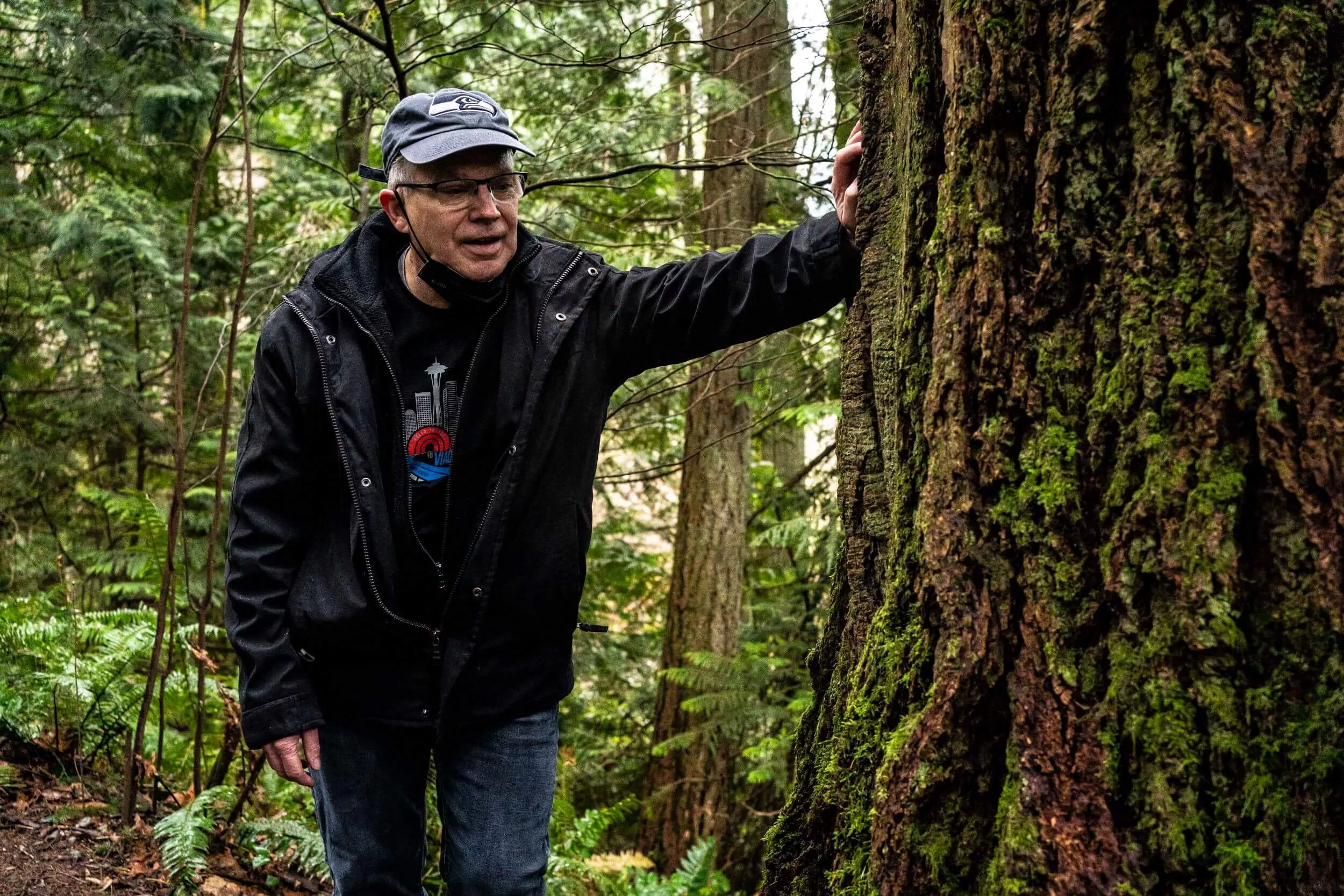
Ramos, a 30-year U.S. Forest Service veteran, watched as an Issaquah City Council member as his city tried to figure out how to manage timberland that had been folded into the city parks system. They lacked the know-how to care for swaths of forest that, untended, would collapse.
“Towns own a lot of green space to help protect their community, but they don’t have the expertise to manage it,” Ramos told InvestigateWest. “They just buy it and it sits there.”
The legislation, House Bill 1216, would revive a decade-old law giving the Department of Natural Resources the authority to provide technical assistance to cities, counties, tribes and other governments. The department, which backs the legislation, would be tasked with performing a statewide assessment of urban tree canopies and running a grant program into which qualifying cities could enroll.
If enacted, the legislation would be among the first pieces of Washington law grown from a yearslong examination of how the state can address longstanding environmental injustices. In a comprehensive report issued late last year, an environmental justice task force found that Washingtonians of color are far more likely than their white counterparts to live in areas with few natural amenities like trees and lots of pollution.
When it comes to trees, the disparity is most obvious from above.
“If you look at neighborhoods that are well-off in aerial photos, they’re all tree-lined. … The rooftops are a smaller part of the picture,” Ramos said. “You look at other neighborhoods, and they’re all rooftops and pavement.”
A detailed analysis conducted in Seattle, for example, showed heavy tree cover in neighborhoods north of the Lake Washington Ship Canal and in other largely white, affluent areas elsewhere. In racially mixed southeast Seattle and the Duwamish corridor, trees are sparse.
Ramos’s bill would address that statewide disparity by requiring that half of any funding or assistance provided through the bill goes to neighborhoods identified as highly impacted communities. Most are along the Interstate 5 corridor between Everett and Olympia, though areas of Yakima, the Tri-Cities, Spokane and a smattering of other locations in Eastern Washington would also qualify.
The effort, launched during the 2020 legislative session, has drawn few detractors, and any opposition is expected to center on its as-yet-unclear cost. Gov. Jay Inslee’s budget proposal included $2.1 million in funding, most of which would go toward analysis and technical support to cities.
The bill’s supporters see it serving several ends, including the governor’s climate agenda.
Urban trees play a minor role in storing or sequestering carbon, capturing about 3.2% of the carbon stored in all U.S. forestland, according to the U.S. Forest Service estimates. But trees can help communities avoid carbon emissions altogether by cutting the energy needed to heat and cool homes.
Tree canopy dramatically reduces the “heat island” effect seen in cities. Heat absorbed by roofs and pavement during the day keeps the cities hot through the night; nighttime air temperatures can be be elevated by as much as 22 degrees. Trees also block winter winds that can drain heat from poorly insulated homes.
“You get energy savings and those benefits, but you also get a lot of social and human health benefits,” said Angel Spell, a member of the state Community Forestry Council and assistant director of natural resources for the city of Spokane Parks & Recreation Department.
Urban forests also offer modest positive impacts on airborne particulate and other air pollution, including gases known to have serious health impacts. They improve mental health, as residents are more likely to head outside; one British study even found urban trees correlate with a decrease in antidepressant prescriptions.
Crucially, tree cover also cuts stormwater pollution. In King County alone, about 118 billion gallons of untreated stormwater flows into Puget Sound each year, harming orcas, salmon and the rest of the stressed ecosystem. Tree roots filter contaminated rainwater and trap pollution before it heads downstream.
Climate change is already harming urban trees, and those stresses will become more acute in the years ahead, Spell noted. In most cities, she said, “trees aren’t particularly adapted to this type of extreme and volatile weather events, or these warmer winters and summers.”
The foundation for deeper state involvement in how cities grow their forests was laid with the Evergreen Communities Act, the 2008 law Ramos hopes to invigorate. Thanks largely to budget cuts driven by the Great Recession, the act was never really implemented.
“It’s a bill that was passed and then immediately shelved,” said Jason Callahan of the Washington Forest Protection Association, a timber industry group supporting the legislation.
Washington cities have swelled in the 12 years since the law’s adoption, and are expected to continue to do so.
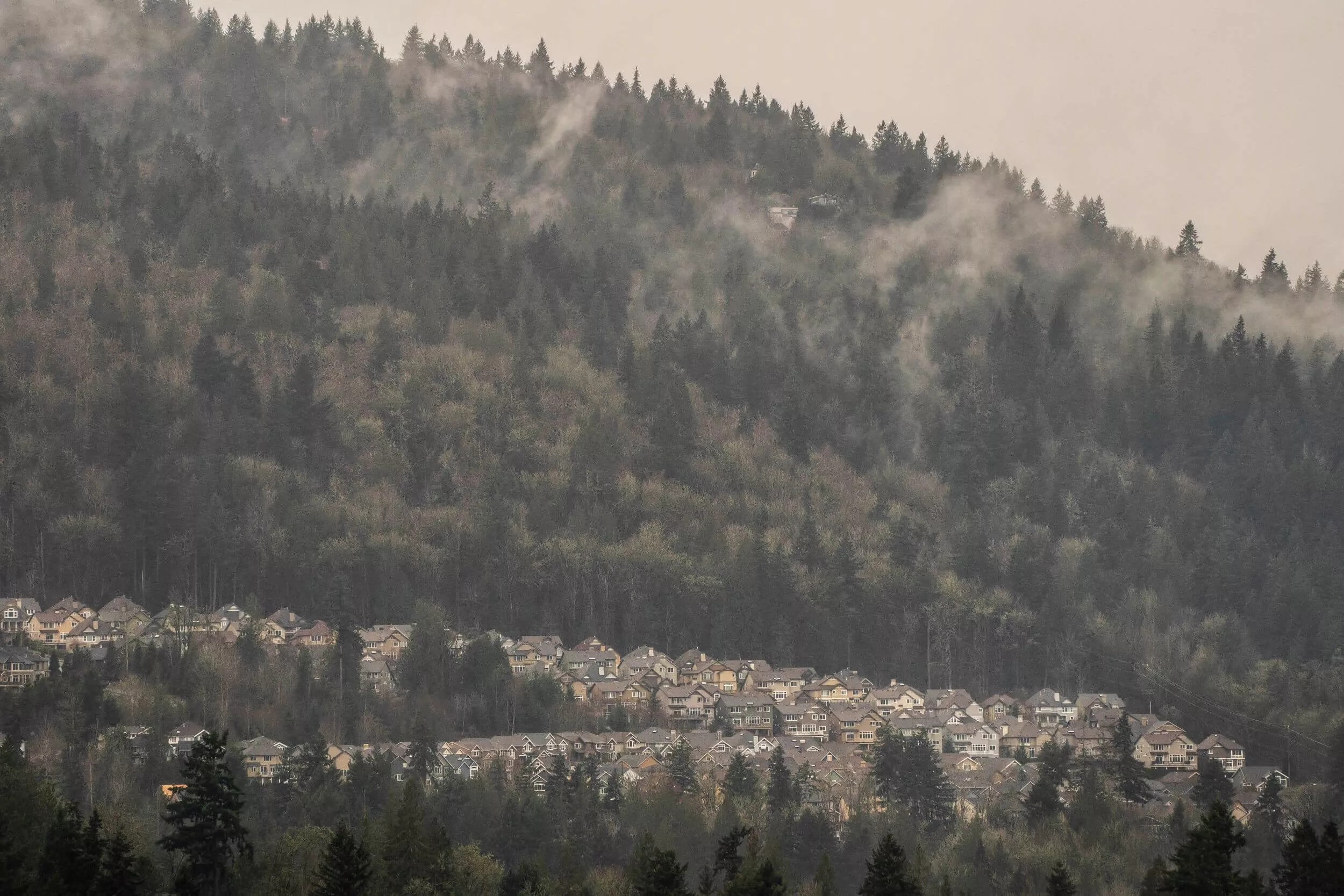
Pressure to grow vibrant forests didn’t amount to much decades ago, when cities and towns were specks of gray in Western Washington’s sea of emerald. Now, though, urbanization is creeping ever higher into the treed hills surrounding the Interstate 5 corridor.
According to USDA projections released in 2018, urban areas are expected to cover nearly 10% of Washington’s land by 2060, an increase from 3.6% in 2010. The human footprint is expected to expand to cover 54.2% of King County land, up from 24.9%.
Cities are expanding with little guidance on how to best shape their urban forests, said Justin Allegro, director of state government relations with The Nature Conservancy’s Washington office.
“Cities need to better plan for their urban forests,” Allegro said.
“We need our cities to welcome more people and grow, and our Puget Sound cities are doing that,” he continued. “But those challenges of sustaining clean air, clean water, quality of life are exacerbated.”
Ben Thompson, urban forestry program manager with the Department of Natural Resources, offered a similar sentiment.
The state is urbanizing rapidly, Thompson said, and the spread of hard surfaces — roads, parking lots, rooftops – is harming the environment and imperiling people’s health. Those impacts are often felt most acutely by people in low-income areas or marginalized neighborhoods.
Urban trees address many of the problems that come with urbanization and past discrimination. But, Thompson said, to “maximize these benefits, cities must invest in the care and management of their trees to the same degree they manage other public assets.”
“Unfortunately, many communities lack the resources to do this,” he said.
In Spokane, city leaders have committed to plans that would nearly double to the amount of tree cover in the city, to 40%. The goal is ambitious, and Spell, who manages the trees on city parkland, said state resources will go a long way toward reaching it.
If enacted, Ramos’s bill would direct the Department of Natural Resources to provide guidance and surplus equipment to municipalities and other governments attempting to better tend their trees.
That specialized assistance, Ramos said, could be invaluable to cities. Ramos recalled an issue that arose while he was on the Issaquah City Council. The city had purchased a 35-acre piece of timberland only to discover that trees in a seven-acre swath were riddled with root rot.
Looking for a solution, the city tried to draw on the expertise of a Forest Service forester. Asked what the Forest Service would do if the sick trees were on federal land, the forester’s solution was simple — clear-cut it — and unworkable for the city.
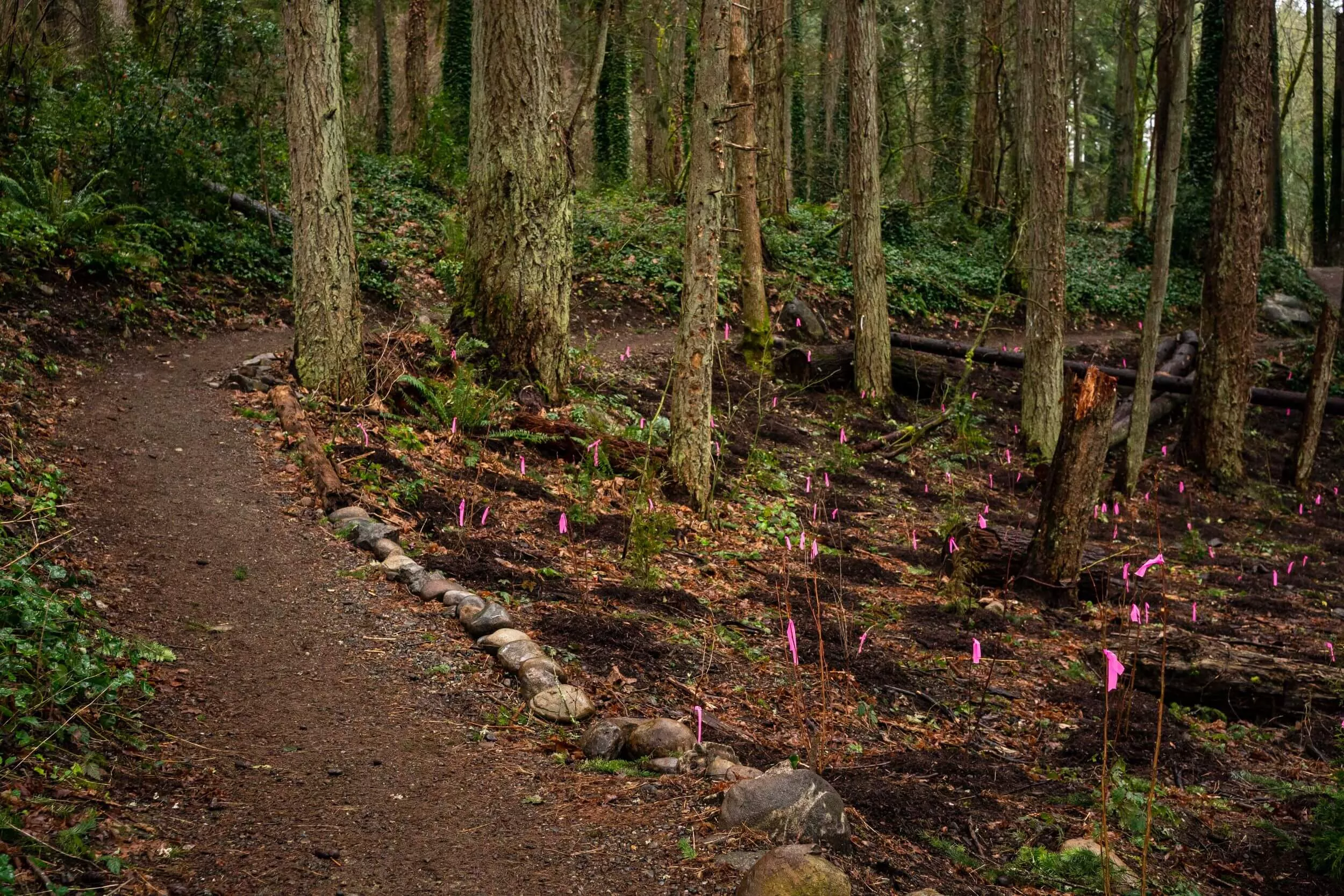
“It’s a different kind of management when you’re managing seven acres versus a million acres,” Ramos said. “It’s not an easy situation to solve.”
The legislation requires that at least 50% of the urban forestry effort benefit people living in or within one-quarter mile of areas identified as highest risk on a health disparities map maintained by the state Department of Health. The analysis includes environmental factors as well as socioeconomic information, including race and ethnicity.
The work of the state Environmental Justice Task Force, which was organized through the Governor’s Office, is evident in Ramos’s bill and is expected to broadly influence legislation during the session that kicked off Jan. 11. Many of its recommendations have been collected in legislation introduced by Sen. Rebecca Saldaña that is currently before the Senate Committee on Environment, Energy & Technology.
“I don’t think its a surprise that on the heels of the civil rights moment that we witnessed over the last year that the Legislature is responding vigorously with environmental justice as a top priority,” The Nature Conservancy’s Allegro said.
The legislation, which also contemplates helping cities put their forests onto carbon markets, takes an “all carrot, no stick” approach.
It doesn’t contain a mandate, but cities that want to access grant funding must meet criteria set by the Department of Natural Resources. The department would be tasked with developing those benchmarks, though cities would be required to develop tree care ordinances, inventory their trees and put at least $2 per resident toward urban forestry.
Ramos filed a similar bill during the short 2020 legislative session. It was proceeding toward a floor vote and likely passage, but was shelved when the coronavirus pandemic set in.
While acknowledging that the Legislature faces “immense challenges,” Allegro described Ramos’s legislation as “primed and ready to go.”
Ramos, too, sees his bill as touching on several of the highest priority areas for state leaders —climate change and racial justice, among them. Development pressures haven’t let up on the cities, and environmental wrongs aren’t going to right themselves.
“These folks need some help,” Ramos said. “Let’s get them the technical help they need.”

The story you just read is only possible because readers like you support our mission to uncover truths that matter. If you value this reporting, help us continue producing high-impact investigations that drive real-world change. Your donation today ensures we can keep asking tough questions and bringing critical issues to light. Join us — because fearless, independent journalism depends on you!
— Jacob H. Fries, executive director
DonateCancel anytime.

Stella-Jones, a wood treater fined $1 million by state regulators, is appealing the penalty


Mayor Harrell promised law would get Seattle “back on track,” but new street-tree planting data raises doubts

The penalty comes days after InvestigateWest found regulators investigating the pollution didn’t take steps to immediately stop it

Gov. Bob Ferguson has rejected everyone the state board recommended for commutation

At the same time, Adult Protective Services workers say they’re under growing pressure to close investigations quickly.

After Isaac Berger overdosed, his mother gave hospital staff the pills she found in his room. She says it became the biggest regret of her life.

Advocates and experts say that reflects the challenges rural families have getting health and social safety net services
Subscribe to our weekly newsletters and never miss an investigation.
Our work has inspired new state laws, exposed government failures and impacted local communities in powerful ways. These stories wouldn't be told without InvestigateWest, and we couldn't do it without our generous supporters.
Cancel anytime.