

She brought fentanyl to the hospital to save her son. Idaho treated him as a trafficker.
After Isaac Berger overdosed, his mother gave hospital staff the pills she found in his room. She says it became the biggest regret of her life.


After Isaac Berger overdosed, his mother gave hospital staff the pills she found in his room. She says it became the biggest regret of her life.

Advocates and experts say that reflects the challenges rural families have getting health and social safety net services

The school board said state law limits the district from taking action against the former principal, despite community demands to fire him.

Owyhee County is among hundreds of local law enforcement agencies getting paid to join ICE’s immigration crackdown

A southwest Idaho sheriff’s office has received at least $116,000 from Immigration and Customs Enforcement as part of its agreement for local deputies to assist in President Donald Trump’s mass deportation campaign, one of hundreds of departments across the country collecting payments.
Owyhee County, a rural county on the state’s western border that’s home to many farmers and immigrant farmworkers, was the first in Idaho to join ICE’s 287(g) program under what’s known as the “task force” model in February 2025. Those task force agreements delegate local officers the authority to stop and question people they believe are in the country illegally and to process them for federal immigration violations. Later that year Sheriff Larry Kendrick signed an additional agreement to make Owyhee the only agency so far receiving payments for their participation in the task force model. InvestigateWest obtained records of the payments, which offer some insight into how the federal dollars are being used by the sheriff’s office to boost its resources.
DHS paid $115,000 to the Owyhee County Sheriff’s Office on Jan. 30 for equipment related to 287(g). The office later spent that money on two vehicles — a Ford Explorer and Ford Interceptor, both 2025 models — and body cameras for two officers. In March, the Owyhee sheriff’s office also received nearly $1,000 in wage reimbursements for the time the deputies spent on immigration enforcement activities. The sheriff’s office has just 12 full-time and two part-time deputies and, in 2026, an annual budget of $1.1 million. Two of those deputies underwent ICE training to carry out the agreement.

Across the country law enforcement agencies are cashing in large sums of money from the Department of Homeland Security for signing up officers for the 287(g) agreement.
“It's just this huge infusion of money that there doesn't seem to be any transparency or accountability on,” said Felicity Rose, vice president of criminal justice research and policy with FWD.us, a criminal justice and immigration reform advocacy group based in Washington, D.C. “It's potentially a one-time payment, so it’s not going to be sustainable money that the people in these communities get to use for public safety long term.”
In Trump’s second term, the number of local and state law enforcement agencies signing up to assist federal immigration enforcement under ICE’s 287(g) program has skyrocketed, from 135 agreements in January 2025 to 1,372 a year later, according to the Department of Homeland Security. In an effort to get more agencies to join, the administration announced in September that it would reimburse some costs for local law enforcement agencies that sign up for the “task force” model, the most intensive version of the 287(g) program.
In Idaho, 10 sheriff's offices and Idaho State Police have 287(g) contracts. Other than Owyhee County, only two other agencies have task force agreements and are eligible to receive the payments: Franklin County in southeastern Idaho, whose sheriff has said he’s seeking the same financial incentives, and Idaho State Police, which does not receive payments from ICE, according to the Idaho Governor’s Office. Instead, the governor has set aside $300,000 in state dollars to transport undocumented immigrants convicted of crimes in county jails or state prisons to ICE custody for deportation.
Details related to how Owyhee County deputies are acting as ICE agents are unclear. ICE declined to answer questions about Owyhee County’s immigration enforcement. Instead, an unidentified ICE spokesperson sent a statement saying the 287(g) task force model “provides participating state and local law enforcement with the tools, training and resources to enforce immigration laws while performing routine police duties.”
While Owyhee County released records of the money disbursed by DHS and how the sheriff’s office spent it, it declined to release records about deputies’ enforcement activities under 287(g). InvestigateWest requested the reports that the sheriff is required to submit to ICE as part of the service agreement, which says the office must report any “subjects of interest” it has encountered, but Kendrick’s office said that request must be made to ICE. The county also must report the hours its deputies spend on enforcement activities related to adults or unaccompanied minor children.
Kendrick declined to answer questions from InvestigateWest about the payments, referring any questions related to the agreement to ICE.
The county’s 287(g) agreement requires it to coordinate with ICE before the release of any information “obtained or developed” as a result of the agreement, but says the Owyhee sheriff can discuss the “substance” of the agreement with the media.
Later, Owyhee County Chief Deputy Steve Crawford responded to a reporter’s questions by email. Crawford said the time deputies spend on the 287(g) program “varies from month to month.” In February, he said officers spent 15 hours on immigration enforcement, zero hours in March, and, as of April 27, six hours in the month of April.
The Department of Homeland Security announced in September that it would “fully reimburse” participating agencies for the annual salary and benefits, including some overtime, of trained 287(g) officers working under the task force model. Participating agencies can receive $100,000 for new vehicles and $7,500 per officer in equipment reimbursements — which Owyhee County received — and another $15,000 per officer for IT equipment. Agencies are also eligible for “performance awards based on the successful location of illegal aliens.”
Starting April 1, the ICE spokesperson said that sheriff’s offices with 287(g) jail enforcement agreements are eligible for a one-time $200,000 incentive. Kootenai County is the only sheriff’s office in Idaho with a jail enforcement model, though the county said in March it does not have any such agreement with ICE.
ICE did not say exactly how many local agencies are receiving incentive payments, or how much it has paid so far. But a leaked federal ledger, which independent journalist Ken Klippenstein obtained and published to his Substack on March 24, appears to show that ICE has so far allocated more than $256.9 million to hundreds of local law enforcement agencies participating in the 287(g) program nationwide. It’s not clear from the ledger whether those figures are preliminary or have actually been paid to local agencies.
 Rachel Spacek
ICE’s 287(g) program has sparked criticism from immigrant advocates because of its history of abuse by law enforcement using it to racially profile and target Latinos for immigration enforcement. The federal payments add a new layer of concern for immigrants’ rights, said Neal Dougherty, a Boise immigration attorney.
He said if officers are receiving money from ICE based on the number of immigrants they question and send to ICE for deportation proceedings, that could encourage a quota system and racial profiling.
“It sounds like they're getting paid specific money to go and target people for civil enforcements,” Dougherty said. “That seems unethical to me.”
Rose, whose organization analyzed the leaked ledger, said it shows how the federal government is pouring money into local governments without explanation of how it’s divvying up the funds. Some departments are listed as receiving thousands of dollars per officer, while others appear to have been promised $100,000 or more.
Rose said a few local law enforcement agencies received 287(g) payments that were more than their annual budget — in some cases more than double. The Benton Borough Police Department in Pennsylvania had an annual budget in 2018 of just $50,000, and the federal ledger says its estimated payment from ICE is $149,000, Rose said. The Scranton Police Department in South Carolina had an annual budget in 2018 of $50,000, and its estimated payment from ICE is $113,000.
Rose said the one-time payments could incentivize law enforcement agencies that are skeptical of the time and cost of immigration enforcement on their existing budgets to sign up for 287(g).
“What you see now with this incentive funding is a lot of smaller departments seem to be signing up,” Rose said. “The potential cost if you only have one or two officers, sending them to a 40-hour training to get deputized, even if it's remote training, is still a lot of time that they're not doing their normal job. Now in some cases, it's been easier to justify that with the money they're getting.”
Rachel Spacek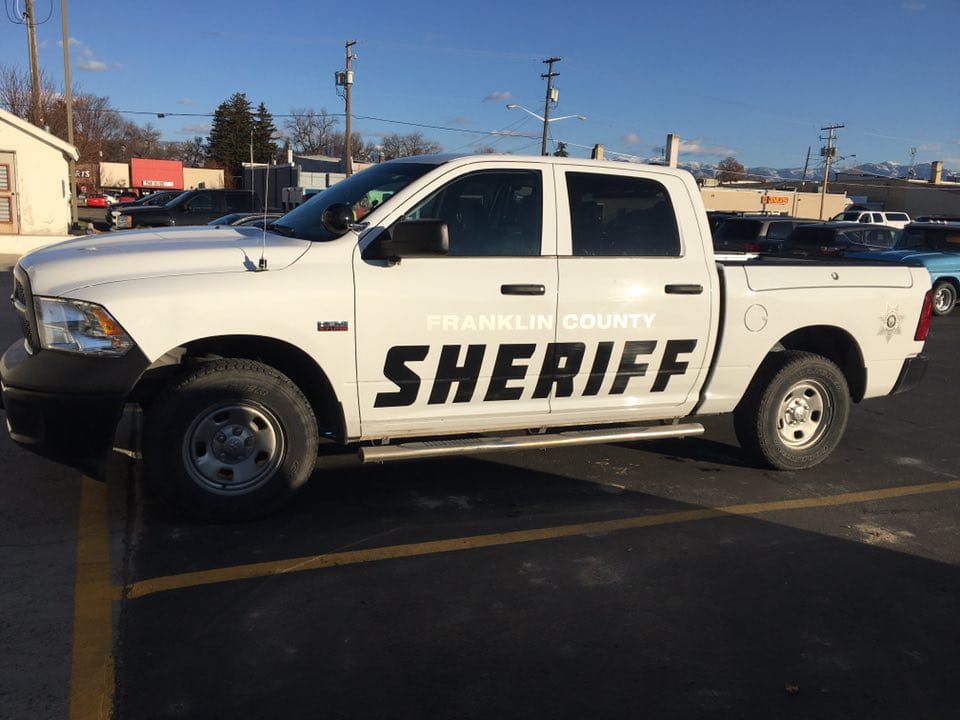
During the Idaho legislative session, which ended last month, lawmakers tried to pass a bill that would require all local law enforcement agencies to sign up for a 287(g) agreement, but the bill received pushback from sheriffs who said the program was costly and they did not want to be tied to the agreements under future presidential administrations.
Rose said Owyhee County appeared to be using the funds as intended, for vehicles and salaries. But given DHS’s lack of transparency surrounding the payments, and a general lack of local resident input about how the money should be spent, she’s worried the funds could be abused.
“This money could be going to surveillance technology, to militarized equipment, to lots of other things that we know police departments like to spend extra money on when they have it, and there's no oversight on it from the local community,” she said.

The story you just read is only possible because readers like you support our mission to uncover truths that matter. If you value this reporting, help us continue producing high-impact investigations that drive real-world change. Your donation today ensures we can keep asking tough questions and bringing critical issues to light. Join us — because fearless, independent journalism depends on you!
— Jacob H. Fries, executive director
DonateCancel anytime.

Emails show how Canyon County probation officers are helping immigration authorities — including making a list of foreign-born individuals

Some immigration attorneys and scholars worry the ruling will make it harder for undocumented people to get probation

How effective are Portland’s sanctuary city policies when ICE can track and surveil immigrant communities with ease?

While Idaho sheriffs opposed attempts to make ICE cooperation mandatory, nine of the state’s 44 counties have joined the 287(g) program

After Isaac Berger overdosed, his mother gave hospital staff the pills she found in his room. She says it became the biggest regret of her life.

Advocates and experts say that reflects the challenges rural families have getting health and social safety net services

The school board said state law limits the district from taking action against the former principal, despite community demands to fire him.
Emails show how Canyon County probation officers are helping immigration authorities — including making a list of foreign-born individuals
Subscribe to our weekly newsletters and never miss an investigation.
Our work has inspired new state laws, exposed government failures and impacted local communities in powerful ways. These stories wouldn't be told without InvestigateWest, and we couldn't do it without our generous supporters.
Cancel anytime.