Newsroom staffers tell InvestigateWest and RANGE that concerns about Curley’s leadership festered until his August suspension — weeks before the paper was set to transfer to his nonprofit
Oregon Health & Science University shelved plans to expand its overcrowded newborn intensive care unit. Nurses fear babies won’t get needed care
Nurses say more babies are being squeezed into rooms in the 30-year-old unit
The entrance to the Neonatal Intensive Care Unit (NICU) at Oregon Health & Science University in Portland, Ore. The unit provides specialized care for newborns requiring advanced medical support. (OHSU/Christine Torres Hicks)
Ten years ago, top officials at Oregon Health & Science University stood in front of the board of directors and shared troubling details on the state of the health system’s pregnancy and newborn care.
The neonatal intensive care and labor and delivery units had been hitting their capacity with increasing frequency. At times, clinicians were unable to admit patients seeking their highly specialized care, said Cynthia Grueber, the Portland-based hospital system’s chief operating officer of clinical operations at the time.
The solution, they proposed, was to construct a new wing of OHSU’s Doernbecher Children’s Hospital. The project would not only increase bed capacity, but also allow the system to introduce services for high-risk infants and pregnancies that were otherwise unavailable to Oregonians short of traveling to Seattle or San Francisco.
“I can’t imagine a better project to fulfill our mission for the well-being and health of all Oregonians,” Jay Waldron, then-president of OHSU’s Board of Directors, said at the 2016 meeting.
A decade and multiple delays later, plans to build a new home for obstetric and neonatal services have all but died: OHSU leadership put it on ice last year, saying the hospital did not have the money for the project, while it has prioritized adding adult bed space through higher revenue-driving departments, like cancer care. Yet the hospital continued with the expansion to services, courting more families across the region in need of complex care.
Now, the roughly 30-year-old neonatal intensive care unit, or NICU, is nearing a crisis point, six current and former OHSU employees of the unit told InvestigateWest.
More patients are being squeezed into the NICU than it accommodated just a decade ago. In some cases, as many as eight families are sharing one room, each with just a couple feet at the bedside and a flimsy partition separating them.
The NICU has been stretched so thin that its patients have taken over rooms set aside for postpartum recovery, which nurses say sometimes leaves laboring women to receive care in hallways or give birth in tiny triage rooms.
Nursing staff who spoke to InvestigateWest, citing patient privacy, would not say whether overcrowding has led to serious adverse events. But they said the situation is untenable and worry the cramped conditions will increase the risk of infections, mistakes or other problems that compromise patient safety.
OHSU is one of two hospitals in Oregon that can provide the most complex neonatal care, meaning patients are transferred there from across the state. Hospitals are already concerned about hourslong waits to get a critically ill newborn or mother moved to a facility like OHSU, and nurses fear endless capacity issues could erode access to life-saving care statewide.
Katie Casseday, who has worked in OHSU’s NICU for more than six years, said she and other nurses have a “looming fear” that one day they will have to turn away a child in need of care they’re uniquely able to provide as Oregon’s sole academic medical center.
“They’re trying to get more people to deliver here and more babies to come to the NICU,” said Casseday, speaking as a representative of the Oregon Nurses Association, which represents OHSU nursing staff. "Every day it's a triage of if we can take [more babies] and how."
The pressure on the NICU has been mounting for years. While the space was up to par with standards when it was built in the 1990s, demand has since grown significantly.
Medical advances have allowed babies to be safely delivered at younger ages, while providers are seeing more pregnancies with complications that may result in neonatal care. The optimal layout of a NICU has also shifted towards giving more space and privacy for each baby — current Oregon Health Authority rules for the environment of NICUs apply only to facilities built or remodeled after 2019.
It’s not clear if and when the children’s hospital expansion will go forward. OHSU declined multiple interview requests by InvestigateWest. The system also declined to release a report used to determine the NICU’s current bed capacity, citing an exemption in Oregon public records law allowing the university to withhold “sensitive business materials.”
In an emailed statement, Dr. Dana Braner, Doernbecher’s physician-in-chief,acknowledged the current NICU space “can and must be improved,” noting OHSU’s previous plans for a new NICU included more beds and private rooms. He wrote that the university hasn’t dropped its plans, but the more than $400 million cost is financially out of reach.
“The NICU project is at the top of capital investment priorities, as well as OHSU’s philanthropic priorities out of the OHSU Foundation, but the scope of the investment will require large amounts of capital at a moment when OHSU is working hard to improve its financial standing,” Braner said.
Braner added that staff are still providing safe and effective care for patients and families in the meantime, and OHSU leadership are working to identify “additional care sites” to relieve some of the demand on the NICU’s current space.
Still, nurses question why the Doernbecher expansion project hasn’t been as high of a priority as leadership says, despite millions having already been poured into planning. A few weeks before hospital leadership informed NICU staff they weren’t moving forward with the wing, OHSU told state regulators it was prepared to pour $1 billion into infrastructure updates, funded by bonds, as part of a proposed merger with a neighboring healthcare system, Legacy Health.
Sofya LaRocque, another NICU nurse and representative of the nurse’s union, said it “hurts” to see newborn care passed over while other projects are moved ahead.
“The money speaks for itself, where it goes,” said LaRocque. “It’s easy to tell what the priorities are.”
‘In survival mode’
More than 650 babies pass through OHSU’s neonatal ICU every year, either having been born in Portland or brought to the hospital by helicopter from other parts of the Pacific Northwest. Nurses say they have had as many as 53 babies at any given time — compared to the NICU’s 40-bed capacity 10 years ago.
The NICU consists of several shared rooms, or “pods,” where babies are grouped together based on their specific needs and the severity of their conditions. The unit also has two private rooms for patients who may need to be isolated.
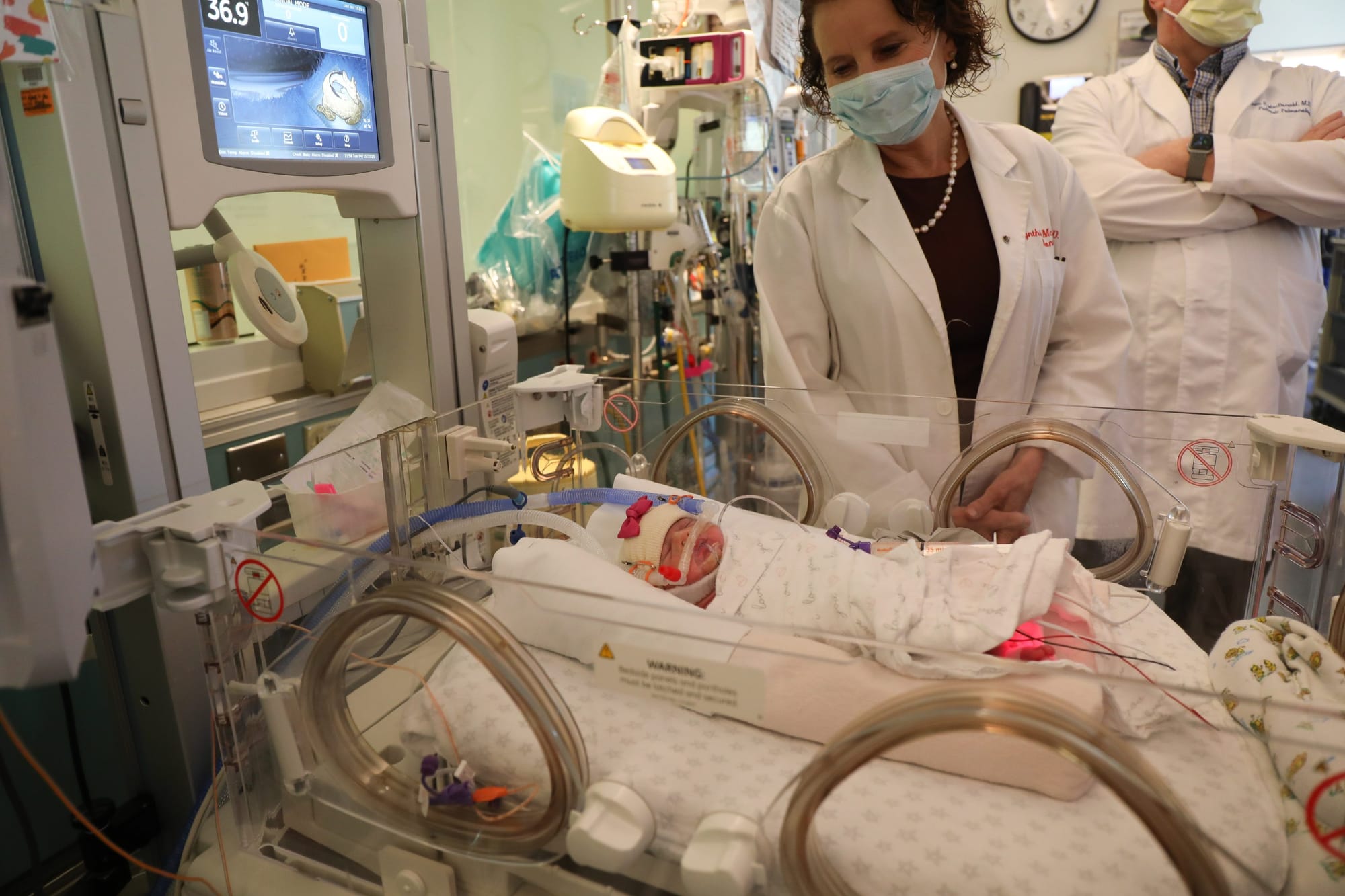
Cindy McEvoy, M.D., looks over a preterm infant using CPAP therapy in the Oregon Health and Science University’s neonatal intensive care unit, as part of a clinical trial to improve lung growth and function among preterm infants. (OHSU/Christine Torres Hicks)
As more babies have been squeezed into the space, parents said they often found themselves pressed against ventilators, monitors, feeding pumps and other large devices during visits. Noah Lidell, a Portland resident whose daughter spent about a month in the NICU in 2024, said his wife, who was in a wheelchair after labor, was unable to reach their newborn’s bedside because there was not enough space for her to maneuver.
“You’d probably have 20 square feet to yourself, not very much,” said Lidell. “There’s a lot of making sure you’re not knocking something over.”
OHSU’s website lists the current capacity of the NICU at 46 babies. To create overflow space when they exceed that, OHSU converted multiple rooms in other parts of the hospital, including a nursery for healthy babies, recovery room for patients who just gave birth and a roughly 8-by-10-foot room described by families and staff as akin to a “storage closet."
But these tight quarters remain, posing constant challenges to provide care. For instance, nurses say in most rooms there is no space to keep basic supplies like gloves or hand sanitizer at the bedside. This means they are constantly weaving in and out of pods to clean their hands before and after checking on patients. Maintaining hygiene is especially important around vulnerable NICU babies, whose immune systems are often too weak to weather an infection.
The crowded conditions also create more obstacles for medical staff in the event of an emergency, like when a surgical procedure needs to be performed at the bedside because a baby is too fragile to move to an operating room. Nurses and doctors often must first usher visiting families into the hallways to make sure medical staff has the equipment and space to respond.
Not only can this create hazardous delays in care, but nurses say it can be difficult to explain what is happening to families and remain in compliance with federal privacy laws. In OHSU’s adult and pediatric ICUs, patients are separated by walls, giving a buffer from such crises.
“You don’t want to have to share medical information about another patient,” Casseday said. “But when [parents] can physically see that patient in respiratory distress, in a medical crisis, you can only do what you can do and you have to say what you need to.”
Taylor and Cody Smithey’s son Otis was born last July at 30 weeks, following a tumultuous second trimester. Otis weighed just barely over a pound and had difficulty getting enough oxygen or sugar to grow. Doctors told the Smitheys his size put him at a high risk for developing conditions like cerebral palsy.
“You’re kind of in survival mode,” Taylor said. “Like I can’t be too happy one day or [feel] like things were going to work out, for my own protection.”
Fortunately, Otis left the NICU after three months under what his care team called the “best case” scenario, according to Cody. Even so, the couple said the cramped conditions made a distressing situation even worse.
Parents are allowed to stay with their child in the NICU at nearly all hours of the day. Not only does it help them bond, studies have shown that ongoing parent participation in care can help improve babies’ health outcomes.
The Smitheys were there every single day their son was in the NICU, often for up to 12 hours. The couple said it was hard not to absorb every little thing that was happening around them: alarms, conversations or codes. They could see mothers attempting to nurse and fathers practicing skin-to-skin contact. When another baby began to backslide, it was inescapable.
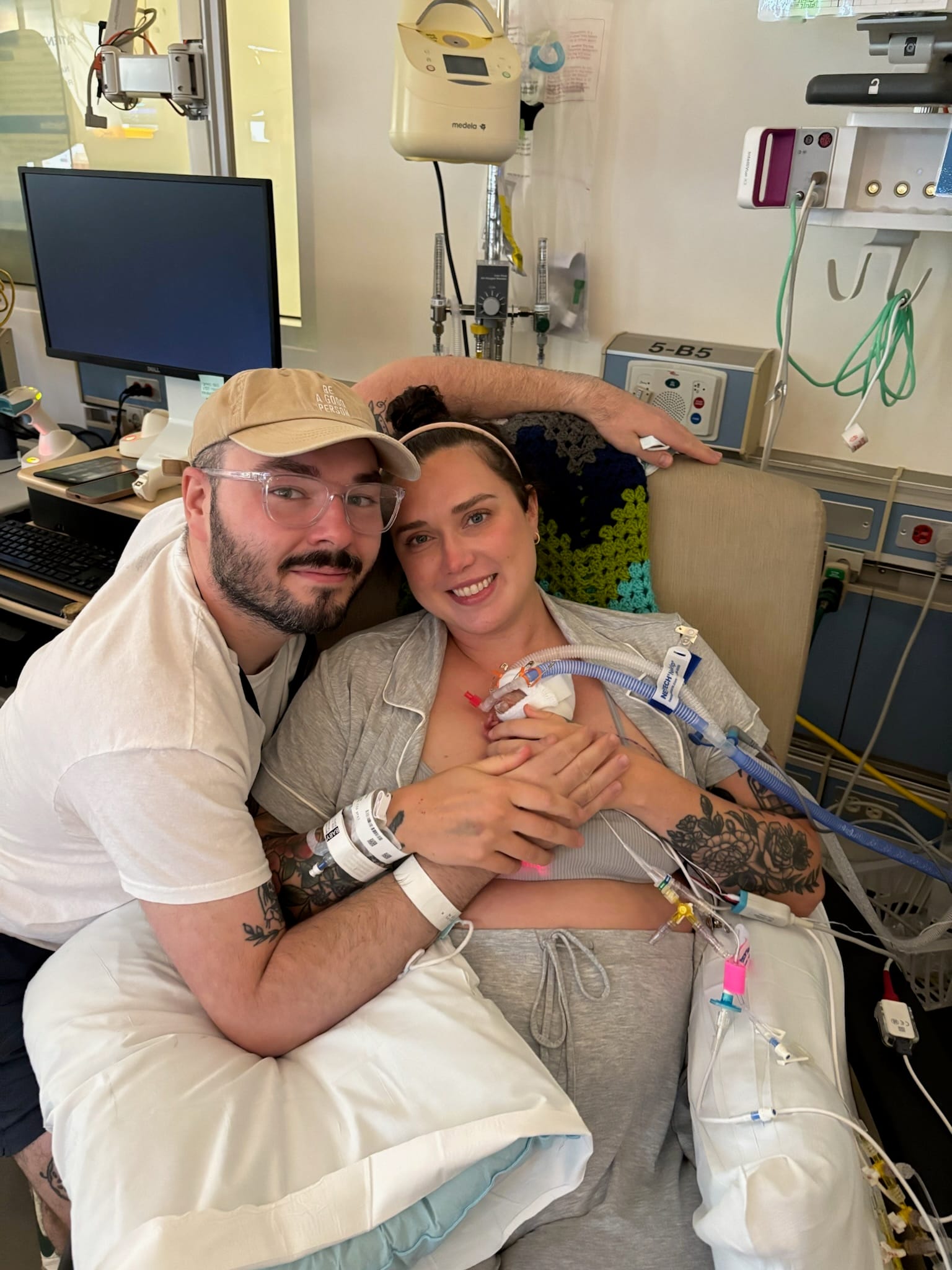
Taylor Smithey holds her son Otis in the Oregon Health & Science University neonatal intensive care unit in Portland, Ore. Taylor and her husband Cody Smithey, on left, often spent up to 12 hours a day in the NICU during the three months that Otis, who was born at 30 weeks, received care. (Provided)
On several occasions, Cody said they could only find a hard plastic chair to sit on while bonding with Otis. A recliner was hard to come by, and took up all the space left by the bed. Taylor often couldn’t find a private space to pump. The couple said they hit a tipping point when Otis was moved to a small overflow room with multiple other babies: Taylor said she sat jammed up against a sink and by a door that could not open because of how cramped it was.
"There's so many things that you can't control, but being able to be there for your baby and having that interaction is huge,” Taylor said. “To not have the space to sleep next to him or console when [we] needed to was awful.”
Delivery of care
Standards and hospital trends have changed significantly since OHSU built its Portland NICU in 1994, including shifts to emphasize more space and privacy for families. The hospital’s leadership has said while the unit was built to standard then, it has become out of step with where they would like it to be.
The NICU is what the American Academy of Pediatrics calls a Level IV facility — a large regional hospital offering highly specialized, advanced care. Hospitals across the state transfer moms and babies to OHSU for a higher level of care and access to specialists like surgeons capable of doing in-utero procedures for complex prenatal conditions unavailable elsewhere in Oregon.
Just one other hospital in Oregon, Legacy Health’s Randall Children’s Hospital, also in Portland, operates at the same level.
The care these hospitals provide has become much more advanced over the past few decades, improving outcomes for younger and critically ill babies. The recommended duration for a NICU stay has also lengthened during this time based on new research and treatments.
With these changes, new standards were introduced regarding what a NICU should look like, favoring more private settings. Guidance from the American Academy of Pediatrics issued in 2019 began recommending at least 150 square feet of space for each baby in a multi-bed environment to give enough room for parents to be present and involved in care without creating obstacles for clinicians to provide safe care.
Oregon, like most states, has few public health regulations specifically for NICUs. One of the only rules is a space requirement for new or renovated neonatal facilities, aligned with the academy’s guideline.
Most states also do not check to see if hospitals are following American Academy of Pediatrics recommendations for the level of neonatal care they claim to provide, said Dr. Eric Eichenwald, chief of neonatology at Children’s Hospital of Philadelphia.
“Depending on the state, you’re trusting that the individual hospital is going to provide the services that are necessary to provide to the patients that they’re taking care of,” he said.
Older facilities, like OHSU, struggling to keep up with these changes creates challenges for Oregon’s already strained maternal care landscape.
Hospitals across the state are seeing pregnant patients who are sicker than ever before — conditions that raise the risk of complications for newborns. A number of hospitals, especially in rural areas, have also shuttered or threatened to close labor and delivery units, citing financial and staffing problems.
But getting a patient into a large hospital from a rural facility has become harder with the demand. A report released last year by the Oregon Perinatal Collaborative, following a survey of the state’s birthing hospitals, said mothers and newborns in urgent need of acute care may be waiting anywhere from two to eight hours before a space is available.
Sometimes, this demand means hospitals providing specialized care may be closed entirely to transfers. When OHSU is unable to take one of these patients, Braner — the lead physician for OHSU’s children's hospital — said they may be directed to another facility in Oregon or, for infants with the most complex needs, to Washington or California.
Eichenwald said hospitals often have to negotiate between the decision to accept a new patient or transfer them elsewhere when they don’t have space, staffing or equipment to support them. For a Level IV NICU like OHSU that sees a lot of transfer requests and in-hospital births, it’s not ideal to be operating at full capacity, he said.
"That way you have room for new babies to come in," Eichenwald said.
Getting ahead of the curve
OHSU has changed course multiple times since Doernbecher Children’s Hospital leadership first presented the concept for a new wing in 2016.
The initial plans were abandoned after just a few years, as OHSU began pursuing a more ambitious project, the $650 million Vista Pavilion. The new tower, according to planning documents, would have dedicated four of its 14 floors to obstetrics and neonatal care.
A 2023 rendering by ZGF Architects of a proposed new wing of the Oregon Health & Science University Doernbecher Children’s Hospital, which would have included new neonatal intensive care and labor and delivery units. (Provided)
When the COVID-19 pandemic hit, hospitals statewide buckled from a lack of capacity — Oregon’s in-patient bed space is among the lowest in the country. Then-OHSU President Danny Jacobs decided to pivot again, scrapping the obstetrics and neonatal floors to make room for more adult beds and returning to the original plan for a children’s hospital addition.
The entire Vista Pavilion is now dedicated to cancer care, following a $2 billion donation from Nike co-founder Phil Knight and his wife, Penny.
For a few years, work seemed to be moving forward on the children’s hospital wing, which was estimated to cost about $425 million. OHSU poured at least $10 million into planning the new facility, asked for input from medical staff, hired architects and brought designs to the City of Portland for approval. The university also moved forward with scaling up services.
The concept they arrived at, which Braner described as “designed to exceed” current standards, would have had 60 NICU beds in mostly private rooms, on top of additional space for patients before and after labor.
By 2024, however, the project was still far from breaking ground. During a meeting of Portland’s Design Commission in May of that year, an OHSU representative said the system had yet to identify a way to fund construction.
NICU staff learned the project was put on pause indefinitely less than a year later, at the start of a morning shift in April 2025. According to two nurses present for the meeting, OHSU leadership said they would only be able to move forward with the project if a high-dollar donor backed it.
Even so, leadership has continued to acknowledge the need for more space. At a board meeting in June 2025, Lawrence Furnstahl, OHSU’s chief financial officer at the time, said the expansion was necessary to “get ahead of the curve and not just try to catch up” to growing demand. Braner told InvestigateWest that there’s “no question that more space would benefit everyone.”
Yet there appears to be no plan for when the NICU project will resume. Braner said OHSU will likely need a mix of donors, state funding and loans to build the new hospital wing.
In April of this year, Jeff Jones, OHSU’s interim CFO, told the board that the university’s financial outlook is still precarious. Most of next year’s $214 million capital investment budget will go toward finishing the Vista Pavilion, a planned renovation of the Emergency Department and “non-sexy” building maintenance across the university and hospital campus, he said.
OHSU has come under scrutiny for “dangerous” overcrowding in the Emergency Department in recent months and a backslide in patient safety scores for failing to prevent events often linked with capacity issues, like patient falls and infections, according to Oregon Public Broadcasting. President Shereef Elnahal, who assumed the post last summer, has said leadership is working to address those issues with new safety protocols and initiatives.
When Board Chair Susan King asked when the board could revisit “significant needs” like the NICU, Jones said hospital leadership will have to weigh it against other investment priorities they’ve identified, like a cafeteria renovation and a “refresh” to the old cancer care wings of the main hospital to ready them for new adult beds.
“We have a long list of what every area would like to do, in a great world of no challenges and [small operating] margins,” Jones said, adding that the university will be evaluating future capital projects as part of the next multi-year strategic plan.
LaRoque, who has worked in the NICU since 2024, said frontline staff have had the promise dangled over them like a carrot — and then taken away — for years: “You just lose hope that anything is ever going to change.”
Danielle Dawson is a collaborative investigative reporter and Report for America corps member for InvestigateWest, covering eastern and central Oregon.
The story you just read is only possible because readers like you support our mission to uncover truths that matter. If you value this reporting, help us continue producing high-impact investigations that drive real-world change. Your donation today ensures we can keep asking tough questions and bringing critical issues to light. Join us — because fearless, independent journalism depends on you!
Newsroom staffers tell InvestigateWest and RANGE that concerns about Curley’s leadership festered until his August suspension — weeks before the paper was set to transfer to his nonprofit