

She brought fentanyl to the hospital to save her son. Idaho treated him as a trafficker.
After Isaac Berger overdosed, his mother gave hospital staff the pills she found in his room. She says it became the biggest regret of her life.


After Isaac Berger overdosed, his mother gave hospital staff the pills she found in his room. She says it became the biggest regret of her life.

Advocates and experts say that reflects the challenges rural families have getting health and social safety net services

The school board said state law limits the district from taking action against the former principal, despite community demands to fire him.

Lawmakers and advocates express mixed reactions to the policy, which the state labor commissioner says is critical to reduce backlogs that leave workers without pay for months

Thomas Altenhofen estimates that his former employer owes him about $1,700 in stolen wages.
Shortly after he started working for Phil’s Meat Market & Delicatessen in Portland, Altenhofen’s paychecks began coming late, he said, or were worth only half of what he was owed. After four months, he left the company. A couple of months later, he sought help from the state Bureau of Labor and Industries, Oregon’s agency tasked with enforcing worker rights.
That was in June. So far, his claim has only been through initial processing, and he has no clear sense of how long a resolution might take. That slow pace is because of the massive backlog that the labor bureau faces, for both wage claims and civil rights complaints that deal with discrimination in employment and housing. The backlogs are a long-entrenched problem within the agency, and the issue is taking center stage as bureau officials prepare to lobby lawmakers for a significant budget increase in the upcoming legislative session.
State officials don’t all agree on how best to solve the problem. Some lawmakers have expressed support for Labor Commissioner Christina Stephenson’s request for nearly $18 million more, which will fund 72 new positions to whittle down the logjam. The proposal also has the full support of Gov. Tina Kotek, whose recommended budget released in December included all the positions that the commissioner asked for. But a new policy to investigate only the claims of lower-paid workers has drawn the ire of some lawmakers and workers.
In November, the bureau began prioritizing wage claims based on a new standard: the income level of the worker. Claims submitted by people making more than $25.34 an hour, or about $53,000 a year, are no longer being investigated by the agency. In presentations to legislators in the fall, Stephenson cast the wage threshold as a critical step to prioritize the state’s most vulnerable workers, who are unlikely to have any other recourse to recover their pay outside of her agency.
“There are thousands and thousands of claims, and we see a natural attrition rate when people are in that process for over a year,” Stephenson said. “The money matters now. It doesn't matter 24 months from now.”
Lawmakers listening to those presentations reacted with a mix of alarm and anger.
“I have no idea how you say to somebody, to a steel worker, a truck driver, that your wage claim doesn't matter,” said Rep. Shelly Boshart Davis, R-Albany. “Dismissing it wholeheartedly is, in my mind, completely unacceptable.”
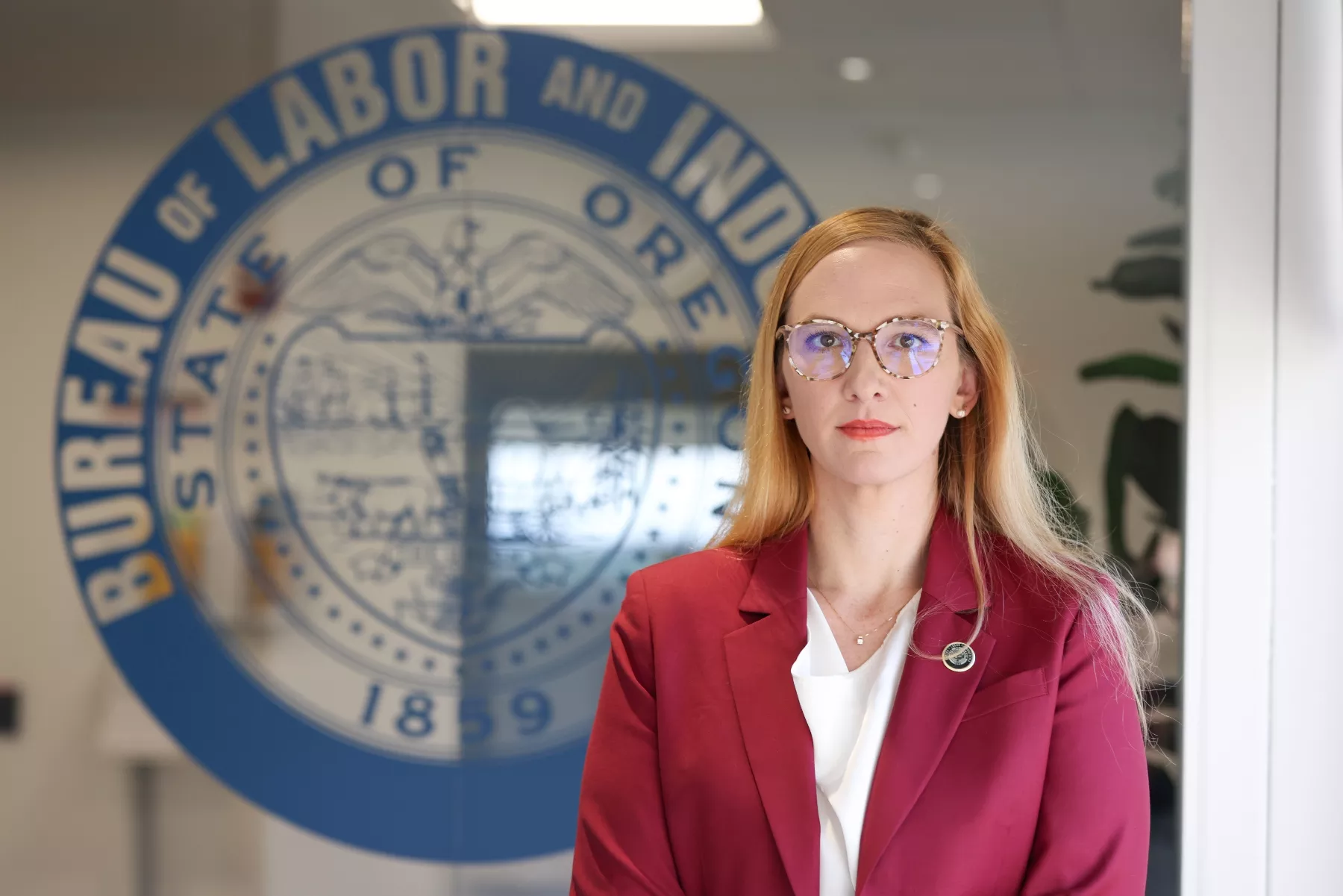
Stephenson and other labor bureau officials have rushed to clarify that the agency is not throwing out claims, but that it is continuing to track them and offer limited help to all workers even without an investigation. And the policy hasn’t led to a massive number of claims being dismissed: In the last two months, the labor bureau has received just 74 claims that it will close without an investigation because the workers earn too much money. That’s a tiny fraction of the more than 3,000 wage claims waiting to be processed and investigated as of September.
The earnings threshold has also sparked mixed reactions from workers and advocates. Some, like Altenhofen, worry that decreased enforcement from the agency sends a message to employers of middle-income workers that they can get away with stiffing employees.
Altenhofen’s base pay at his old job was about $22 an hour before tips, meaning his claim is eligible for an investigation. Even so, the fact that three more dollars an hour would have left him ineligible is “yet another kick in the gut to workers,” he said.
Sustaining himself during the months without pay burned through nearly all of his savings, he said. Even if he was making another $10 an hour, he said, he couldn’t afford to pay a lawyer to represent him in a lawsuit. An attorney for his former employer declined to comment.
But others applaud the agency’s decision to take more decisive action to reduce the backlog, which has plagued the wage claim process in Oregon for years.
“From my point of view, I think they're doing what they have to,” said Kate Suisman, attorney with the Northwest Workers’ Justice Project, a nonprofit that advises and represents low-income workers in wage theft lawsuits. She has had a front-row seat to the despair that the wage claim backlog has wrought over the last few years. When workers called asking where they should look for help, she said, “It felt pretty bad telling workers your best bet is to go to (the labor bureau) and it will take a year and a half.”
The labor bureau continues to send employers notices anytime a wage claim is filed, including for claims that are not being investigated, said Laura van Enckevort, who heads the wage division. That letter of notice is enough to resolve the claim in about half of all cases, according to the agency’s data.
Investigators in the labor bureau’s wage division will also continue to keep a record of each claim that isn’t investigated, she said, and it plans to reopen any that aren’t resolved with the notice to the employer, as the backlog allows.
But to eliminate the backlogs and fulfill other enforcement responsibilities around housing and paid leave, agency leaders say they need additional staff. As the Legislature has tasked the Bureau of Labor and Industries with ever-increasing enforcement responsibilities over the years, the number of staff it has budgeted to do that work has not kept pace. Today, the labor bureau has fewer full-time employees than it did four decades ago: It employs one staff member for every 20,000 workers in the state. Back in 1980, it employed one person for every 5,750 workers, according to an agency report from September.
Through a spokesperson, Stephenson said she is “heartened” by the governor’s backing of her budget proposal.
Lawmakers who heard Stephenson’s presentations on the agency’s woes have differing takes about the root of the problem and the solutions. Boshart Davis, who criticized the earnings threshold in September, has slammed the budget request.
“Oregon bureaucrats continually ask for more money from the Democrat-controlled Legislature without having to answer tough questions about their performance because they know they will get it,” she said through a spokesperson. “We can't afford to simply throw more money at problems without real reform.”
Others said the Legislature has played a key role, by failing to ensure adequate funding.
“This is decades, years of systemic underinvestment,” said Rep. Dacia Grayber, D-Portland, at a meeting of the House Interim Committee on Labor and Workplace Standards on Sept. 25. “We have a mandate to fix this moving forward.”
Meanwhile, workers wait.
Altenhofen’s former employer has since gone bankrupt, giving him little hope of recovering his wages outside of the labor bureau’s dedicated fund for victims of bankrupt companies.
He has no other way to recoup his lost wages unless the agency enforces his rights.
That’s why even proponents of the wage claim threshold say they are continuously reviewing the policy’s impact. Van Enckevort said the agency is checking in every 45 days to determine whether the policy is still appropriate.
“As soon as we’re able to alleviate the work on our investigators, we would definitely reconsider (whether) we need this,” van Enckevort said.

The story you just read is only possible because readers like you support our mission to uncover truths that matter. If you value this reporting, help us continue producing high-impact investigations that drive real-world change. Your donation today ensures we can keep asking tough questions and bringing critical issues to light. Join us — because fearless, independent journalism depends on you!
— Jacob H. Fries, executive director
DonateCancel anytime.

As crews continue to work through hazardous conditions, company and government officials say it’s too early to know what might have caused the implosion in Longview that killed 11 people.

Workers say exposure caused serious health issues including a hospitalization and a miscarriage

An extremism watchdog group said the sheriff’s rhetoric about immigrants is “disturbing” and could fuel violence

'This is a wonderful way to make six figures saying no,' said one attorney about Independent Medical Examiners' role in evaluating workers' comp claims.

After Isaac Berger overdosed, his mother gave hospital staff the pills she found in his room. She says it became the biggest regret of her life.

Advocates and experts say that reflects the challenges rural families have getting health and social safety net services

The school board said state law limits the district from taking action against the former principal, despite community demands to fire him.

Emails show how Canyon County probation officers are helping immigration authorities — including making a list of foreign-born individuals
Subscribe to our weekly newsletters and never miss an investigation.
Our work has inspired new state laws, exposed government failures and impacted local communities in powerful ways. These stories wouldn't be told without InvestigateWest, and we couldn't do it without our generous supporters.
Cancel anytime.