

She brought fentanyl to the hospital to save her son. Idaho treated him as a trafficker.
After Isaac Berger overdosed, his mother gave hospital staff the pills she found in his room. She says it became the biggest regret of her life.


After Isaac Berger overdosed, his mother gave hospital staff the pills she found in his room. She says it became the biggest regret of her life.

Advocates and experts say that reflects the challenges rural families have getting health and social safety net services

The school board said state law limits the district from taking action against the former principal, despite community demands to fire him.

Loopholes and failed investigations allowed a former Henry M. Jackson High School teacher to skirt accountability

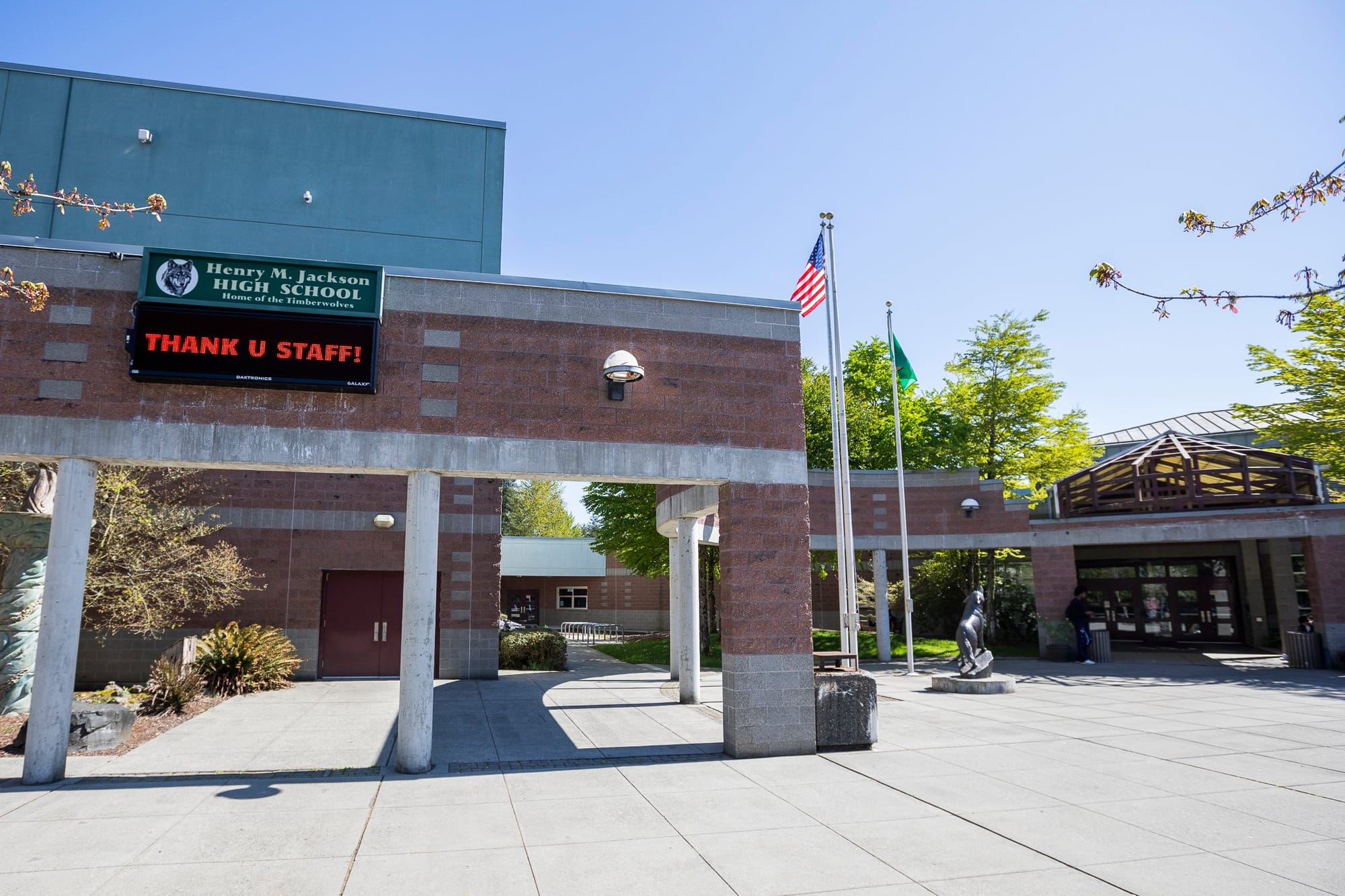
In April 2024, the Mill Creek Police Department launched an investigation into Kevin Kukla, an AP physics teacher at Everett’s Henry M. Jackson High School.
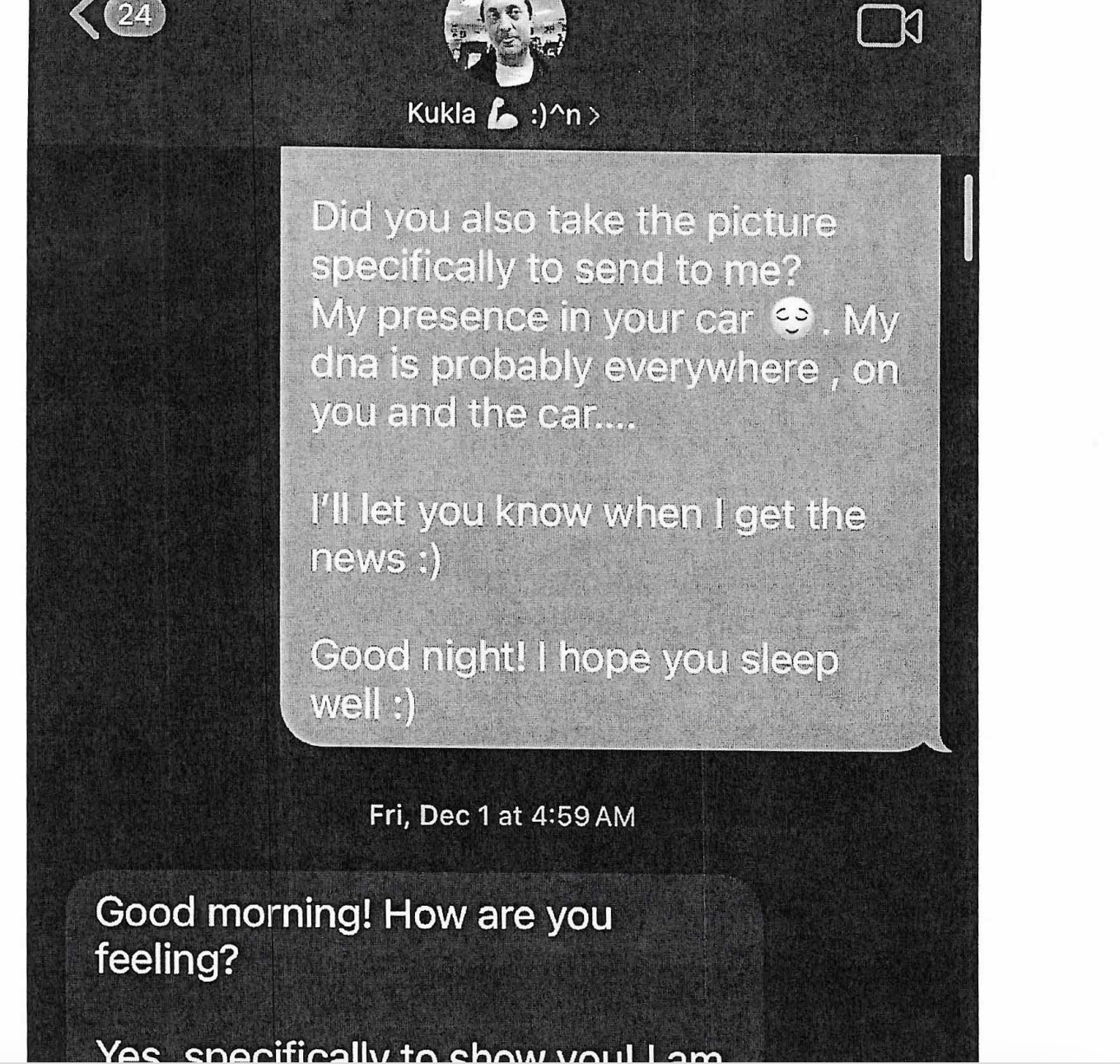
A custodian had found 47-year-old Kukla receiving a back massage from a student in his locked classroom, according to the police report. Although the teacher and student, then 18, denied they were romantically involved, text messages between the two spanning years reference kissing, loving and missing each other, and being afraid someone saw them lying in the back of the teacher’s car.
The police investigation lasted less than two weeks. The detective said there wasn’t enough evidence to prove a physical relationship between the two. Kukla resigned from his position in June 2024 amid the school district’s third-party investigation, which he refused to participate in.
Later that year, Kukla found another job as an adjunct instructor at Shoreline Community College, just north of Seattle.
A review of thousands of text messages and investigation documents by InvestigateWest and The Daily Herald shows how school leaders and law enforcement failed to recognize and properly investigate common sexual grooming behaviors Kukla displayed as he grew closer and closer to the student.
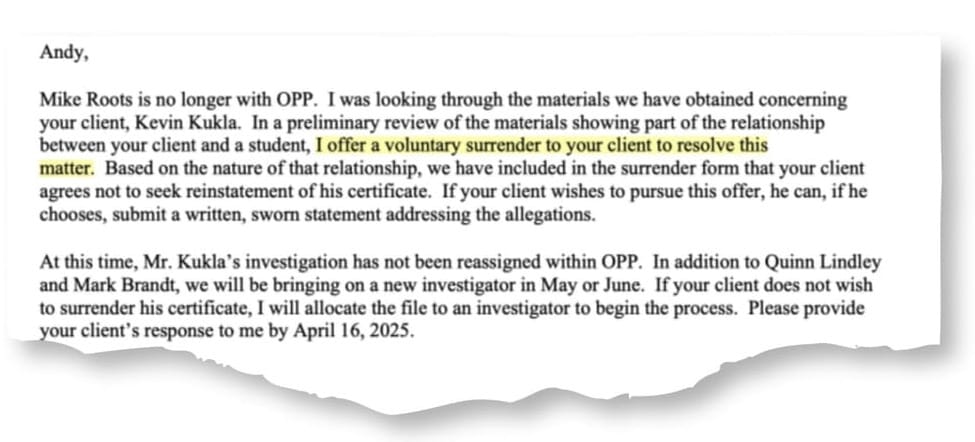
The case reveals how local and state school officials protected Kukla once his inappropriate relationship was discovered: Everett Public Schools signed a separation agreement containing a confidentiality clause, which is supposed to be banned under a 2004 state law that later became a model for other states. Emails obtained by InvestigateWest and The Daily Herald show that an investigator with the state’s education oversight agency suggested Kukla voluntarily surrender his K-12 teaching license — a move that stopped a pending state investigation and kept the allegations from being included in a public-facing database.
Advocates across the country point to cases like Kukla’s to highlight the need for stronger state and federal laws to prohibit educators who resign while under investigation from moving on to different classrooms, a process researchers refer to as “passing the trash.”
“Washington has been the pioneer of this legislation, and to see that there are people out there working the system to protect and aid and abet a person who has offended a child is beyond comprehension,” said Terri Miller, the board president of the National Center to Stop Educator Sexual Abuse, Misconduct & Exploitation. “This is a clear failure to protect students, and it needs to be fixed.”
Kukla did not respond to multiple emails from InvestigateWest and The Daily Herald. The student is not identified in this story to protect her privacy.
In a written statement, Harmony Weinberg, a spokesperson for Everett Public Schools, said the district “responds right away to any reports of teacher misconduct.” When asked about the confidentiality clause in Kukla’s separation agreement, Weinberg said the district “has no intent to keep this information confidential from any future employer, as evidenced by the district’s reports to the Mill Creek Police Department and OSPI’s Office of Professional Practices, as well as releasing the reports when requested through the Public Records Act.”
“The safety of our students is our top priority,” she wrote.
A day after the custodian reported the massage incident, the high school principal stopped Kukla in the hall and said he needed to speak to him, according to the principal's statement to the police. Kukla was “immediately filled with anxiety” and started asking questions, including whether the issue was related to the custodian.
“I know you’re stressed, go home,” the principal told Kukla.
“I’m going to lose my f—ing job,” Kukla replied.
A few hours later, Kukla messaged the student.
Kukla: People may be talking to you soon about me. I am sorry. A complaint was made today from last night. I can’t talk anymore
Student: Ok
Kukla: My life is over.
Student: What are you talking about? Did I do something wrong
Kukla: I can’t talk anymore under advisement. The janitor from last night. I can’t talk anymore. I was told not to.
Student: OK. What do I do. What am I supposed to say
Kukla: Just fixing tag
Kukla: No more texting
The next morning, Kukla, accompanied by his union representative from the Washington Education Association, met with the principal and the head of Human Resources. The school district put him on paid administrative leave and told him to leave campus. Kukla still received pay through December 2024 and was eligible to receive benefits through August 2025, according to his separation agreement.
By the time the high school custodian found Kukla receiving a back massage from the student, school leaders had already missed common red flags that would indicate an inappropriate relationship, according to InvestigateWest and The Daily Herald’s review of Kukla’s case.
The two met during the 2021-2022 school year, when Kukla was 45 and she was 16. The student was a sophomore.
The following school year, someone reported to the principal that the student was frequently bringing Kukla lunch at school. The principal warned Kukla of “creating an appearance of unprofessional conduct,” but the incident wasn’t documented or investigated further, the principal told the third-party investigator in a June 2024 interview.
“I just accepted Dr. Kukla’s explanation that (the student’s) mom owned a restaurant and was giving him leftovers,” the principal told the investigator. “I did not know it was ongoing conduct. I thought it was a one-off or a couple of times.”
During the student’s first semester of her senior year, the same custodian had reported to the principal that Kukla was covering his classroom windows so you couldn’t see inside, a violation of school policy. It was the same semester that the student became Kukla’s teaching assistant. That March, when the janitor walked in on the back rub, the windows were covered.
“The covering up of the windows should have been a huge red flag,” said Miller, who advocates for federal and state legislation to prevent and address sexual misconduct in schools. “That should have been addressed immediately, and as a violation of (school) policy, that teacher should have been written up.”
After Kukla was found receiving a back massage from the student, the school district hired Richard Kaiser, a Bellevue-based attorney often used by Washington school districts to act as a third-party investigator for personnel matters, including alleged sexual misconduct.
Kaiser conducted an initial review of the thousands of text messages and emails he’d obtained from the student. The messages revealed more red flags that experts would consider potential signs of grooming, leading the school district to call the police.
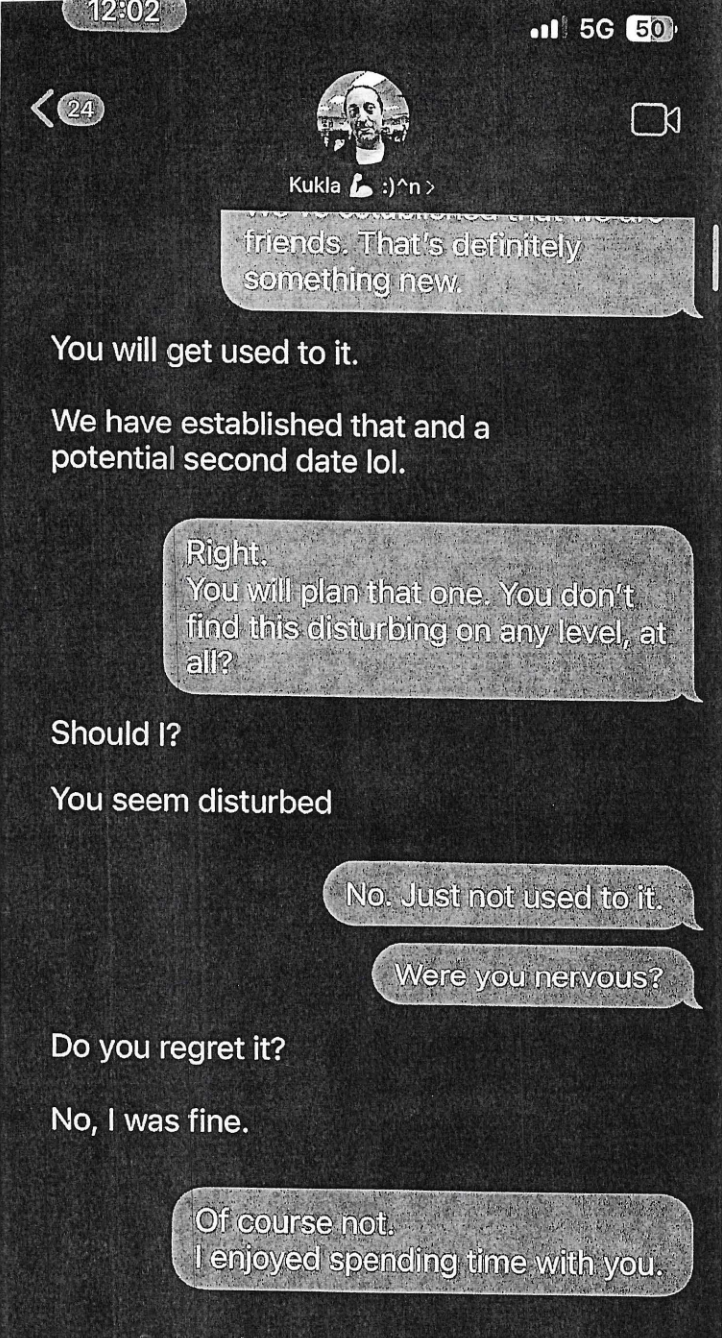
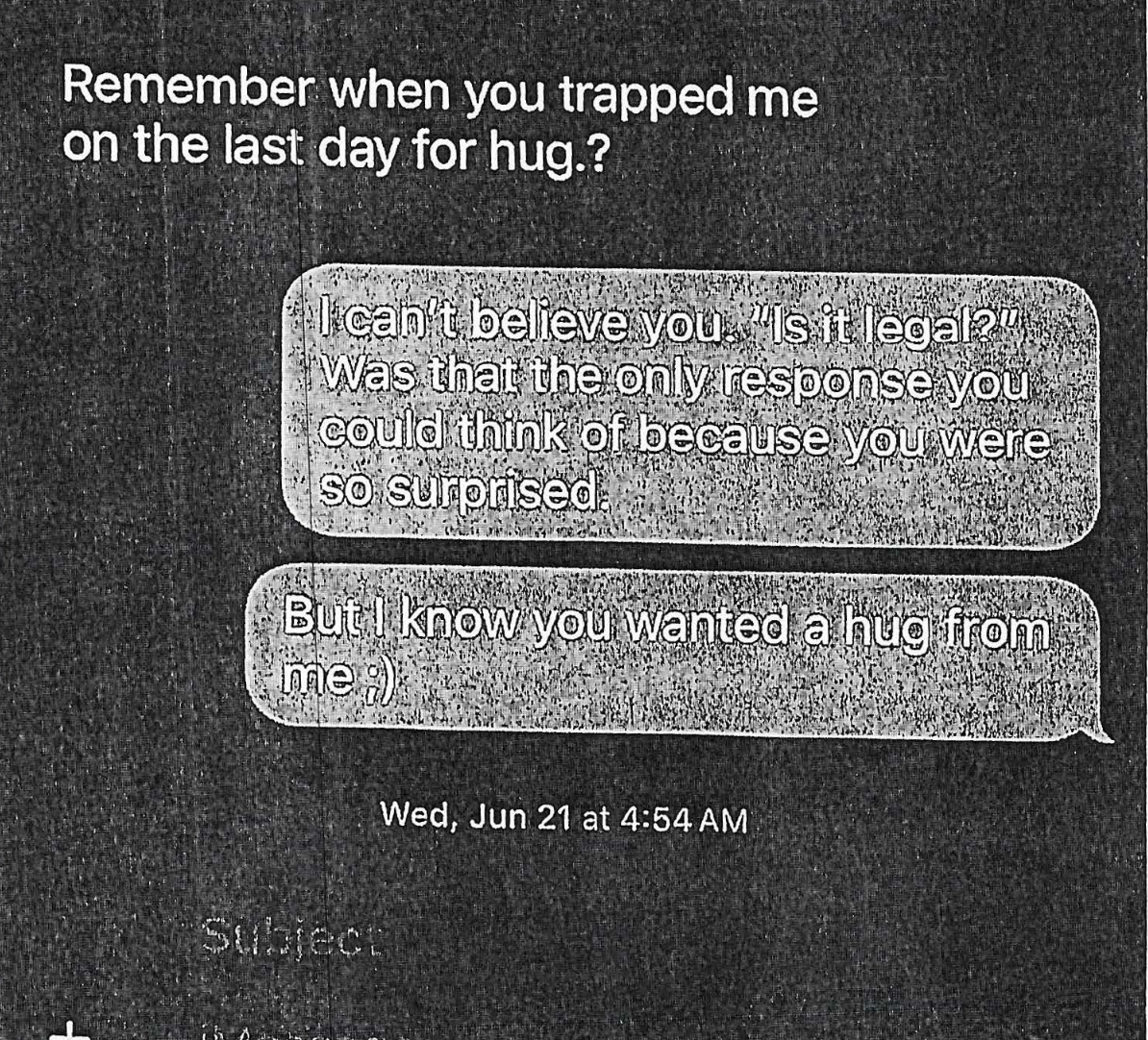
There were text messages of her asking to be let in through the back door of the school and Kukla responding that they had to wait for the principal to leave. In one exchange, the student said: “I’ll be the one pinning you against the wall next time.” In another text exchange, the teacher canceled their plans but told the student he’d “still kiss her :).”
The texts showed instances of them becoming concerned that others were suspicious of their relationship and that they needed to use more caution. They spoke at length about hugging and had a countdown until the student’s graduation date. Kukla frequently drove the student home from school and spent time with her outside of class.
“We know that grooming is present in 100% of educator sexual abuse cases,” said Elizabeth Jeglic, a clinical psychologist and professor at John Jay College of Criminal Justice in New York City who specializes in sexual violence prevention, sexual grooming, child sexual abuse, and sexual assault.
Jeglic said that common red flags for grooming include engaging in subtle touching at the beginning, such as hugs, to desensitize the child to escalating physical contact. The adult will often treat the child as a peer, sharing personal information or struggles with the student as if they were a friend, and will find ways to spend one-on-one time with the child during and outside of school hours, including giving the student rides home or attending extracurricular events, she said.
“They choose kids that are compliant and have low self-esteem, then they give them special attention,” Jeglic said. “They make them feel important.”
The adult often manipulates the child into keeping their relationship secret, either rewarding them with gifts and praise or punishing them with silence or threats, according to Jeglic. Communication may start on a school-sanctioned platform but then move to personal communication channels such as texting or social media.
From the outside, the actions can often look like trust-building or mentorship, Jeglic said, but the goal of the behaviors is to desensitize the child to boundary violations. An adult might also groom the adults closest to the child, such as their parents, in order to gain trust and more access.
“We think of perpetrators as creepy people, not as people that we know, that we hang out with, that are our colleagues,” Jeglic said. “So we miss a lot of those red flags.”
A 2023 study Jeglic co-led found that out of 6,632 K-12 students who were surveyed, 11.7% reported having experienced some sort of sexual boundary violation with an educator, with about 1% reporting sexual contact or abuse.
“It’s not uncommon,” Jeglic said, regarding the prevalence of sexual contact. “That translates to roughly half a million kids in the U.S., which is really very scary.”
When Rod Fleming, the Mill Creek Police Department detective assigned to Kukla’s case, spoke to Kaiser on the phone, the third-party investigator told the detective that, based on his experience and the messages he’d seen, he believed the student and teacher were in a physical relationship.
When the detective called the teacher, Kukla acted confused as to why the case had been referred to law enforcement, according to the police report. Fleming spoke to the student earlier that day, who denied the teacher had subjected her to any sexual contact but admitted that “boundaries had been crossed.” She described Kukla as a “teacher, friend and mentor” and said that the two were “very close.”
Kukla told the detective “he never did anything sexually with the student,” according to the police report. He said he cared for her and her family and had known them for years.
Kukla agreed to meet with the detective three days later for a formal interview, but he didn’t show. A day after their scheduled interview, Fleming received a call from Kukla’s lawyer, saying he likely wouldn’t be participating in an interview. Fleming never heard from him again.
“When someone has an attorney and calls me and says that he’s not going to talk to me, there’s nothing else I can do,” Fleming told InvestigateWest.
Fleming told the school there wasn’t enough evidence proving a physical relationship between the teacher and the teenager. He said it was clear from their text messages that the teacher had overstepped his professional boundaries and the relationship was inappropriate, but he didn’t have the evidence needed to press charges. Kukla had been under investigation for sexual misconduct with a minor, and for communication with a minor for immoral purposes, both of which can be charged as a misdemeanor or felony.
The next day, Fleming closed the case. It was forwarded to a municipal prosecutor, who agreed that, based on Fleming’s investigation, probable cause couldn’t be established, and they wouldn’t pursue the case further.
“Talking about hugging or talking about a massage, those acts, in and of themselves, are not illegal,” Fleming said in an interview.
When asked about the references to kissing or pushing each other up against a wall, he said he didn’t want to “get into each and every text and email” and added that his job was to gather everything and send it to the prosecutor.
The third-party investigator, Kaiser, wrote in his final report that he’d notified Fleming of the specific text messages regarding Kukla’s physical conduct toward the student, including the texts about kissing and lying in the back of his car, but that Fleming didn’t reopen the case.
Fleming said he never received the third-party investigation when it was completed, and he denied receiving additional text messages from Kaiser, stating that the last time they corresponded was April 15, 2024.
“Had everyone been interviewed and every text message reviewed forensically, then certainly the police and prosecutors could have made a stronger case,” Miller said. “We know that the victims are often coerced into silence.”
“A trained child sexual abuse investigator knows that, and they could have done a lot better job (at) getting to the bottom of what really happened,” she added.
Jeglic said that in general, law enforcement has gotten better at recognizing the signs of sexual grooming. But investigations still often fall short. She said some states have tried to pass legislation in recent years to criminalize grooming behaviors, but the practice is still new, and successful prosecutions are few.
Jeglic said that minors in cases such as these often deny that anything inappropriate is going on. It may be years or decades before they recognize what they experienced was abuse.
“Delayed disclosure is very common for grooming because it’s a psychological manipulation,” she said. “(The adult) does specific tactics and strategies to make the person convinced that they’re in a consensual relationship, so they’re not recognizing this as abuse.
“They’ll tell them not to tell anybody or they’ll get in trouble, or if they tell they’ll be fired, or they’ll commit suicide, or their wife will leave them, or they’ll get in trouble,” she added. “So that prevents the disclosure.”
Jeglic said it’s difficult for law enforcement and prosecutors to prove these cases because there’s typically a lack of physical evidence, especially if the conduct isn’t reported until later. It’s why online communications, such as text messages and social media communication, can be especially useful in documenting an inappropriate relationship, particularly if they explicitly discuss sexual contact, she said.
Kaiser, the third-party investigator, interviewed Kukla in late June 2024, about a week after the student had graduated. By then, the Mill Creek police investigation had been closed for a month.
Kukla told the investigator he was “not a pedophile” and repeatedly denied having a physical relationship with the student. He said he had a “close friendship” with the teenager and referred to himself as a “father figure” and “family friend.”
When questioned about a text message that Kukla sent about kissing, the teacher said he meant it “metaphorically, not in reality.” In another message, the student discussed kissing Kukla behind the ears, but Kukla told the investigator it didn’t happen. In another string of messages, the two discussed their shared concern that someone had seen the student lying on top of Kukla in the back seat of his car. Kukla denied the situation.
Kukla admitted to violating nearly all of the district’s policies regarding maintaining professional staff/student boundaries and acknowledged that his communications with the student could be interpreted as flirtatious or sexual. When asked how his behavior reflected on the school district, Kukla responded “very badly.”
The interview was cut short because Kukla kept excusing himself to vomit, according to Kaiser’s final report. The teacher had grown increasingly anxious, and at one point, told the investigator he had defecated in his pants.
The investigator ultimately halted the interview so that Kukla could go home and take his medication. Kukla agreed to resume the interview in the coming weeks.
But four days later, Kukla resigned and refused to participate further.
Like other states, Washington’s education oversight agency, the Office of the Superintendent of Public Instruction, is tasked with investigating potential code of conduct violations by educators. The investigations can result in temporary or permanent revocations of a person’s teaching license, a disciplinary action that is then added to a public-facing teacher misconduct database.
But records show how Washington’s oversight agency aided Kukla in keeping his misconduct quiet.
Three months after Kukla resigned, in September 2024, the superintendent of Everett Public Schools, Ian Saltzman, contacted the state to report his misconduct –– a requirement under state law.
He wrote that the district determined there was “probable cause” to fire Kukla based on “substantial boundary invasion, inappropriate digital communication and sexual harassment of a female student that is so severe, persistent, or pervasive that it limited a student’s ability to participate in or benefit from our educational programs.”
But a state investigation wasn’t completed.
Andy Paroff, a staff attorney with the Washington Education Association, emailed the agency in April 2025 on Kukla’s behalf, asking for an update on the investigation. Kukla had already been teaching at Shoreline Community College for four months, according to his LinkedIn.
Shaun Harman, the assistant director within OSPI’s Office of Professional Practice and Ethics, said that after an initial review of Kukla’s case, he “offered” that Kukla could voluntarily surrender his teaching license to “resolve the matter” as long as he agreed not to seek reinstatement of his certificate. If he wanted, Kukla could include a sworn written statement addressing the allegations, he added.
“Essentially, a surrender ends an investigation,” Harman wrote in a follow-up email to the lawyer. He added that, unlike a formal disciplinary action, a voluntary surrender would result in “no findings,” and the reason for the surrender would not be listed in the agency’s teacher misconduct database.
The lawyer asked why a teacher would decide to provide a written statement. Harman replied that it allows an educator to respond to allegations against them, but no current laws or rules require a teacher to do so.
Three weeks later, Kukla voluntarily surrendered his teaching license, halting the state’s investigation. He did not provide a written statement.
In an email, WEA spokesperson Julie Popper said the union doesn’t comment on individual cases, citing attorney-client privilege, and that their attorneys are legally obligated to represent all employees fairly, impartially and in good faith, regardless of the allegations against them.
In January, Katy Payne, then a spokesperson for OSPI, told InvestigateWest that the agency would continue an investigation if it received a complaint from a school superintendent, regardless of whether the teacher voluntarily surrendered their license. But she reversed her previous statement in April when InvestigateWest identified Kukla’s case. Payne said a “breakdown in communication” is responsible for the reversal.
“Allowing for a voluntary surrender by an accused educator who is under investigation is an important tool that removes an accused educator from the classroom,” Payne, who was recently promoted to the agency’s director of strategy, wrote in an email on April 28. “It prioritizes student safety and conserves necessary resources by not completing a full investigation.”
Since the state’s investigation was still pending, no criminal charges were filed, and Kukla had resigned from his job before he could be terminated, one of the only ways Shoreline Community College would have known about his past misconduct when hiring him is if he had self-disclosed it on his job application, as required by a 2020 state law.
The law requires anyone applying to work at a college or university to disclose if they were the subject of “any substantiated findings” of sexual misconduct in a previous position, if they are currently under investigation, or if they resigned while under investigation.
It’s unclear if Kukla self-disclosed when applying to Shoreline Community College, and an Everett Public Schools spokesperson wrote in an email to The Daily Herald that the college never contacted the district during the hiring process. While the 2020 law requires higher education institutions to contact prior higher education employers when vetting an applicant, it doesn’t include K-12 employers.
It’s a loophole that state Rep. Gerry Pollet, D-Seattle, hopes to address with future legislation. Pollet, an attorney and adjunct professor at the University of Washington, spearheaded the 2020 legislation.
“I’m just dumbfounded that someone could get around that,” he said.
Kukla’s separation agreement from Everett Public Schools, obtained through a public records request, stated he would not discuss his case with his coworkers or otherwise “affirmatively publicize the matter,” stating that doing so would “constitute a breach of these terms and conditions.”
The agreement also said the school district would only provide dates of employment and positions held to future hiring managers and would otherwise be truthful in responding to any questions.
Miller, the national advocate, said those clauses seem to violate a 2004 state law that banned the use of confidentiality and nondisclosure agreements related to sexual misconduct allegations. It was the first “Don’t Pass the Trash” law in the country and later became a model policy in other states.
“This type of clause is creating a loophole that aids and abets him, the perpetrator,” Miller said.
Shoreline Community College declined an interview request and rejected a public records request to review Kukla’s job application, citing a public records exemption. Cat Chiappa, a spokesperson for the college, said in an email that the school complies with the 2020 law in the vetting of applications before making a job offer.
After InvestigateWest and The Daily Herald reached out to the college for comment, Kukla’s name was removed from the school’s faculty page. Chiappa said he remains employed by the college.

The story you just read is only possible because readers like you support our mission to uncover truths that matter. If you value this reporting, help us continue producing high-impact investigations that drive real-world change. Your donation today ensures we can keep asking tough questions and bringing critical issues to light. Join us — because fearless, independent journalism depends on you!
— Jacob H. Fries, executive director
DonateCancel anytime.

The school board said state law limits the district from taking action against the former principal, despite community demands to fire him.

The changes, which would expand the state’s investigatory abilities, still need approval from the governor-appointed Professional Educator Standards Board

Records show administrators left a teacher in an elementary school classroom despite repeated concerns about his inappropriate behavior with students

Curtis Johnston was allowed to voluntarily surrender his teaching license after the superintendent told a state investigator that no investigations existed, records show

After Isaac Berger overdosed, his mother gave hospital staff the pills she found in his room. She says it became the biggest regret of her life.

Advocates and experts say that reflects the challenges rural families have getting health and social safety net services
The school board said state law limits the district from taking action against the former principal, despite community demands to fire him.

Emails show how Canyon County probation officers are helping immigration authorities — including making a list of foreign-born individuals
Subscribe to our weekly newsletters and never miss an investigation.
Our work has inspired new state laws, exposed government failures and impacted local communities in powerful ways. These stories wouldn't be told without InvestigateWest, and we couldn't do it without our generous supporters.
Cancel anytime.