


Judge dismisses lawsuit accusing Idaho agency of retaliating against nonprofit for talking to reporters
An Idaho nonprofit sued the state claiming its funding was pulled for talking to InvestigateWest; a federal judge tossed the case

A federal judge dismissed an Idaho nonprofit’s lawsuit claiming that a state agency violated the First Amendment by revoking funding in retaliation for speaking to reporters.
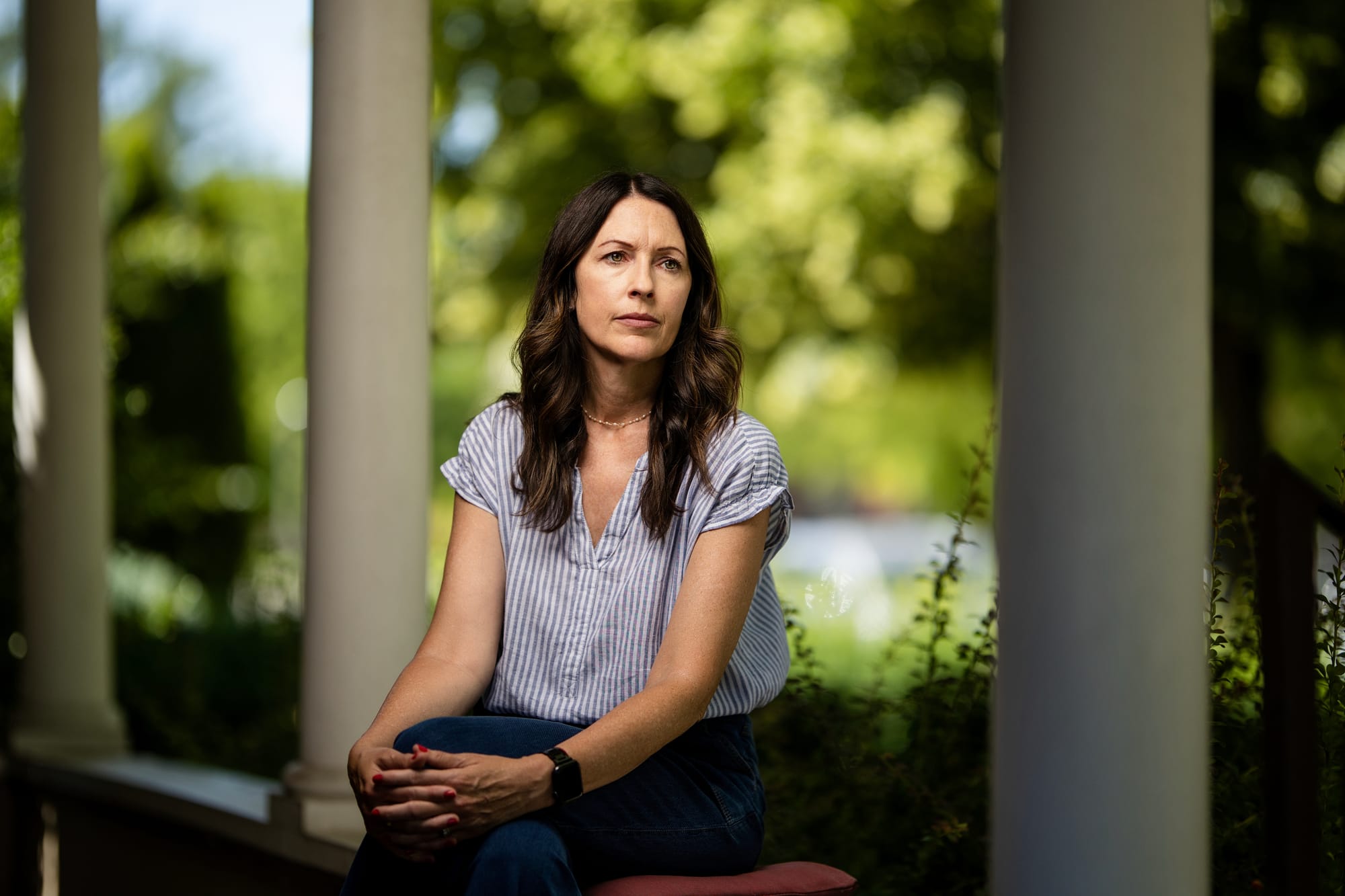
The Idaho Anti-Trafficking Coalition’s October 2024 lawsuit centers on then-Executive Director Jennifer Zielinski’s communication with InvestigateWest journalists regarding another nonprofit called Community Outreach Behavioral Services, or COBS. Both nonprofits served human trafficking survivors in the Boise area and received federal grant funding distributed by the Idaho Council on Domestic Violence and Victim Assistance, a governor-appointed state agency.
Zielinski was one of more than three dozen people interviewed by InvestigateWest for its July 2024 series “Savior Complex,” which detailed how COBS founder Paula Barthelmess funneled clients into counseling sessions at a potentially fraudulent for-profit mental health agency run by her son. Trafficking survivors described feeling like they had been “trafficked all over again” at COBS safe houses.
The series also scrutinized the Idaho Council on Domestic Violence and Victim Assistance for failing to properly investigate survivors’ complaints about COBS and continuing to direct federal funding to the organization, despite violations of government funding standards. Barthelmess told InvestigateWest at the time that COBS does not force residents into treatment at any one company and declined to answer questions about potential Medicaid and grant fraud.
But following the series’ publication, the state council didn’t stop sending federal dollars to COBS. Instead — suspecting that Zielinski was the driving force behind InvestigateWest’s articles — it pulled the $231,305 that Zielinski’s organization had been granted for fiscal year 2025. Zielinski argued that this was retaliation for speech protected by the First Amendment, according to the complaint filed in the lawsuit.
In his July 20 order, Chief U.S. Magistrate Judge Raymond Patricco found Zielinski's communications with InvestigateWest were not “legitimate whistleblowing.” Zielinski had already reported her allegations to government agencies before speaking with InvestigateWest, and relied in part on anonymous reports, according to the order. He characterized the conflict as a “personal feud” between Zielinski and Barthelmess that was “largely driven” by Zielinski.
The judge also found that Zielinski’s conduct — and the resulting news articles — disrupted victim services in Idaho. A 1968 U.S. Supreme Court case says that while government employees, including contractors, still have First Amendment rights, the government does have some interest in regulating their speech, such as to prevent disruption to government services.
“The articles publicized the feud between IATC and COBS, creating distrust in victims of COBS’s safe housing; hesitation among law enforcement, who refused to work with either organization; and disarray among other victim service organizations, who were caught in the middle of the feud,” he wrote.
The state council’s decision to withdraw the grant funding was “more likely motivated by the resulting disruption” caused by Zielinski’s free speech rather than her conversations with reporters, according to the ruling.
Patricco therefore granted the state council members and staff “qualified immunity,” a broad legal doctrine that shields individual government officials from being held financially liable for constitutional rights violations for “harm caused by reasonable mistakes,” according to the judge’s order. This doctrine drew public scrutiny in 2020 after a Reuters investigation revealed how federal appeals courts were increasingly granting qualified immunity to police officers accused of excessive force.
InvestigateWest’s articles, backed by an in-depth analysis of Medicaid reimbursements reviewed by multiple experts, triggered a probe into COBS by the U.S. Department of Health and Human Services Office of Inspector General, assisted by the Idaho Attorney General’s Office. When InvestigateWest inquired about the investigation’s status, the Idaho Attorney General’s Office said to ask the inspector general’s office, which took the lead on the investigation. The inspector general’s office said they have “no information to provide.”
The state Attorney General’s Office is representing the Idaho Council on Domestic Violence and Victim Assistance members in the lawsuit. The council and its lawyers did not respond to requests for comment.
The court decision raises a larger question about how much protection government-funded nonprofits have when they speak publicly about suspected wrongdoing, said Ari Yampolsky, a founding partner of Whistleblower Partners, a law firm representing whistleblowers of fraud and misconduct across the country.
“From a whistleblower-policy perspective, there is reason for concern if organizations receiving public funds come to believe that reporting suspected fraud or misconduct to journalists could jeopardize their funding,” Yampolsky said.
Yet despite this concern, the case’s outcome isn’t necessarily surprising, according to John Rumel, a law professor at University of Idaho. Over the last few decades, laws in Idaho and nationwide that protect public employees’ free speech have become more favorable to government employers, he said.
“On the one hand, the law tends to often kind of lead to this result, the way the law has evolved to be less and less protective of public employees,” Rumel said. “But it should nonetheless concern folks that perhaps there indeed was wrongdoing, and (the Idaho Anti-Trafficking Coalition) is never really going to get a full hearing on that in a court.”
The judge also granted the state agency immunity from the claims in February 2025. This effectively leaves no other path for the nonprofit to address its free speech concerns in court, apart from appealing the case to a higher court, Rumel said.
More than half of the Idaho Anti-Trafficking Coalition’s funding came from federal grants administered by the state council, according to the lawsuit. Without that money, the nonprofit has greatly cut back on its victim services, which used to include things like transportation, housing assistance and a 24/7 crisis hotline. COBS, meanwhile, was awarded another $142,164 of funding by the state council for 2026.
Idaho civil rights attorney Jeremiah Hudson, who is representing Zielinski and the Idaho Anti-Trafficking Coalition in the lawsuit, said he plans to appeal the dismissal to the U.S. 9th Circuit Court of Appeals. He otherwise declined to comment for this article, fearing government retaliation against him or his clients for speaking to the press.

The story you just read is only possible because readers like you support our mission to uncover truths that matter. If you value this reporting, help us continue producing high-impact investigations that drive real-world change. Your donation today ensures we can keep asking tough questions and bringing critical issues to light. Join us — because fearless, independent journalism depends on you!
— Jacob H. Fries, executive director
DonateCancel anytime.
Human Trafficking

Seattle-area man who allegedly trawled dating sites for victims charged with sex trafficking
A teen told InvestigateWest last year about how she has tried to rebuild her life after the exploitation

Lawsuit accuses Idaho agency of defunding anti-trafficking nonprofit in retaliation for whistleblowing
Victims assistance agency pulled funding for nonprofit believing it was behind InvestigateWest articles

Idaho agency for victims defunds suspected whistleblower, maintains support for nonprofit embroiled in alleged Medicaid fraud
Records indicate the decision to defund nonprofit was punishment for alleged involvement in InvestigateWest articles

King County woman’s chance to testify lost as prosecutors opt for plea deal, raising concerns about justice in sexual assault cases
Data shows many King County sexual assault cases end in plea deals that victims and advocates say don’t reflect the crime
Latest
What happens when local news disappears? Polluters pollute more. Governments become less accountable. Entire communities are left in the dark.
Since 2009, InvestigateWest has been building something the Pacific Northwest desperately needed: a nonprofit investigative newsroom — and the civic infrastructure to spread accountability journalism across the region.

Washington has few paths to early prison release. Advocates fear Gov. Ferguson has closed off a critical one
Gov. Bob Ferguson has rejected everyone the state board recommended for commutation

Washington is fighting to limit its duty to protect vulnerable adults
At the same time, Adult Protective Services workers say they’re under growing pressure to close investigations quickly.

She brought fentanyl to the hospital to save her son. Idaho treated him as a trafficker.
After Isaac Berger overdosed, his mother gave hospital staff the pills she found in his room. She says it became the biggest regret of her life.