

Free training: How to access police employment & misconduct data in the PNW
If you cover criminal justice in the Pacific Northwest — or want to — we’re hosting a free virtual training that may be useful to you and your newsroom
If you cover criminal justice in the Pacific Northwest — or want to — we’re hosting a free virtual training that may be useful to you and your newsroom

A searchable teacher misconduct database compiled by InvestigateWest fills gaps in the state’s public-facing records

State agencies will no longer release information about whether an officer retired, resigned or was fired


As lawmakers debate how to rein in these cameras, sheriffs, civil rights groups and transparency advocates are clashing over how much access is too much

To Spokane County Sheriff John Nowels, the installation of automatic license plate reader cameras has been revolutionary.
Flock Safety, a leading supplier of these cameras, brags that they’re used by over 5,000 law enforcement agencies across the country, and that Flock technology can go beyond simply recording a license plate. Many of their devices can also identify a car’s make, model, color, dents, roof racks, window stickers and even a dog in a truck bed. It’s a nightmare for privacy advocates, but a dream come true for a sheriff with a tight budget. Nowels said it’s saved hundreds of investigative hours, helped drive down auto thefts and made it easier to prosecute criminals.
“To replicate this with humans, I would have to have 70 people standing on the street 24/7 and they'd have to have perfect recall for everything they took a picture of for 30 days,” Nowels said. “It’s impossible.”
Yet, he’s reluctant to say too much about Flock’s particular vulnerabilities in Washington, knowing the tool could be particularly dangerous in the wrong hands.
"I have concerns about this getting into print, because I don't want people to get any ideas,” Nowels said.
These images are hypothetically in everybody’s hands after a Skagit County judge ruled in November that nearly every image these cameras capture in Washington is a public record, available to whomever requests them.
"Let's say an ex-boyfriend who's violent decides that he can't find his ex, but he wants to, and he thinks she lives here in Spokane, and he happens to know what car she drives,” Nowels said.
In theory, Nowels said, he could submit a records request to Spokane County, asking for every time his ex’s license plate had been recorded by a Flock camera in the past month.
With Flock already under fire for its use in the Trump administration’s immigration crackdown, multiple Washington cities have shut down their Flock camera programs, in part because of these public-record concerns.
 Moe K. Clark
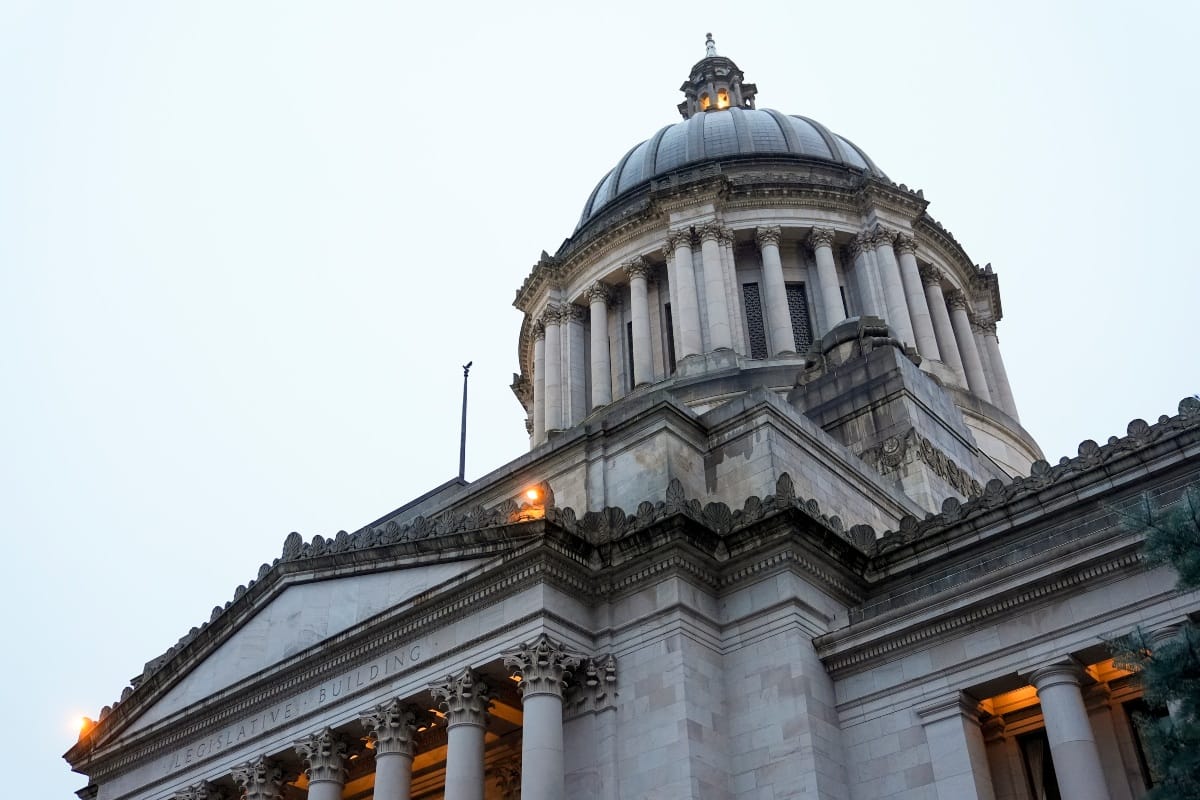
Washington lags behind nearly half of the states, including Idaho, that have passed laws and regulations around automatic license plate readers. As the 2026 legislative session kicks off in Olympia, legislators have introduced a bill to rein in these cameras by limiting which Flock records the public can access.
The bill would dramatically limit the use of Flock cameras by both the public and law enforcement. The cameras would be banned outside of hospitals, schools, food banks and churches. They couldn’t be used for immigration enforcement or to track protests. And crucially, only academic researchers would be allowed to make public records requests for the data.
But to do that lawmakers must contend with the three conflicting interests: the law enforcement officers who say Flock cameras are vital to protect the public, the civil rights groups who see the cameras as an invasion of privacy, and the public record advocates who worry that cutting off transparency paves the way for government abuse.
"That's going to remain probably one of the contentious points of the bill and negotiations moving forward,” said Sen. Yasmin Trudeau, D-Tacoma, the bill’s co-sponsor. “There are people that feel very passionately about public records, and they should.”
It was public records, after all, that first revealed information about Flock cameras that outraged civil liberties groups.
In May, independent journalists at the tech site 404 Media revealed that records had uncovered cops across the country conducting Flock camera searches on behalf of Immigration and Customs Enforcement.
Flock boasts about giving their users access to “real-time alerts and footage from partners across the country.” But each search leaves a record — an audit trail — in each city or county’s Flock system. Those audit trails also revealed that Texas deputies had searched cameras across the entire country, including Spokane County, to locate a woman who'd given herself an abortion. Spokane County has since stopped allowing their Flock network to be accessed by nationwide searches.
A University of Washington research project this summer harnessed its own records requests to show that at least eight different Washington state law enforcement agencies had given the U.S. Border Patrol access to Flock images to potentially aid with immigration enforcement. In many states, including Washington, local law enforcement is forbidden from helping federal immigration enforcement.
 Daniel Walters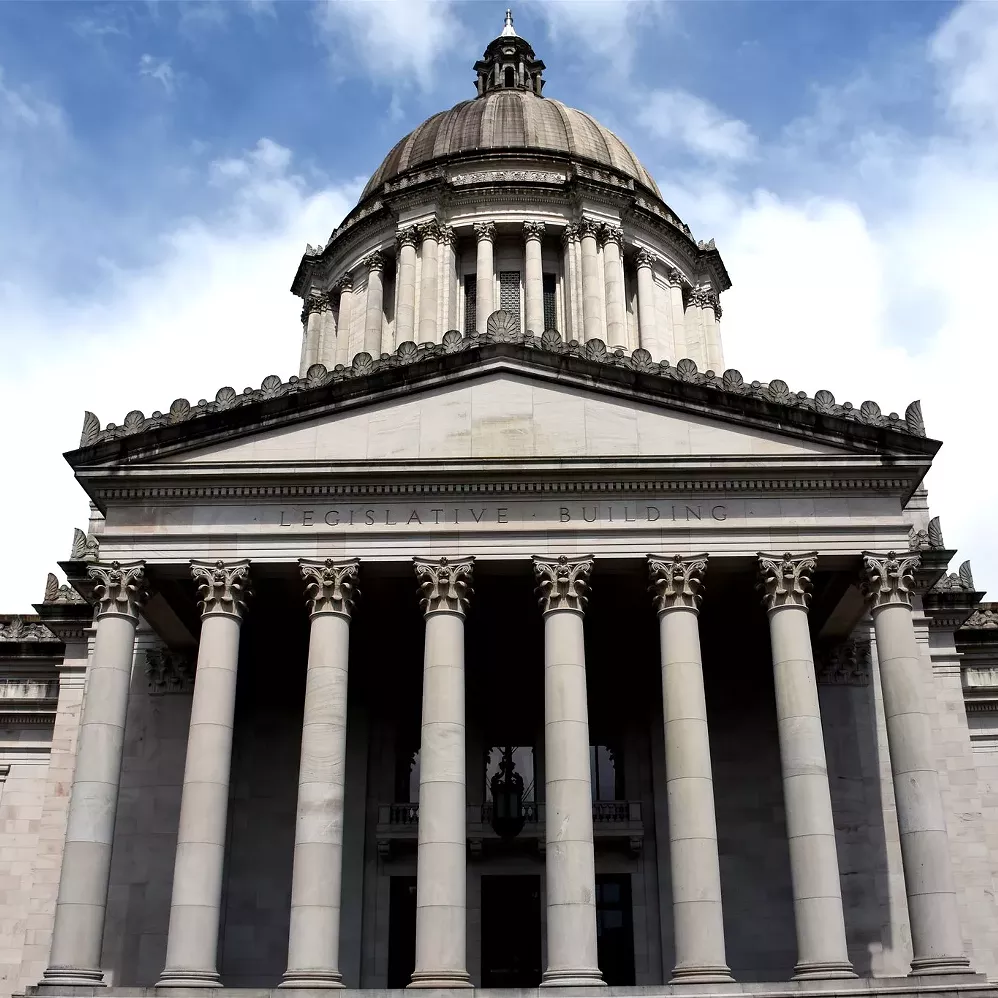
By the time a Washington superior court ruled on a records case in November that such camera data was open to the public, cities like the Seattle suburb of Redmond had already shut down their Flock cameras. Other cities had to contend with a wave of new records requests. Some were broad and voluminous, creating the kind of financial burden that comes with preserving massive amounts of photos.
Other requests were more targeted. One person requested photos taken of his own license plate.
Another, Jim Leighty, a longtime Spokane area activist, figured out a way to start tracking ICE using the same kind of cameras ICE had used to track others. He sent a public records request to Spokane County asking for all “camera locations, dates and times for Washington License Plate 72715RP” captured during the first dozen days of December.
That vehicle is used by a private company to transport ICE detainees from Spokane to the holding facility in Tacoma, Leighty said, and he wanted to figure out the schedule.
“How often is it coming over?” Leighty said. “That could give us an idea of how active ICE can be in our community.”
Leighty also intended it as a test: If the government was going to violate the right to privacy of average citizens, it only seemed fair to him that citizens could turn around and demand the same sort of information from the government.
Leighty got the record he requested — a single camera hit for the vehicle — after a little less than a month, though he said the county first notified the transport company and called Leighty to ensure that he wasn’t intent on harming anybody.
Meanwhile, Thomas Stotts, who runs the private investigation agency Strategic Intelligence Services, made two Flock camera records requests in his attempt to locate a parent who’d fled another state with their children.
“As soon as you walk out the door, you have no expectation of privacy,” Stotts said.
Washington law gives private detectives some special rights — they are able to look up a person’s license plate number, for instance — but Nowels argues that private detectives don’t have the same level of accountability or training as law enforcement.
“I don't know anything about their integrity,” Nowels said. “I'd like to think most people are ethical and moral, but there's plenty of people who aren't. … That's my issue with that information available to just about anybody.”
For now, Tony Dinaro, the public records officer for Spokane County, said the county has been attempting to use the existing law to prevent known abusers from looking up specific license plates, by cross-referencing the records requests with a list of all the people who have had protective orders leveled against them.
Since Washington’s records laws currently allow the government to decline to release records if the disclosure could endanger a crime victim’s physical safety, Dinaro said, the county attorneys felt they were “definitely on solid ground legally” to deny such a request from an abuser.
“That’s our red line,” he said.
The trouble is, requests can come in anonymously. A stalker could simply refuse to leave his name. In those cases, Dinaro said, the county plans to contact the owner of the vehicle being tracked, giving them a chance to go to court and say, “I am being stalked … and I don’t want this information released.”
Local governments face another big problem. Flock, as a default, deletes the images off their servers after 30 days. But what if someone makes a last-minute request to the city on Day 29? If the requested pictures get deleted before the city can ask Flock to preserve them, the city could be fined for violating the state’s transparency laws.
Trudeau’s bill seeks to fix that vulnerability by cutting off almost all public records access. The bill would slash the amount of time most Flock images could be preserved from 30 days to just three.
Nowels worries that such legislative restrictions could make the cameras “completely useless.”
Trudeau is well known for supporting measures to restrain law enforcement, including a controversial restriction on vehicle chases. But this latest bill, she notes, is co-sponsored by Sen. Jeff Holy, R-Cheney, a former detective who spent 22 years with the Spokane Police Department.
“Everyone is happy and unhappy about my current draft, which means we're probably on a good path to compromise,” Trudeau said.
Holy sees the bill as an example where a conservative and a progressive can find common ground: libertarianism. Both of them worry about how a tyrannical government might abuse its powers.
The proposed bill requires governmental agencies to keep their own logs tracking Flock usage. Yet the fact that it also cuts off the underlying public access to the data in those logs has some public records advocates wary.
“Some of the board members have said, as long as the government is receiving information, that should be considered public record,” said Collette Weeks, executive director of the Washington Coalition for Open Government, an organization that advocates for public transparency.
Weeks said that the bill “raises 100 questions for me, with each question leading to 100 more.”
And Leighty, the Spokane activist, argued that the bill was “locking citizens out, but not actually protecting citizens.”
It isn’t clear whether a license plate number included as part of a Flock audit log would still be considered a public record.
“It's really just a question of balancing transparency with privacy,” said Tee Sannon, technology policy program director with the American Civil Liberties Union of Washington.
The ACLU has warned that audit log data itself is often not enough to identify abuses of the technology and can be vague and misleading. Records first obtained by Range Media show that more than a dozen Flock searches were made by Spokane County sheriff’s deputies in November with no recorded explanation logged other than the word “investigation.” (Nowels told InvestigateWest that he’s urged his deputies to be more specific with their Flock requests.)
So far, the most prominent examples of Flock technology being used for stalking have not involved records requesters — but law enforcement officers.
A police chief of a city outside of Atlanta, Georgia, was arrested in November for allegedly using the city's license-plate readers to stalk and harass people. In Kansas, a police chief used Flock cameras to track the license plates of his ex-girlfriend and her boyfriend over 200 times across five months, according to news reports, while a police lieutenant in a neighboring city used the cameras to track his estranged wife.
Nowels is well aware that, in the hands of an unethical sheriff or officer, the technology can be used for evil ends.
“I'll be the first one to stand up and say, ‘If you can't use this tool appropriately and ethically and lawfully, it needs to go away,’” Nowels said. “It just does.”
Either way, when Washington state legislators drive near the Capitol in Olympia this month, their license plates won’t be recorded by Flock. Last month, Olympia shut off its Flock cameras at the police department’s request, due to the concerns that had been revealed through public records.

The story you just read is only possible because readers like you support our mission to uncover truths that matter. If you value this reporting, help us continue producing high-impact investigations that drive real-world change. Your donation today ensures we can keep asking tough questions and bringing critical issues to light. Join us — because fearless, independent journalism depends on you!
— Jacob H. Fries, executive director
DonateCancel anytime.

Stuck in a “no-man’s land” of uncertainty, many who’ve fled the Ukrainian war have lost the right to work in America

Drag queen at center of Idaho culture war takes Christian Nationalist group to court

With powerful allies in the pulpit and the Pentagon, the Idaho Family Policy Center seizes its moment

Charging documents show a more nuanced picture of what federal officers have been facing.

If you cover criminal justice in the Pacific Northwest — or want to — we’re hosting a free virtual training that may be useful to you and your newsroom

A searchable teacher misconduct database compiled by InvestigateWest fills gaps in the state’s public-facing records

State agencies will no longer release information about whether an officer retired, resigned or was fired

Advocates say boosting insurance pay would help expand programs for vulnerable pregnant people
Subscribe to our weekly newsletters and never miss an investigation.