

Parents, advocates say guardians ad litem need more guardrails. These Washington reforms could help
More training and limiting the scope of investigations could improve how domestic violence and child abuse are handled in custody cases
More training and limiting the scope of investigations could improve how domestic violence and child abuse are handled in custody cases

Former residents of one of Oregon’s largest homeless encampments say they lost cars, work tools, irreplaceable family photos and other items


The bill, inspired by InvestigateWest reporting, is awaiting Gov. Brad Little’s signature

More training and limiting the scope of investigations could improve how domestic violence and child abuse are handled in custody cases

In hundreds of custody disputes across Washington each year, judges appoint neutral court investigators to look into how parents’ issues like substance use, domestic violence and mental health could impact kids. But as a growing number of families and advocates raise concerns about how flawed investigations can flip cases against parents trying to protect their kids, legislators are beginning to look at reforms.
These guardians ad litem, also referred to as GALs, have no direct authority on custody rulings, but their reports can have a large influence on judges’ parenting plan decisions — and on children’s safety. Yet in many counties, they have limited training, aren’t required to have a professional license and have little independent oversight, leading in some instances to biased reports without a meaningful way for families to challenge them. Parents have shelled out thousands of dollars in legal fees trying to remove guardians ad litem from cases, a process that is rarely successful and that some fear will only worsen their chances of retaining custody, InvestigateWest reported.
These issues have spurred state lawmakers to look for ways to improve the system. Last year, the Washington Legislature passed a bill aimed at clarifying guidelines for judges ruling on custody cases involving allegations of abuse. The bill’s sponsor, House Civil Rights and Judiciary Committee Chair Jamila Taylor, said that process launched a broader conversation about the role of guardians ad litem and their qualifications. Taylor led a legislative work session in December on common issues with these court investigators and said she’s continuing to talk with colleagues and other stakeholders about what should change.
“Folks have been frustrated by GALs who are writing reports that feel biased,” Taylor said. “I think that there are significant opportunities for updates to the law, updates to the requirements for training.”
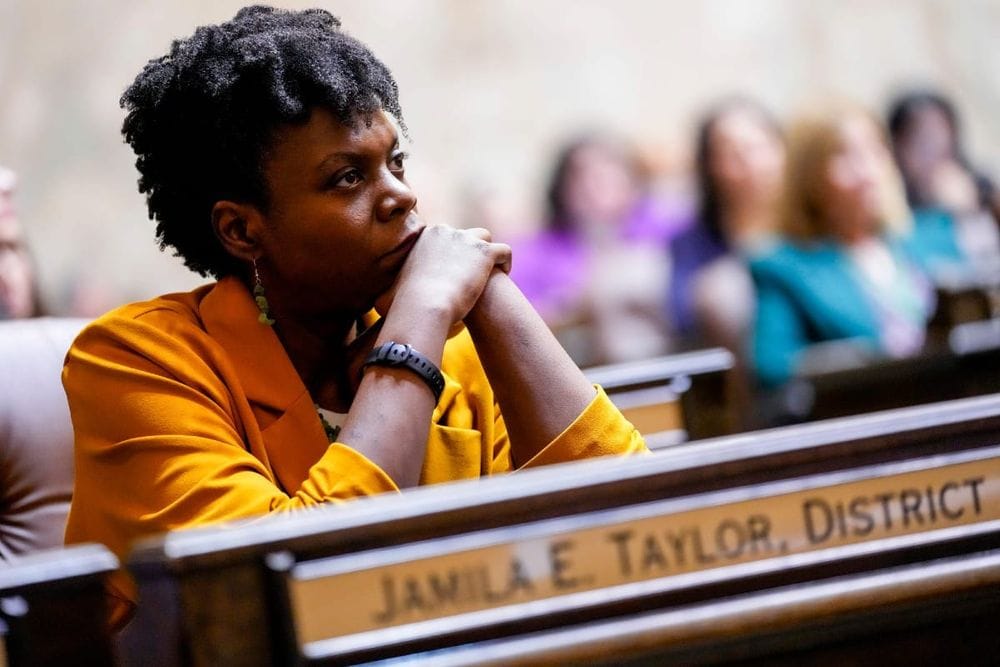
Under current state law, much of Washington’s guardian ad litem regulations are decided at the local court level, causing training requirements, qualifications and oversight to vary by county. But lawmakers seeking to change these rules would be venturing into new and largely uncharted territory. Little research has been done either within Washington or across states to compare approaches and analyze what’s most effective.
InvestigateWest talked to parents, attorneys, judges, guardians ad litem and other family law experts about what’s working best in Washington and how to address problems stemming from guardians ad litem. Here’s what they suggested:
Washington, unlike some other states, doesn’t set standardized qualifications regarding who can become a guardian ad litem. This means courts can appoint a person with no professional expertise in child abuse or domestic violence to investigate those very issues, which domestic violence survivors say has led to recommendations restricting their parenting time instead of their abusers’.
Family law experts have mixed views on who is best suited to perform investigations. Some advocate for attorneys, while others emphasize the importance of mental health expertise.
While most of Washington’s guardians ad litem are attorneys or social workers, specific criteria are decided by county. Some superior courts set a relatively high bar — in Snohomish County, applicants who are attorneys must have practiced law for five years with substantial family law experience. Non-attorneys must meet a series of other prerequisites, like holding a bachelor’s degree in social work or related fields, or a Washington mental health professional license, plus five years of relevant experience.
Other counties’ criteria are more vague, allowing candidates who don’t necessarily have backgrounds working with families. Attorney applicants in Cowlitz County, for instance, must only be members of the Washington State Bar Association in good standing, with no requirements for family law or years of experience. And non-attorneys are assessed by court officials on a case-by-case basis to determine if they have “necessary education, training, and experience,” according to the Cowlitz County Superior Court. (The Superior Court noted that it plans to update its guardian ad litem policies within the next few weeks.)
Some states, like Utah and Virginia, require guardians ad litem to be attorneys. While this helps ensure a deeper understanding of the law and court process, it doesn’t guarantee professional experience with nuanced issues like domestic violence and how that can show up as nonviolent, controlling behavior.
“I worry how few attorneys understand things like coercive control and domestic violence,” said Dawn Sydney, an attorney and former guardian ad litem in King County.
 Kelsey Turner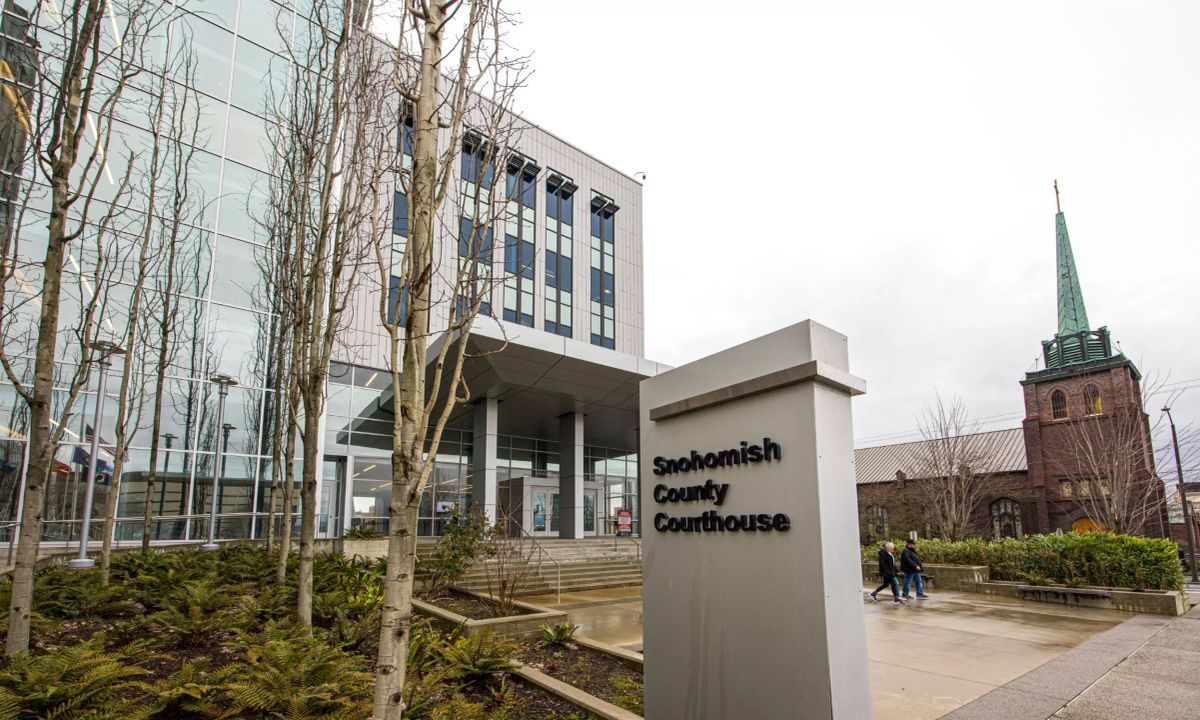
Alternatively, some family law experts in Washington think guardians ad litem should have professional backgrounds in mental health. This approach is consistent with a legal framework developed by the National Council of Juvenile and Family Court Judges, a nonprofit judicial membership organization that works to improve policies affecting families and abuse victims. The nonprofit’s model code recommends that people conducting custody evaluations in cases involving domestic abuse should be licensed mental health professionals with extensive knowledge of domestic and child abuse. Although no state has yet adopted the updated model code, released in December 2022, Taylor and other state policymakers drew from aspects of it while developing their family law bill passed last year.
Requiring a professional mental health license could help address training deficiencies in areas like domestic violence, while also providing a statewide oversight mechanism, since licenses are regulated by the Washington State Department of Health, according to Jeffrey Keddie, an attorney who helps train guardians ad litem and who presented to state legislators in the December work session.
But it wouldn’t solve everything, Keddie added. There could still be issues with bias, court investigators might not receive ongoing training, and they could still make recommendations about parenting plans without legal training on how to apply the law, he said during the session.
Smaller and rural counties face an additional challenge when it comes to approving new guardians ad litem: how to set their standards high enough to ensure they’re qualified, but not so high that not enough people apply. For example, Yakima County, which has 12 family law guardians ad litem, struggles to find people to serve on cases, according to Superior Court Director Jessica Humphreys. While Yakima County’s local court rules say that non-attorney applicants must have a bachelor’s degree and relevant experience working with families and children, it also leaves space for a judge to waive the bachelor’s degree requirement.
“In some communities, the list of approved GALs are few and far between,” Taylor said. “We have GALs who are licensed practitioners, who are attorneys, who are helping to assess families. And so the question is, who is qualified? Who should be qualified?”
When judges sign orders appointing guardians ad litem, they also define the scope of the investigation. This scope is often broad — for example, tasking a guardian ad litem with investigating any issues that could impact a child’s safety can encompass parents’ criminal history, domestic violence, mental health issues, substance use and intentionally using conflict to inflict harm.
Keddie, who helped develop the state’s training curriculum, thinks narrower orders — like only investigating substance use, for instance — are typically more effective.
“If you give somebody too broad of a mandate, they’re going to do a lot of things poorly instead of the main thing that you’re looking for well,” he said. “The court can be much more particularized about what they’re asking for.”
A narrow investigation can also help limit the time — and costs — that go into a report. Attorneys and advocates say they’ve seen guardians ad litem overdo their investigations, running their bills upwards of $40,000 for a single case. On the other hand, those who aim to complete thorough investigations but avoid charging parents exorbitant fees end up putting in hours of unpaid work, according to Keddie.

Cynthia Johnson, a guardian ad litem in Western Washington for 15 years, was paid by Thurston County to work on cases involving low-income clients from 2012 until last year. She said the county’s flat fee covered 15 hours of work, but that often isn’t enough time to thoroughly investigate most cases, meaning she often put in extra hours for no pay.
Now, as she serves on cases paid by parents in Thurston County, she continues striving to complete investigations as efficiently as possible.
“I think sometimes guardians ad litem go outside their scope. They start to look into a lot of different things, which I think is time consuming and costs the parties money,” said Johnson, who also serves in Mason and Grays Harbor counties. “They need to stay real focused.”
Thurston County, in contrast to most other counties, limits the guardian ad litem’s role to being fact-finders, rather than asking them to also make recommendations about parenting plans. This aligns more closely with the National Council of Juvenile and Family Court Judges’ model code, which says that people who are not licensed mental health professionals should only gather and analyze information about the case, and should not make recommendations about parenting arrangements.
Johnson says she prefers Thurston County’s approach because in her experience, making recommendations can lead courts to put too much weight on guardian ad litem reports.
“I don’t think we should have that much influence over the court,” Johnson said.
Not making recommendations helps shift that weight back to judges, she added. “They’re there to use all the facts, apply it to the law, and come up with an outcome. And that’s how it should be.”
While state law requires every new guardian ad litem to complete a mandated training curriculum, it’s up to local jurisdictions to organize and pay for that training — which demands significant resources that many counties don’t have.
“Training for guardians ad litem has been a really big issue. It’s something we have been talking about for the last couple of years statewide,” said Snohomish County Superior Court Judge Karen Moore, who chairs the court’s guardian ad litem committee.
The statewide curriculum, updated in 2018 by the Washington State Administrative Office of the Courts, is a three-and-a-half-day program that covers topics like bias, domestic violence and mental health. Although it’s an improvement from the previous training requirements, which were minimal, there are still “many issues,” Keddie told legislators in December.
“Many judges have not been trained on how to use guardians ad litem. Guardians ad litem trained prior to 2018 may not have had strong training on domestic violence or culture issues or bias in family law cases. Some counties don’t require any additional training after somebody's been put onto the list,” Keddie said.
Kelsey Turner
There also aren’t enough training opportunities to meet demand. Four years after the new curriculum was approved, just two trainings had been held in the state, with each event having a long waitlist, according to a 2022 budget request from the Administrative Office of the Courts.
That year, the agency asked the state for about $480,000 in annual funding to facilitate the mandatory training across the state several times per year. The dollars would also fund continuing education for family law guardians ad litem, help courts develop local rules requiring ongoing training, and ensure the curriculum is updated following each legislative session, according to the agency’s budget request.
Due to the state’s tight budget, the office’s request wasn’t funded, said Chris Stanley, the office’s chief financial and management officer, who added that the agency may try again when the next biennial budget comes up in 2027.
The goal is for the office to spearhead the implementation of guardian ad litem training to ensure professionals across the state get more consistent access, according to the budget request. Because smaller and rural counties with fewer resources are less likely to host their own trainings, would-be guardians ad litem must travel to other areas when training events crop up. That can make it harder for those counties to get court investigators who are educated on domestic violence, child development and other issues.
“Judges working on contentious family law matters need to be able to rely on the investigations conducted by guardian ad items,” Stanley said. “That guardian ad item has got to be trained.”
To better support guardians ad litem through complex custody cases, several counties like Thurston and Pierce assign a more experienced peer to mentor them before appointing them to their own cases. This creates an opportunity for feedback in a job that is otherwise highly independent.
Johnson, who has served on over 800 cases, said she has mentored four new hires in Thurston County, some of whom still call her periodically to ask questions.
“You’re going to weigh in about something that may change people’s lives,” Johnson said. “I’ve had a lot of nights where I've woken up in the middle of night wondering, ‘Am I doing the right thing here?’”
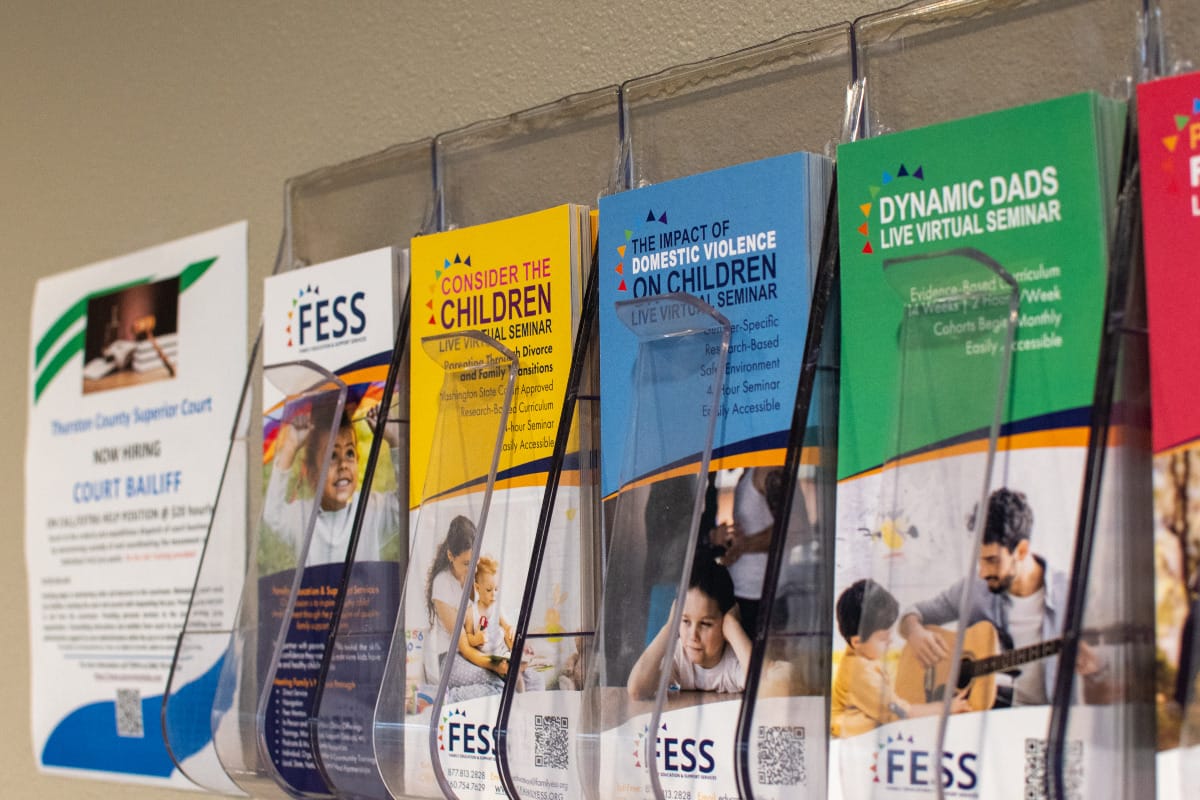
Courts can also require mentorship for people whose investigations are not up to their standards. For example, one Thurston County guardian ad litem who is currently suspended for putting personal commentary in his reports and overstepping his role — including facilitating a meeting between a domestic violence victim and perpetrator — must successfully complete a case under the mentorship of another guardian ad litem and repeat the state’s training curriculum before he will be allowed to take more cases, according to a February letter from the court’s guardian ad litem registry committee.
Thurston County guardians ad litem additionally benefit from monthly meetings, where speakers sometimes present about issues like domestic violence and mental health or judges talk about how they can improve their reports, Johnson said.
“I believe Thurston County Superior Court does an excellent job of monitoring guardians ad litem and educating guardians ad litem and giving us a network of peers to talk to,” she said. “It’s a pretty lonely job, and anywhere we can get support is really important.”
Although Washington State Court Rules lay out a minimum standard for how local courts should handle complaints against guardians ad litem — and require that procedure to be easily understood — parents say it’s not always clear how to submit a complaint or what happens next.
One mom tried to submit a complaint in King County, for example, against a man who she believed was the guardian ad litem in her case. Yet even though he referred to his court filing as a “GAL report” and the order assigning him to the case said “Guardian ad Litem,” the mom was told she couldn’t pursue a complaint because the person was technically a parenting evaluator, according to court records and the mother’s emails with the court.
While many counties have a committee of court officials to review complaints and administer discipline, in King County, the state’s most populous county and which appoints the second-highest number of guardians ad litem, relies on just one judge to handle complaints. Courts also must maintain a record of grievances. But when InvestigateWest requested grievances from King County in the last two years, the county Superior Court’s administration was initially unable to find any, but located two complaints after a reporter asked them to check again.
Even in counties with more detailed grievance policies and a board to review complaints, like Thurston County, some parents still struggle to have their concerns heard. One mom’s complaint was dismissed in Thurston County because she hadn’t asked for the correct type of discipline. The mom, Stephanie Maya, had flagged a half dozen inaccurate statements in the guardian ad litem report, attached documentation to back up her claims and asked the review board to bar the guardian ad litem from taking more cases — or at the very least, to remove her from Maya’s case.
But the court’s administrator replied that only the judge presiding over her case could remove the court investigator. The complaint review committee also couldn’t consider prohibiting the guardian ad litem from serving in that county until Maya’s case concluded.
“The only response we got was, ‘That’s not a remedy we provide,’” said Jennifer Summerville, Maya’s attorney. “There was no evaluation of whether the complaint was valid.”
Summerville filed her own complaint a few weeks later, which was nearly identical to Maya’s but asked for other types of discipline allowed under the local court rules. The board evaluated Summerville’s complaint, ultimately finding that the guardian ad litem’s report was not objective and appeared to be “written from the perspective” of Maya’s ex-boyfriend.
Taylor thinks creating more consistency across local courts could better enable parents to voice their concerns. It’s a topic that she plans to continue discussing with advocates and people engaged in the family law system this spring, she said.
“I don’t necessarily want to wait for a formal legislatively constructed work group to get some work started. I think we can have conversations that can lead us to really good policy,” she said. “I’m willing to do the work.”
The story you just read is only possible because readers like you support our mission to uncover truths that matter. If you value this reporting, help us continue producing high-impact investigations that drive real-world change. Your donation today ensures we can keep asking tough questions and bringing critical issues to light. Join us — because fearless, independent journalism depends on you!
— Jacob H. Fries, executive director
DonateCancel anytime.

Minimal oversight of court investigators makes it difficult for parents to challenge flawed reports without risking damage to their cases

Nonprofits say temporary state dollars haven’t been enough to stave off cuts to sexual abuse and domestic violence programs

While some counties are devoting money to track down guns, others rely on the honor system to ensure firearms are turned over

State Legislature failed to pass bill last session that would have disqualified him from running

Former residents of one of Oregon’s largest homeless encampments say they lost cars, work tools, irreplaceable family photos and other items

The bill, inspired by InvestigateWest reporting, is awaiting Gov. Brad Little’s signature
Minimal oversight of court investigators makes it difficult for parents to challenge flawed reports without risking damage to their cases

Recent court rulings show how ICE is citing missed immigration check-ins — often without evidence — to detain asylum seekers
Subscribe to our weekly newsletters and never miss an investigation.