

Washington schools chief seeks policy changes after teacher sexual misconduct reporting
The changes, which would expand the state’s investigatory abilities, still need approval from the governor-appointed Professional Educator Standards Board
The changes, which would expand the state’s investigatory abilities, still need approval from the governor-appointed Professional Educator Standards Board

Tribal police in Washington hire officers fired elsewhere at a rate four times higher than their share of the workforce

Records show administrators left a teacher in an elementary school classroom despite repeated concerns about his inappropriate behavior with students

Nonprofits say temporary state dollars haven’t been enough to stave off cuts to sexual abuse and domestic violence programs

Sara Owen is almost always on the clock. As one of only two advocates at Beyond Survival, a sexual abuse resource center in Grays Harbor County, Owen is constantly monitoring a 24-hour crisis line in addition to supporting survivors through court and hospital visits.
With few nurses in the county trained to perform sexual assault exams, Owen sometimes spends up to six hours a day driving clients to Olympia or Tacoma to find an available nurse, leaving one other worker to manage all other clients.
Beyond Survival once had five full-time advocates like Owen in Grays Harbor County, a rural region on the Washington coast. But amid plummeting federal Victims of Crime Act funding — the state’s most significant resource for crime victims — it and other Washington nonprofits have had to cut positions and scale back services to continue operating. The state’s federal award fell 76% between 2018 and 2024, from $74.7 million to $17.86 million.
Within the last year, organizations in Washington say they have laid off therapists and advocates, taken on higher caseloads, reduced the emergency financial assistance available to survivors, and, according to the state Department of Commerce, turned away thousands of people from domestic violence shelters. Children’s advocacy centers, which specialize in trauma-informed forensic interviews and mental health resources for abused kids, have slashed their programs and are at risk of closing. Hospitals, especially those in rural areas that already have a shortage of sexual assault nurse examiners, could also face layoffs and closures as the Trump administration’s Medicaid cuts are implemented. And coupled with reduced Victims of Crime Act funds, prosecutor’s offices have struggled to keep survivors engaged in yearslong court cases because of waning state dollars for victim advocates.


On left, Andrea Wardlow, executive director of Beyond Survival, works on a grant in her office in Aberdeen, Wash. On the right is artwork displayed in the children’s room of Beyond Survival’s Healing House. (Dan DeLong/InvestigateWest)
The state has stepped in over the last several years to try to fill the gap left by diminished federal funding, allocating $20 million last year to crime victim services. But as Washington faces a projected $1.6 billion budget shortfall and Gov. Bob Ferguson has proposed significant cuts to close that gap, service providers fear that without a permanent state funding solution, more services for survivors will get cut, waitlists will grow, and agencies in more rural areas might shut down completely.
The governor has proposed allocating $12 million toward crime victim services next fiscal year — about $9 million short of what groups asked for.
“That ask, really, for this year, is just to not have the entire system collapse,” said Sherrie Tinoco, public policy director at the Washington State Coalition Against Domestic Violence, a nonprofit network of the state’s domestic violence programs. “And at the same time, that system is actively breaking.”
This is the sixth year in a row that Washington crime victim service providers are pleading state policymakers for funding to keep their programs afloat. Without it, the state Commerce Department says that starting in July, when the next state fiscal year begins, groups will have to make do with about 47% less funding.
While the field’s funding problems have several causes, much of it can be traced back to the 1984 Victims of Crime Act, or VOCA, which is financed by penalties and fines from federal convictions. Starting in 2015, Congress effectively quadrupled the funding available through the law by raising the spending cap, with funding to states like Washington peaking in 2018. But since then, those dollars have been drying up due to a decrease in federal prosecutions, especially for white-collar crimes — which have historically provided the bulk of the fund’s revenue.
For the last five years, the state Legislature has provided supplemental money to offset the drop in federal dollars. This combination of state and federal funding supports over 52,000 victims per year, 140 different organizations and 17 tribes in Washington. Although it serves victims of a wide range of crimes, from kidnapping to elder abuse to burglaries, upward of 70% goes toward domestic violence and sexual assault survivors.
The state money has helped but hasn’t accounted for inflation or other increased costs. As services continue to erode, rural areas — where services are already limited — are being hit especially hard.
The nonprofit Rural Resources, which supports victims across five counties in Eastern Washington, had to cut its budget by about 20% even with the added state funding, said Communications and Outreach Manager Alaina Kowitz.
In Grays Harbor County, one of the poorest counties in the state, the children’s advocacy center closed down last year. Then the longstanding Providence Abuse Intervention Center, which provides medical care for child abuse victims in Grays Harbor and four other counties, announced it would close at the end of 2025. Providence Swedish reversed its decision after pushback from child advocates, saying in a Jan. 7 statement that services will continue “without interruption” under a new model, but providers say they still expect a large reduction of medical services and staff, which means kids could be sent to emergency rooms for care.
Owen said Beyond Survival has contracted with other agencies to keep providing forensic interviews for abused kids and is doing what it can to fill the gaps.
“But when the larger foundational things like hospitals and children’s advocacy centers are losing their funding to the point where they’re closing doors on things, there’s only so much that we can do,” she said.
For this year’s budget, service providers and the state Commerce Department, which distributes Washington’s VOCA funding, are asking the state for $21.38 million — the minimum needed to maintain Washington’s current victim services infrastructure, according to the Commerce Department.
Their request, however, faces stiff competition. In addition to rising state costs, Washington is dealing with steep federal cuts to food and Medicaid benefits, housing programs and more. President Donald Trump’s “One Big Beautiful Bill,” passed in July, will cost the state at least $165 million this biennium alone, according to a governor’s office press release.
State agencies submitted $2 billion in new spending requests that they described as “critically needed,” according to the press release. Ferguson’s proposed budget funds $700 million of those requests.
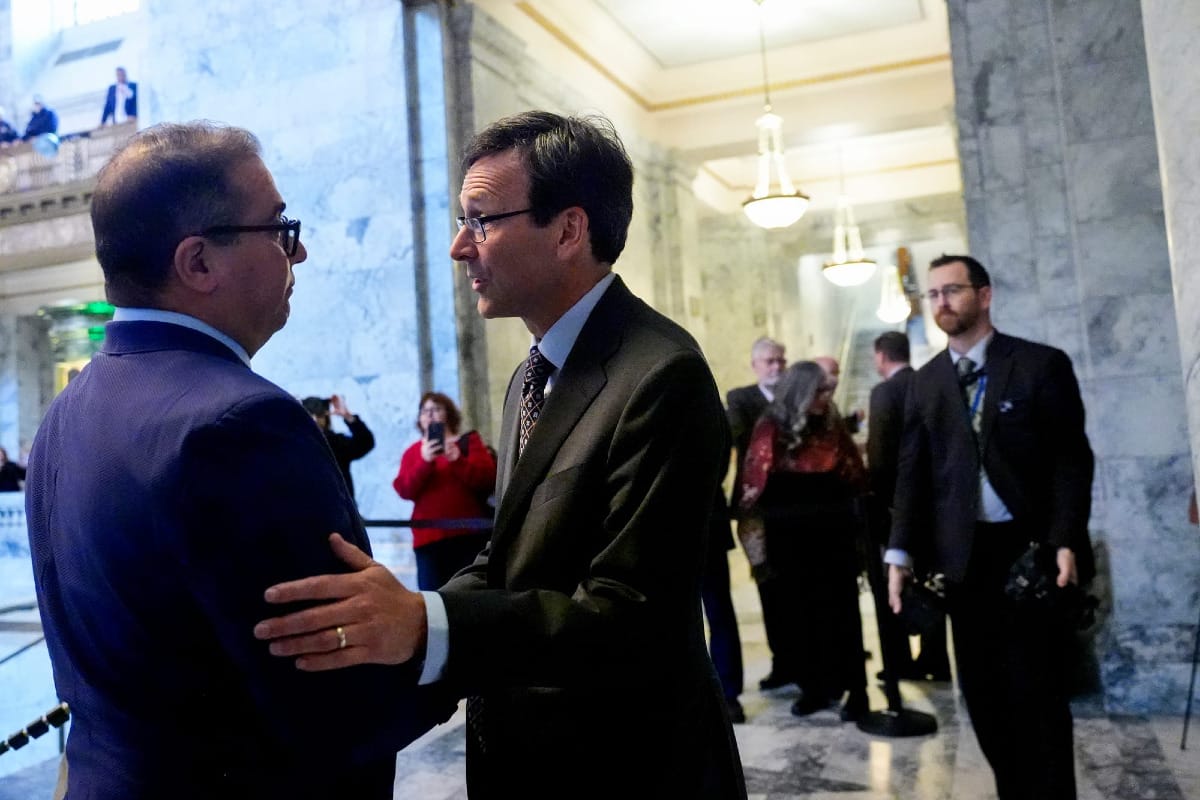
Brionna Aho, communications director for the governor’s office, said the $12 million for crime victim services will help preserve “core services” like sexual assault centers, children’s advocacy centers and victim advocates within prosecutors’ offices.
“Many federal dollars are being eliminated or reduced by the Trump Administration. The state is not in a position to backfill all of them,” Aho said in a written statement to InvestigateWest. “This is one of the few areas of discretionary spending where the governor proposed an investment, which reflects how important these services are.”
But when providers saw Ferguson’s proposal, they immediately pushed back. Owen and other sexual assault service providers sent a Dec. 23 letter to the governor and Legislature emphasizing that $21.38 million is the “absolute minimum” amount necessary to prevent further collapse of statewide services.
“We’ve spent the last 50 years encouraging survivors to come forward to seek help. When services become more unreliable, we send a message that their well-being is not that important,” said Kate Garvey, CEO of the King County Sexual Assault Resource Center, which recently laid off therapists, legal advocates and administrative staff due to funding constraints. “We acknowledge the budget challenges the state faces, but we can’t balance a budget on the backs of child abuse, sexual assault and domestic violence survivors.”
When Washington state Rep. Lauren Davis, D-Shoreline, first decided to get court-ordered protection against her domestic abuser in 2021, it was just the start of a legal process that would drag on for years.
It took six months for the court to grant the order against her former partner, a lobbyist who she accused of stalking her after they broke up. After he violated the order, it took over two years before a jury found him guilty of the violation in September 2024.
As the case stalled, Davis relied on a victim advocate with the Thurston County Prosecuting Attorney’s Office to guide her through the trial process and help keep her safe. She went into hiding and moved over a dozen times to different safe houses, according to a prosecutor’s affidavit.
“I would have never, ever been able to navigate that two and a half years without that victim advocate,” Davis said.
But that advocate position no longer exists.
In addition to falling VOCA funds, prosecutors have taken another financial hit after a 2023 law prompted courts to stop ordering most offenders to pay a $250 to $500 state crime victim penalty, which in turn paid for victim advocates.
Lawmakers intended to ensure low-income defendants aren’t buried in debt as they try to rebuild their lives — a goal that Davis and prosecutors largely agreed with, as long as crime victim services continued to be funded at the same level. Yet despite the Legislature’s commitment to retain the funding, that hasn’t happened.
“The problem is that the state didn’t keep its promise,” Davis said.
Russell Brown, executive director of the Washington Association of Prosecuting Attorneys, estimates that prosecutors’ victim advocate programs should be receiving about $7 million each year to make up for the reduction in the crime victim penalty assessment. The state currently contributes $2 million per year.
“The things that we could have done five or 10 years ago simply aren’t available, and victims really aren’t receiving the same type of help and assistance that they need,” Brown said.
Many prosecutor’s offices can now assign victim advocates only for the most serious cases, like homicides or violent sexual assaults, according to Brown. Yet that leaves many survivors of domestic violence without support. Over 80% of domestic violence arrests in Washington are filed as misdemeanors, according to Washington State Patrol data.
Thurston County, which once had more than three victim advocates, now has just one.
“Thurston County, which is the sixth-most populous county, can no longer provide a victim advocate for misdemeanor crimes of domestic violence because we defunded it,” Davis said.
The Thurston County Prosecuting Attorney’s Office said it’s adding back one victim advocate position in 2026, funded by a local public safety sales tax.
“In our view, however, this responsibility should not fall to local jurisdictions,” Tara Tsehlana, the office’s public information officer, said in an email to InvestigateWest. “The Legislature should fulfill its original promise to back-fill the funding lost through the elimination of the (victim penalty assessment) so that victim advocacy services, particularly for domestic violence survivors, are stable, sustainable, and available statewide.”
In Columbia County, a rural county of just 4,000 people in southeastern Washington, there are no domestic violence services apart from a satellite office managed by a neighboring county’s YWCA. The county has no sexual assault center, therapy for survivors or nurses trained to perform sexual assault exams. The prosecutor’s office, meanwhile, only has one victim witness coordinator who’s also a legal assistant.
With the office’s limited bandwidth, domestic violence victims often fall out of touch with the court, making it more difficult to prosecute offenders and keep survivors safe, Columbia County Interim Prosecuting Attorney Jennine Christensen said.
“We get so many people that will call 911 just to get out of that situation (immediately) because they’re getting abused. They’re getting assaulted. Their kids are getting assaulted. But then never stick with it, because what’s the point?” she said. “If there aren’t services for them and there’s nothing really to help them, and everybody is just trying to help the defendant, then how likely are they to come back next time and make a report?”
Gov. Ferguson’s budget proposal includes $1 million for victim services in county prosecutor’s offices, which would restore a fraction of the lost funding. Brown said the supplement is “welcome” but is “still well short of what is needed.”
Davis introduced a bill on Jan. 13 that would reinstate the mandatory state penalty at a higher rate, but only for offenders who are able to pay. She acknowledges that a perpetrator pay model is not the “most sustainable” way of funding victim advocates, but she feels like she has to do something, she said.
“Nobody’s coming to the rescue. There’s been no additional backfill. All of these positions have been laid off,” Davis said. “It’s not acceptable.”
Last year, Davis and Sen. Manka Dhingra, D-Redmond, introduced legislation that would stabilize victim services funding for years to come.
Modeled after a similar law in Maryland, the bill would fill the gap left by plummeting VOCA dollars by requiring the state treasurer to deposit funds into a new victim services account each year.
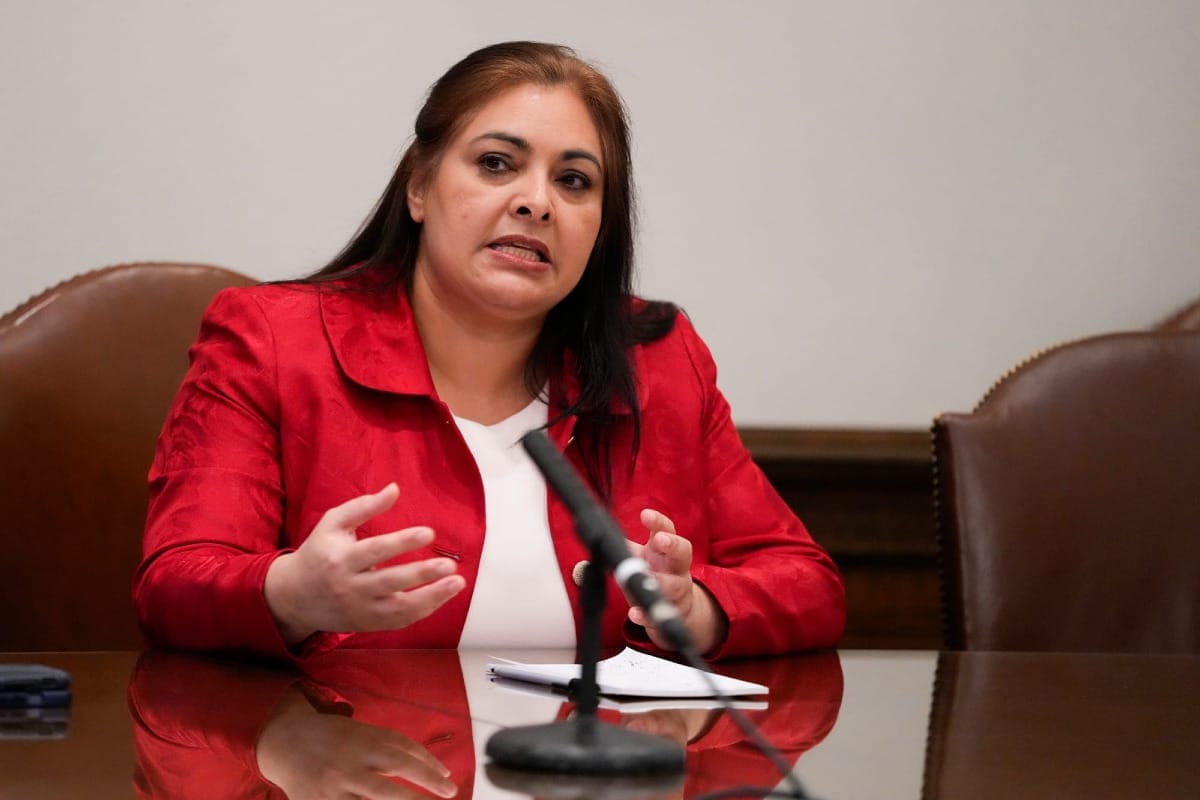
It received widespread support, including from the Washington Association of Prosecuting Attorneys, the Washington Association of Sheriffs and Police Chiefs, and victim service providers. But it didn’t advance last session, mostly due to its high price tag, Davis said. Nonpartisan legislative staff estimate that it would cost around $155 million to stabilize crime victim funding for organizations through 2031.
Although the legislation is still alive this year, Davis and Dhingra aren’t optimistic that it will pass in light of the state’s budget constraints. “So I will be fighting to make sure that we can at least provide the minimum that our organizations need, and that's the $21.5 million,” Dhingra said.
The governor’s office, meanwhile, is encouraging victim service providers to look toward the federal government for longer-term solutions.
“We trust people with concerns are reaching out to their federal representatives to urge the restoration of this federal funding,” Aho, the office’s communications director, wrote in an email to InvestigateWest.
Federal efforts so far have had limited success. In 2021, Congress passed a law known as the “VOCA Fix” that adds a new revenue source to the federal fund — specifically, revenue from deferred prosecution agreements and pretrial deals that the U.S. Justice Department has increasingly used for white-collar crimes.
The fix helped stave off a more severe drop in funds, but it wasn’t enough to restore lost funding. Federal lawmakers introduced another VOCA stabilization bill in 2025 with broad bipartisan support. Some organizations are eyeing it with cautious optimism, but if passed, it would be a temporary solution providing a funding boost only through 2029.
“We’re hoping that will pass, because that will provide a little bit of relief,” said Paula Reed, executive director of Children’s Advocacy Centers of Washington, a membership organization that supports the state’s 19 accredited children’s advocacy centers.
But many nonprofit leaders feel that they can no longer rely so heavily on the federal government to sustain them. On top of VOCA’s instability, last year the Trump administration tried to restrict organizations from using federal domestic violence prevention dollars to serve undocumented immigrant or LGBTQ victims.
A series of lawsuits have blocked these restrictions from being implemented, at least for now, The 19th News reported. But some organizations are seeking to limit their dependence on federal grants in case there are strings attached. For example, the YWCA in Yakima County, an agricultural region with a majority Hispanic population and high rates of domestic violence, decided not to apply for a federal award that it previously received through the Violence Against Women Act, according to YWCA Yakima CEO Cheri Kilty.
“We’ve chosen to serve our community and not accept that money,” Kilty said. “We’re not going to turn anybody away because of their immigration status or however they self-identify.”
As they await the final state budget, service providers are trying to plan for what another funding reduction would mean for their organizations and the survivors who depend on them.
“That whole crime victim services network is so interconnected. When you take away one, it’s not like anybody else is going to take it over,” Reed said. “At some point, there’s a breaking point. And I think that is where we are.”

The story you just read is only possible because readers like you support our mission to uncover truths that matter. If you value this reporting, help us continue producing high-impact investigations that drive real-world change. Your donation today ensures we can keep asking tough questions and bringing critical issues to light. Join us — because fearless, independent journalism depends on you!
— Jacob H. Fries, executive director
DonateCancel anytime.

Parents in eight states can be acquitted if they can show “reasonable fear” of escalating violence

As Washington reduces public defender caseloads, prosecutors say that's forced difficult charging decisions

Even in states like Oregon without an explicit “failure to protect” law, abused mothers can face prison time

More training and limiting the scope of investigations could improve how domestic violence and child abuse are handled in custody cases

The changes, which would expand the state’s investigatory abilities, still need approval from the governor-appointed Professional Educator Standards Board

Tribal police in Washington hire officers fired elsewhere at a rate four times higher than their share of the workforce

Records show administrators left a teacher in an elementary school classroom despite repeated concerns about his inappropriate behavior with students

Subscribe to our weekly newsletters and never miss an investigation.