

Idaho Legislature passes bill to expand prison sex abuse law
The bill, inspired by InvestigateWest reporting, is awaiting Gov. Brad Little’s signature
The bill, inspired by InvestigateWest reporting, is awaiting Gov. Brad Little’s signature

Minimal oversight of court investigators makes it difficult for parents to challenge flawed reports without risking damage to their cases

Recent court rulings show how ICE is citing missed immigration check-ins — often without evidence — to detain asylum seekers

An InvestigateWest analysis of the state’s educator misconduct database shows gaps allowing teachers to escape scrutiny

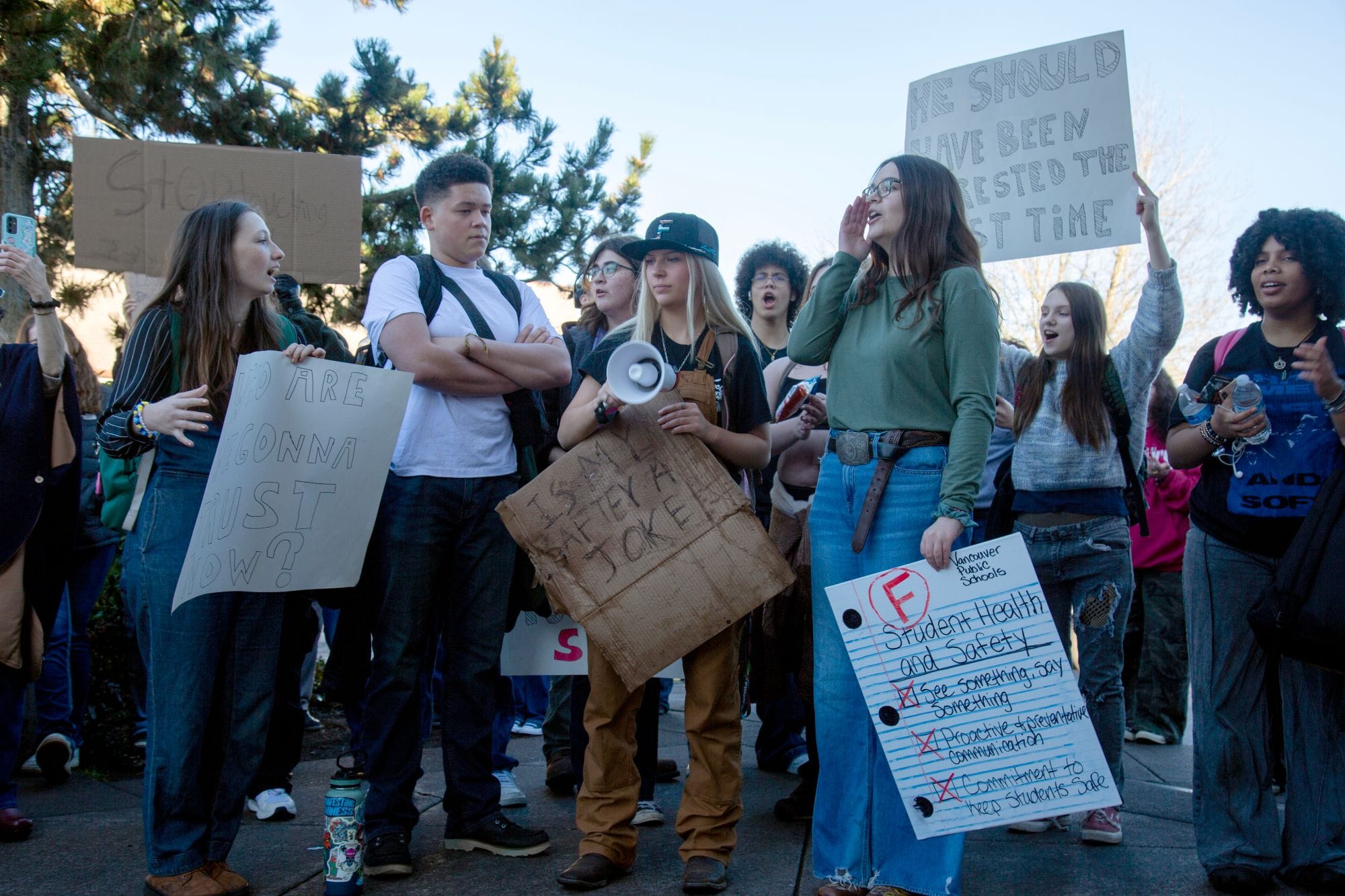
In November 2024, a woman in her early 30s walked into her former high school in Vancouver, Washington, and reported to the principal that while she was a student, she was groomed for a sexual relationship by Shadbreon Gatson, a longtime English teacher at the school.
Police arrested Gatson, and news coverage inspired two other former students from Hudson's Bay High School to come forward with similar allegations against Gatson.
Records showed that the educator’s inappropriate behavior was brought to school leaders’ attention at least four times in the last 15 years. One woman who came forward in 2024 was interviewed by school leaders a decade earlier, when she was a sophomore student. A school janitor found her and Gatson, who was partially undressed, alone in the band room with the lights off. Administrators didn’t properly investigate, according to a third-party investigation ordered by the school district. The sexual abuse continued.
Partly because the district failed to act for years, the educator avoided a criminal conviction — prosecutors dropped charges against him in January 2025 because the statute of limitations had passed. And because Gatson then resigned, he didn’t have to participate in the school district’s third-party investigation. He also voluntarily surrendered his teaching license, which means the public can’t see details of his case in Washington’s statewide teacher misconduct database. InvestigateWest could not reach him for comment.
An InvestigateWest analysis of 10 years’ worth of cases from the statewide database reveals how Gatson’s case is just one of many illustrating how teachers in Washington accused of sexual misconduct can escape accountability and public scrutiny, opening the door for them to find jobs elsewhere.
While the database, managed by the state’s K-12 education oversight agency, offers one of the only windows into the prevalence of educator sexual misconduct in Washington, it also shrouds some of the most troubling cases.
Washington is largely ahead of other states in tracking and publishing the names of teachers who have faced disciplinary action, but many gaps remain. When a member of the public goes to the website, the database doesn’t prominently show why a person’s teaching license was suspended or mandatorily revoked, making that information available only in the case files. And if a person voluntarily surrenders their license, as Gatson did, those case files aren’t accessible without filing a public records request, which can take months to fulfill.
One hundred and fifty-seven teachers, or nearly 45% of all teachers who appear in the database since 2015, voluntarily surrendered their licenses, shielding their files — and misconduct — from public view. In Seattle Public Schools, all but four of the 15 educators recorded in the database voluntarily surrendered their license.
“This is how they are being hidden in plain sight without anyone’s knowledge of their wrongdoing,” said Terri Miller, the board president of the National Center to Stop Educator Sexual Abuse, Misconduct & Exploitation, which advocates for federal and state legislation to prevent and address sexual misconduct in schools.
“That is deliberate enabling of child predation in our schools,” Miller added.
The Washington State Office of Superintendent of Public Instruction, which oversees the state’s misconduct database, declined interview requests from InvestigateWest.
In response to written questions, Katy Payne, a spokesperson for the state agency, said an educator is allowed to voluntarily surrender their license for any reason as long as they have not received a final order for revocation or been convicted of a felony crime. Once a teacher voluntarily surrenders their license, the state agency is not required under state law to open an investigation unless a formal complaint is received from a superintendent. A teacher can also reapply for their teaching license under some circumstances if they voluntarily surrender it, as long as they disclosed why they surrendered it in the first place.
When asked why the voluntary surrender case files are not included in the state’s public facing database, Payne said it is because the forms “do not meet web accessibility requirements,” but can be obtained through a public records request.
An analysis of the available case files, coupled with a review of media reports published over the last decade, shows that of the 349 teachers added to the state’s database for having their license revoked, suspended or voluntarily surrendered, 160 teachers — or approximately 46% of all cases — involve sexual misconduct.
And that’s likely an undercount. Many teachers who were found to have committed sexual misconduct weren’t categorized as such in OSPI’s internal database, according to InvestigateWest’s review of the files. For example, a substitute teacher at the Deer Park School District, Nathan White, lost his Washington teaching license because he was arrested in Utah for trying to meet with a 13-year-old girl for sex. His misconduct was not labeled as sexual misconduct on the back end of the state’s database but instead “character/fitness,” a broader category that can encompass sexual misconduct.
The database of misconduct and disciplinary action is reported each year to the governor-appointed Washington State Professional Educator Standards Board, which sets the rules dictating educator certifications and code of conduct issues.
“This database and the way they’re tracking it is insufficient to protect victims and protect kids,” said Ashton Dennis, a personal injury lawyer with the Washington Law Center who specializes in sexual abuse cases. “That is a glaring failure on behalf of the state to not record (these) things as sexual misconduct.”
Gaps in Washington’s teacher misconduct database
Each year, Washington’s K-12 education oversight agency receives complaints from superintendents across the state regarding potential professional misconduct issues like leaving students unattended, failing to report child abuse, sexually pursuing students, watching porn at school, using drugs, and lying on a job application.
Last year, the state received 143 complaints from superintendents, according to Payne, and issued formal discipline — suspensions, revocations and voluntary surrenders — against 35 educators. Fourteen of those educators voluntarily surrendered their licenses, making their disciplinary files not accessible in the public database.
The database only includes school district employees who have a teaching license, meaning it excludes others such as coaches, bus drivers or support staff.
For example, Dennis helped represent around a dozen former students who were sexually abused by a wrestling coach, David O’Connor, in the University Place School District located in the Puget Sound. The school district has paid out nearly $14 million on behalf of victims so far through settlement agreements. Since the wrestling coach did not have a teaching certificate and does not appear in the state’s database, it is less likely that members of the public or future employers would know about the alleged misconduct.
There are also long-standing gaps in how states communicate with each other about disciplined teachers. The disciplinary files sometimes don’t follow them to another state, or there’s a lag.
Washington’s education oversight agency uses a national database, the NASDTEC Educator Identification Clearinghouse, to screen potential candidates, but if other states fail to report an action taken against a teacher, or if there are delays, they might unknowingly hire a teacher with serious misconduct on their record.
In February 2020, school administrators at the Toppenish School District in Eastern Washington received a job application from Alexander Lacey, who was applying to be a school psychologist. He was qualified for the position, having held the same role for numerous years in California.
Subscribe to our weekly newsletters and never miss an investigation.
On his job application, as well as on his forms to apply for a Washington teaching license, he wrote that he had never been reprimanded or investigated by a prior employer regarding misconduct or resigned from a position in the middle of an investigation. Neither was true.
Records show that he had resigned from his previous position in California three months earlier, after a student told the school district that Lacey had groomed and pursued a sexual relationship with her during her senior year in 2018. The student had survived a suicide attempt that year, and as the school psychologist, Lacey had been assigned to look after her well-being, records show.
In April 2021, following the California investigation, the state revoked his teaching license. But it took another two years before Washington took action. Records show that investigators with Washington’s oversight agency only reprimanded the educator for lying on his job application –– not for the previous sexual misconduct that occurred over state lines.
And instead of revoking his license as the California regulators did, his license was instead suspended for three months and was reinstated in September 2023. He now works for an international study abroad program, according to his LinkedIn.
Payne, with OSPI, said in an email that if a teacher is under investigation by state investigators or if disciplinary action is taken, a banner will appear when the school district searches the person’s name in the state’s internal database.
But since California hadn’t completed its investigation into Lacey by the time he applied to work in Washington, there likely wasn’t a flag on his application in the system. And even if there was, the alert doesn’t show what the actual issue was.
“If a school district is considering an applicant and their record contains a banner, the district could contact OSPI to request additional information, they could ask the candidate directly, and/or they could decide not to consider the candidate for the position,” Payne wrote. “School districts have the experience to know that disciplinary action is something to investigate further before making a job offer to a candidate.”
Payne said OSPI adds new information from the national database monthly.
State database: the tip of the iceberg
Washington’s statewide teacher misconduct database is just the tip of the iceberg when it comes to the prevalence of teacher sexual misconduct in K-12 schools. And Washington isn’t alone in failing to track or accurately quantify how often it happens. The U.S. Department of Education, the Department of Justice and child welfare agencies do not collect consistent data regarding employee sexual misconduct in K-12 schools.
Researchers estimate that one in every 10 students experiences some form of educator sexual misconduct by the time they graduate high school, with the average age a survivor discloses their experiences being 52 years old. Students may not come forward because they fear the perpetrator, they feel shame about what happened or they might not recognize the teacher’s behavior as abuse.
“Students aren’t taught what to look for in terms of boundary crossing, and they might instead think, ‘Oh, this is cool to be friends with the teacher,’” said Joel Levin, the co-founder and director of programs for the Seattle-based nonprofit Stop Sexual Assault in Schools. “It could be subtle at the beginning, but then sometimes it progresses from these sorts of subtle flirting things to physical contact.”
Levin founded his nonprofit in 2015 after his daughter was assaulted by a peer on a school field trip and his family struggled to hold Seattle Public Schools accountable. “The revictimization, institutional betrayal, this type of thing that we experienced firsthand –– we didn’t want other families to go through it like we did.”
Research shows that administrators and school leaders can often fail to recognize common grooming signs and report the behavior to law enforcement or other state oversight agencies meant to investigate claims of sexual misconduct. Inadequate district investigations and union negotiations can also keep misconduct from being reported.
When a teacher is allowed to quietly resign from their position during an investigation, they can avoid formal discipline that could ultimately prohibit them from being hired elsewhere. In these instances, a teacher is often allowed to leave without a “termination for cause” on their employment record and a school district can avoid a lengthy –– and at times expensive –– firing process. The practice, which makes it difficult to quantify the prevalence of teacher sexual abuse, is known to researchers and investigators as “passing the trash.”
“There are so many things that are wrong with this practice of passing the trash that does even more detrimental harm to victims,” said Miller, with the National Center to Stop Educator Sexual Abuse, Misconduct & Exploitation.
“Oftentimes, (victims) say the abuse was bad enough, but knowing there were people that knew, knowing there were people that could have stepped in and intervened and helped at the time, that betrayal is sometimes a harder pill to swallow for them,” she added.
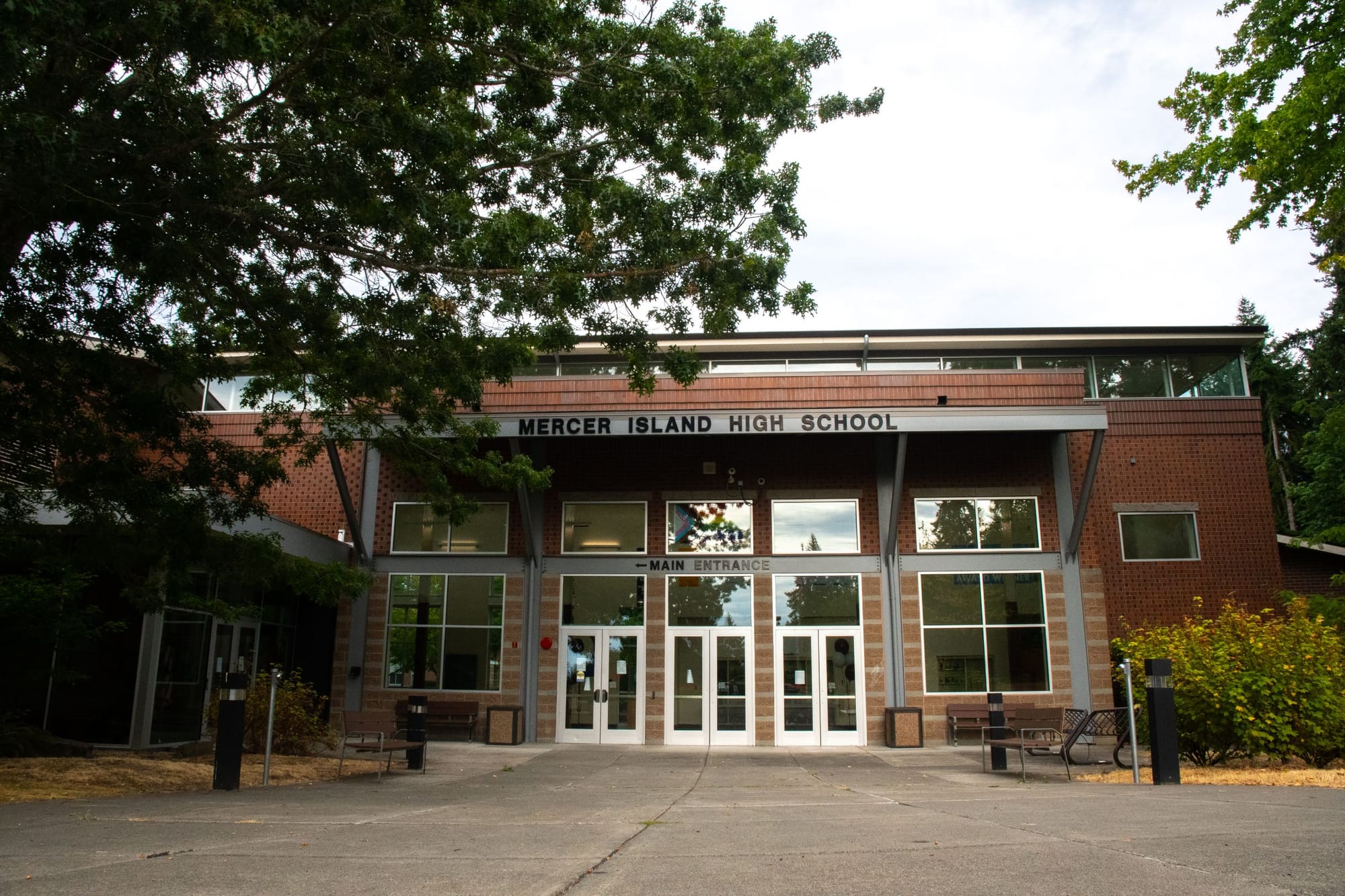
A separation agreement is what allowed a Mercer Island High School English teacher to quietly resign from the district despite misconduct concerns.
Eric Ayrault, who taught in the Mercer Island High School’s English Department from 1997 until 2019, was under investigation in 2018 for misconduct related to “maintaining professional staff/student boundaries” before his resignation, school records show.
The investigation was initiated in part after three students shared a GoogleDoc with the principal that documented over a dozen alleged instances of inappropriate behavior over the course of a semester.
In his separation agreement, Erin Battersby, the head of legal for the Mercer Island School District, wrote that the three week investigation into the allegations had concluded “without a finding.” He resigned the same day without facing any formal discipline and went on to teach at seven schools in Colorado and California, according to his LinkedIn.
Battersby, who is in charge of investigating reports of teacher misconduct within the Mercer Island School District, declined numerous interview requests.
School records show that Ayrault had been under investigation the year prior after a fellow teacher reported to the administration that she had overheard students complaining that he was “creepy” and made them feel uncomfortable.
The investigative report obtained by InvestigateWest showed the educator was found to have violated three separate school policies, including “Maintaining Professional Staff/Student Boundaries” and sexual harassment. He was required to enter a no-contact agreement with one of the students, which included a safety plan for the student. But the discipline was nominal. He received a written reprimand and was required to take additional training. His conduct was not reported to the state, and he was allowed to continue teaching.
“Reports to OSPI are the responsibility of the superintendent and in this instance, we do not know why the superintendent at the time did not make a report,” Ian Henry, the spokesperson for the Mercer Island School District, wrote in an email to InvestigateWest. “Unfortunately, we can’t speak to the actions of a former superintendent.”
Ayrault’s misconduct was finally reported to Washington’s oversight agency in October 2025 by the current superintendent, after InvestigateWest published reports regarding two other longtime English teachers at the school who had engaged in inappropriate relationships with students. But as of Jan. 26, 2025, Ayrault does not appear in OSPI’s misconduct database.
The first teacher, Gary “Chris” Twombley, was quietly put on paid administrative leave in 2023 and later resigned and voluntarily surrendered his teaching license, according to a settlement agreement between the school district and the teachers’ union.
The second teacher, Curtis Johnston, abruptly announced his retirement a few days after InvestigateWest and the Mercer Island Reporter published an investigation into Twombley. It was later revealed, after a victim came forward, that the school district had been made aware that Johnston was engaging in a sexual relationship with a student in 2011 but that administrators failed to properly investigate.
Current administrators with the school district launched an investigation into Johnston following InvestigateWest’s reporting, but closed it less than two months later after being “unable to make any findings.”
Dennis, the attorney with the Washington Law Center law firm, said he often sees school districts blaming the teachers’ union for not allowing them to fire a teacher who displayed problematic behavior.
Unions are legally required to provide fair, impartial and good faith representation to all members following a landmark 1944 Supreme Court ruling. But Dennis sees school districts using the union as a scapegoat more often than not.
“If there’s children’s safety involved, that is not an acceptable excuse,” he said.
The Washington Education Association, the state’s teachers union, declined interview requests for this story.
Dennis said when school districts allow a teacher to quietly resign from their position without formal discipline, they are often thinking about cost savings, not student safety.
“They may not want to frame it that way, but at the end of the day, that’s what they’re doing. And it’s a conscious decision that they’re making. Saying, ‘Hey, do we want to fight this? It’s going to cost us X, Y and Z, or do we just move on?’ Meanwhile, kids are being harmed.”
“It makes my blood boil,” he added.
Miller, who advocates against educator sexual abuse nationwide, stressed that there are state and federal laws on the books that prohibit school districts from allowing teachers to avoid accountability and swiftly move on to different jobs.
While federal law doesn’t outright ban the use of settlement or confidentiality agreements, it does discourage school districts from using them in cases of sexual misconduct, and it mandates that states enact policies or regulations to prohibit such agreements.
“But there’s not enough teeth in it,” Miller said.
She was surprised to learn these agreements were still being negotiated in Washington, considering it was one of the pioneering states to pass model legislation banning them more than 20 years ago.
“If this is still happening, well, maybe Washington needs to ramp up their penalties,” Miller said. “Because they are deliberately endangering children and students, and they are deliberately setting up other districts for liability when those people offend again.”

The story you just read is only possible because readers like you support our mission to uncover truths that matter. If you value this reporting, help us continue producing high-impact investigations that drive real-world change. Your donation today ensures we can keep asking tough questions and bringing critical issues to light. Join us — because fearless, independent journalism depends on you!
— Jacob H. Fries, executive director
DonateCancel anytime.

School leaders received numerous reports that former high school English teacher Curtis Johnston was “dating” a student but failed to intervene, complaint says

A searchable teacher misconduct database compiled by InvestigateWest fills gaps in the state’s public-facing records

A different teacher has also been put on paid leave for potentially "failing to report"

High school English teacher Curtis Johnston, who abruptly retired in August, is the second teacher accused of sexual misconduct in recent months

The bill, inspired by InvestigateWest reporting, is awaiting Gov. Brad Little’s signature

Minimal oversight of court investigators makes it difficult for parents to challenge flawed reports without risking damage to their cases

Recent court rulings show how ICE is citing missed immigration check-ins — often without evidence — to detain asylum seekers

The independent probe will look into “systemic failures” detailed in InvestigateWest series
Subscribe to our weekly newsletters and never miss an investigation.