School leaders received numerous reports that former high school English teacher Curtis Johnston was “dating” a student but failed to intervene, complaint says
Uneven Ground: This is the third installment in a series examining inequities facing Native American youth in Washington’s criminal justice system.
In 2018, Washington passed a law to limit the number of children charged as adults. Supporters of the law argued the legislation was necessary to prevent needlessly harsh sentences, noting that kids of color were more likely to be charged as adults than white children.
Within five years, the number of kids charged as adults in 2023 had dropped by more than half, state data shows, which led to a more than 80% reduction in transfers to adult court.
But advocates and lawmakers are left with a problem: White children remain far less likely to be transferred to adult court than children of other races. In 2023, 83% of all children charged as adults were not white, according to data from the Washington Department of Children, Youth, and Families.
“All that’s left are youth of color,” said state Rep. Roger Goodman, D-Kirkland, chair of the House Community Safety Committee.
Reports, including from the Washington State Partnership Council on Juvenile Justice and University of Washington researchers, reveal a persistent pattern: Black, Native American and Latino youths are more likely to be transferred to adult court, subjected to harsher penalties and left with records that follow them into adulthood.
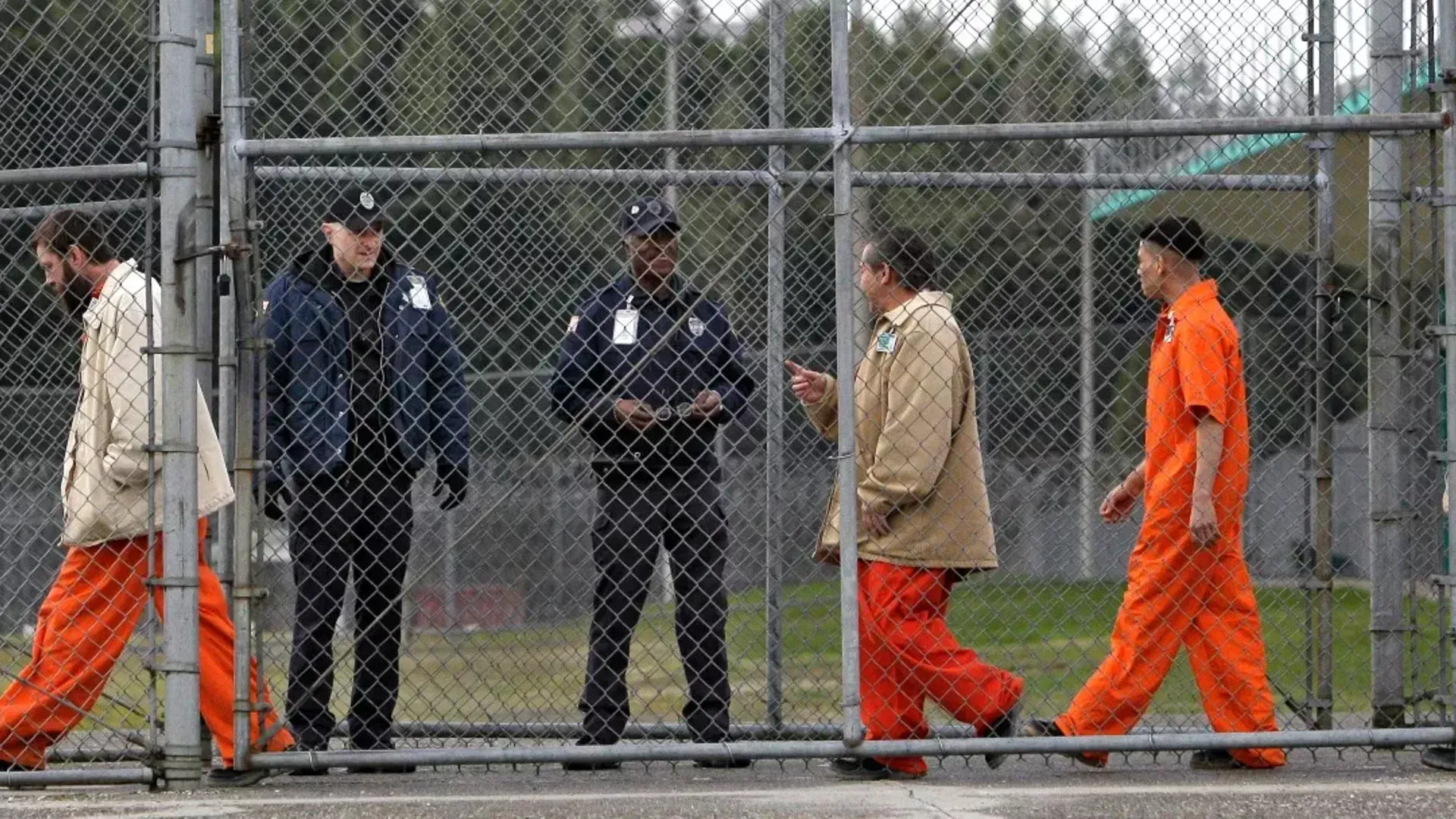
For Native Americans, the result is hundreds now serving time in Washington’s adult prisons for crimes they committed before they turned 18 — some because they were juveniles charged as adults, others because their adult sentences were automatically lengthened because they’d been separately convicted of a felony as a child.
The racial disparities exist both in cases where state law mandates the crime be charged in adult court and when it’s left to a county prosecutor’s discretion. A 2024 University of Washington report, commissioned by the King County Department of Public Defense, found that the disparities were present even with other factors accounted for.
For example, out of 28 cases in which a white child was charged with first-degree assault or second-degree assault with a deadly weapon, zero were charged in adult court. But 28% percent of the same kinds of cases involving Black and Latino youths were charged in adult court, the report shows.
“For both time periods … analyses examining the association between race/ethnicity and decline to adult court indicate that the racial disproportionality is a result of systematic bias, not random chance,” the report said.
Some lawmakers echo that conclusion.
“There’s no other reason for it than just straight racism and intentional systems issues that we’ve never corrected,” said Washington state Sen. Yasmin Trudeau, D-Tacoma, the vice chair of the Senate Law and Justice Committee. But prosecutors said it's difficult to draw firm conclusions from such a small sample size. Jimmy Hung, a juvenile prosecutor with the King County Prosecuting Attorney’s Office, pushes back on the notion of willful racism on the part of prosecutors — noting that existing statutes make it difficult to retain jurisdiction over homicide cases, which are automatically transferred to adult court for 16- and 17-year-olds.
“Even if a young person commits a homicide and I don't want to try them as an adult, the law doesn't really allow me to do that right now,” Hung said. “If they kill somebody, I can't charge a non-murder.”
Hung said he’s never experienced or seen any motivation or intention to treat nonwhite youth more harshly, but said he can’t rule out the possibility unconscious bias plays a role in some discretionary charging decisions.
Trudeau and other lawmakers who work on criminal legal issues said data revealing deep disparities was shocking, but not surprising.
“We can bury our heads in the sand, but the data is pretty clear,” she said.
Charged as adults
All crimes that qualify for transfer to adult court are violent offenses, including murder, rape and robbery. According to the Washington State Administrative Office of the Courts, between 2010 and 2019 the number of juveniles sentenced as adults fell from over 100 annually to fewer than 50. But advocates said prosecutors still have discretion in deciding what charges to pursue, and there’s not much data on how those decisions are made.
“That’s sort of the black box of this,” said Chelsea Moore, the “Smart Justice” policy program director for ACLU of Washington. “We see these [racially] disparate outcomes, and it’s because at those points in the decision-making there’s discretion being used that are subject to racial biases.”
Prosecutors and researchers have said it is difficult to draw firm statistical conclusions based on the relatively small number of cases that are now transferred to adult court.
The adult court system is set up differently than the youth court system, notes Michaela Pommells, executive director of Youth First Justice Collaborative, a national organization that advocates for keeping children out of jail. Juvenile court is supposed to be acutely focused on addressing the unique rehabilitation and development needs of children with the goal of reintegrating them to society while minimizing the risk they end up back in jail.
Advocates argue that subjecting teens and young adults to the adult court system can traumatize them for life, negatively impacting their chances of success and avoiding reoffending.
“There's so many things wrong with a young person being in the adult system,” she said. “These are young people who are not fully developed.”
Families are not encouraged to be a part of the process in adult court the same way they are in juvenile court, which Pommells said causes significant stress.
The overwhelming majority of children who are charged in adult courts have experienced severe trauma, said James Dold, chief executive and founder of Human Rights for Kids, a nonprofit that promotes and advocates protection of human rights for children. A new report from that organization shows that the overwhelming majority of children who were charged as adults in Washington reported being victims of child abuse, with nearly 90% reporting experiencing physical abuse, 85% reporting emotional abuse and 51% reporting sexual abuse, with an average age of abuse onset of just 5 years old.
“When I’m training defense lawyers or witnesses, and they have a female client age 16 or younger, you can pretty safely assume she’s been raped or sexually trafficked,” Dold said, with the report showing a rate of roughly 90% of girls charged as adults reporting sexual abuse or being trafficked.
A bill that could have reduced sentences for hundreds of incarcerated people serving added time for crimes committees as minors failed to pass out of the Legislature earlier this year. (AP Photo/Elaine Thompson)
Native American children who are charged as adults experienced the most significant rates of adverse childhood experiences across all categories — at the time of the charges, more than 91% reported being separated from their parents, more than 95% reported experiencing emotional abuse, and an overwhelming majority reported physical abuse, emotional neglect, substance abuse in their households, and incarceration of their family members.
Research shows that Black children and other kids of color are often perceived as more adult-like than they are and less innocent than white kids, in some cases for children as young as 5 years old. Additional research by Harvard’s T.H Chan School of Public Health shows that negative racial attitudes and stereotypes are associated with lower quality care and poorer results in health and social outcomes for those kids.
“When kids have a hardened life, they mature — it doesn't mean that they are mature,” Rep. Trudeau said.
Rep. Goodman said that adultification can even be seen in court documents: Where white children might be referred to as making a mistake and needing guidance, a Black or Native American child might be referred to as troublesome or violence-prone. That language difference can influence charging and sentencing decisions.
Automatic transfers to adult court take into account age, the type of crime alleged and criminal history. Even with more limits on what charges qualify for automatic transfer to adult court, racial disparities persist since youths of color are charged with more severe crimes than their white peers. Moore, with the ACLU, said a lack of information into how charging decisions are made has allowed racial biases to proliferate.
“They’re ending up in these continuous cycles of incarceration,” Moore said, because the system isn’t set up to heal children’s trauma.
Existing data shows that charging kids in adult court doesn't decrease their chances of recidivism. Research from the Washington State Institute for Public Policy, a nonpartisan public research group, found that youths tried as adults are more likely to reoffend and face longer incarceration compared to those sentenced to time in a juvenile incarceration facility or offered diversion.
Children who are convicted in adult court do not retain the same privacy protections that they get in the juvenile system, leaving their records accessible by future employers, bank lenders and schools. Many news outlets do not publicly name children who are charged with crimes in juvenile court, but often do so for children charged in adult courts, leaving them exposed to a potential lifetime of association with the alleged criminal act.
Hung said that he’s taken a step in his King County office to try to eliminate some points where bias comes into play for charging decisions by removing access to booking photos, and said there are further steps they could take, like doing the same for names of accused.
Sentencing disparities
Some advocates would like to ban the practice of charging children as adults altogether, except in cases of aggravated murder. It’s a tough sell, with significant opposition by groups representing law enforcement against lessening harsh sentences for violent offenders — but prosecutors like Hung aren’t dismissing the idea totally.
“If you asked me in a private time, like ‘Jimmy, do you think we should get rid of all laws that would allow prosecutors to even try kids as adults?’ I’d be like, yeah,” Hung said. “I mean, I think in some ways that would make my job easier, you know?”
Before the practice was banned in 2023, Washington was one of a few states that allowed juvenile offenses to be factored into adult sentences, and some lawmakers are working to reduce sentences for adults whose time incarcerated was automatically lengthened through the point system. Those proposals have faced repeated opposition from law enforcement groups, victim advocates and Democratic lawmakers.
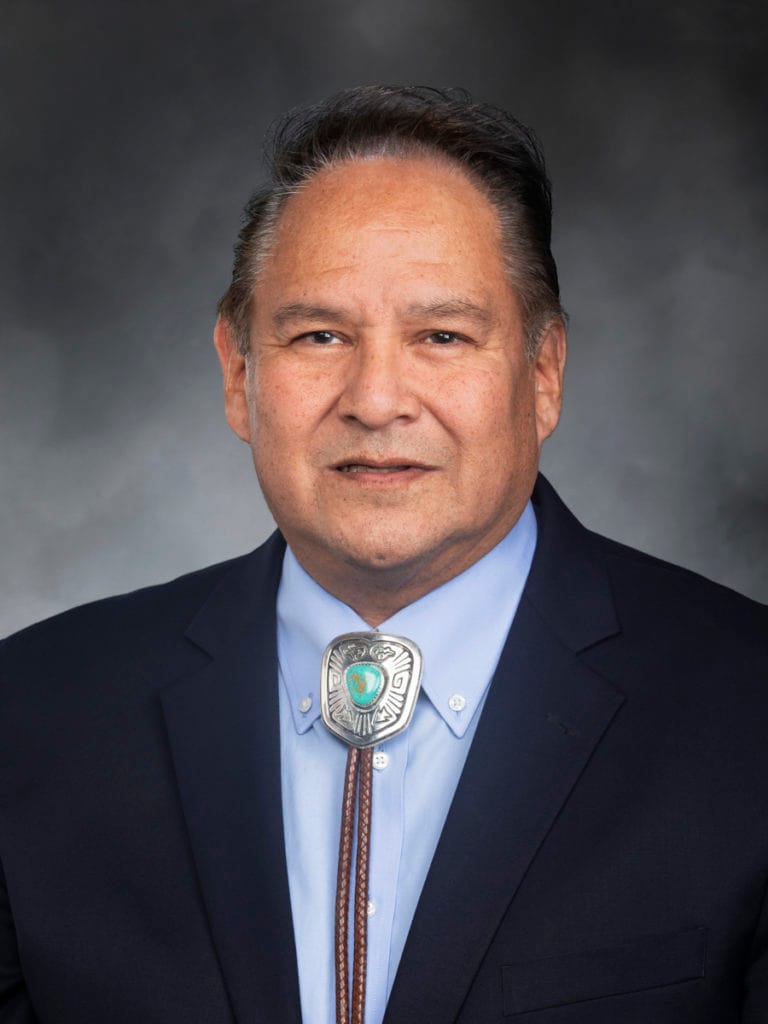
The majority of those incarcerated whose sentences were extended through the points system are people of color, and advocates said they’ve been left behind. Indigenous adults are especially likely to be serving longer sentences, and over 40% of Native people incarcerated in Washington have at least one juvenile felony on their record that has impacted their adult sentencing. State Rep. Chris Stearns, a citizen of the Navajo Nation, is the primary sponsor behind legislative efforts to eliminate the use of juvenile points, including ongoing efforts to retroactively adjust sentences for cases that have already been adjudicated.
Police and prosecutors groups have also repeatedly come out against reform to the juvenile points process. Law enforcement officials, like those with the Washington Association of Prosecuting Attorneys and the Washington Association of Sheriffs and Police Chiefs, have said that those impacted by juvenile points are repeat offenders who have proven their propensity to commit crimes, and that the bills fails to take a victim-centric approach that considers the impact on victims during a resentencing process.
After the 2018 legislation to limit the types of charges that can be transferred to adult court, law enforcement groups similarly argued that those who are charged as adults are solely violent offenders accused of serious crimes like murder and rape. Democrat Rep. Lauren Davis, who once voted in favor of reforms to the juvenile court system, has walked back support, saying the changes came at the expense of juvenile crime victims.
Goodman estimates around 1,000 people could be impacted by a retroactive removal of juvenile points, and that around 40% of those impacted would be Native American. Many would have years shaved off of their prison sentence or even be released.
Such a law would actually save the state millions of dollars from the incarcerated people who would be released, he said. Others disagree, pointing to the cost of the resentencing process.
Trudeau said she is also committed to talking about the retroactive juvenile points legislation until she’s “blue in the face.”
“It’s just so obviously racist,” she said.
But she doubts the retroactive bill will have enough support in the Legislature this year to advance.
“I don’t see us doing anything, actually having the political will to really create that wrap-around and that sense of belonging for kids at the right moment,” Trudeau said.
Rep. Chris Stearns wants to reduce sentences for people who have had their sentences extended for crimes committed as youth. (Provided)
There’s significant pushback, including among Washington Democrats like Davis to pass the retroactive points legislation. Victims and their advocates have strongly opposed such a move, stating concerns about the pain of resentencing hearings and safety.
“That sentence is the only thing the State of Washington ever gave that family, and the family receives that as ‘Now they’re going to take away that too,’” Davis said. “Now we’re going to basically make you relive the worst thing that’s ever happened to you again.”
Davis said she’s opposed to the blanket resentencing provision in the points legislation instead of a merit-based resentencing provision based on the perpetrator’s demonstrated remorse and rehabilitation, pointing out that many people whose sentences that could be impacted by this legislation had committed homicide.
The Shoreline Democrat said during the last session that she scoured social media, reports and news articles to find families of homicide victims to meet with, and none of them support resentencing efforts.
Stearns said he is working with victims groups to address their concerns as he prepares to try to move the juvenile points legislation out of committee in the coming 2026 legislative session.
“The prosecutors agreed this person would get this amount of time and [victims families] agreed, and now it’s changing, and they’re like, ‘We had a deal,’ so that’s bad,” Stearns said. “At the same time, we’re directly affecting people’s lives.”
Davis remains opposed to the changes.
“The basis of your resentencing is because you essentially harmed people for a longer period of time, you harmed people when you were under 18 and when you were over 18,” she said.
Those in favor of retroactively eliminating juvenile points say that system is based on the racist “superpredator” myths of the 1990s.
“It is so obviously disproportionate in the way that these juvenile points were stacked and why, and it breaks my heart that I don't think that we will probably have at least a year until that conversation comes back again because of money,” Trudeau said.
The state faces a significant budget shortfall next year, and several lawmakers cited the impact of resentencing hearings and other associated costs with the bill as a barrier to its passage, in addition to the victim and safety concerns.
“But bearing in mind that this is a moral issue, if it’s really money I don’t know that it’s right to say well, we’re not going to treat you fairly or with equal justice because it’s too expensive, that doesn’t really hold water for me,” Stearns said.
Stearns said the Legislature has already agreed the points system is wrong by eliminating future use.
“We’re doing something that we know we shouldn’t be doing, and we already voted not to do it anymore, but we’re not fixing the past,” Stearns said.
Melanie Henshaw is the Indigenous affairs reporter at InvestigateWest. She covers Indigenous communities in the region, including coverage of tribal sovereignty, health care and the environment.
The story you just read is only possible because readers like you support our mission to uncover truths that matter. If you value this reporting, help us continue producing high-impact investigations that drive real-world change. Your donation today ensures we can keep asking tough questions and bringing critical issues to light. Join us — because fearless, independent journalism depends on you!
School leaders received numerous reports that former high school English teacher Curtis Johnston was “dating” a student but failed to intervene, complaint says
If you cover criminal justice in the Pacific Northwest — or want to — we’re hosting a free virtual training that may be useful to you and your newsroom
Get the inside scoop in your inbox, free.
Subscribe to our weekly newsletters and never miss an investigation.