

‘I was trying to follow the rules:’ WA asylum seekers detained over questionable violations
Recent court rulings show how ICE is citing missed immigration check-ins — often without evidence — to detain asylum seekers
Recent court rulings show how ICE is citing missed immigration check-ins — often without evidence — to detain asylum seekers

The independent probe will look into “systemic failures” detailed in InvestigateWest series

School leaders received numerous reports that former high school English teacher Curtis Johnston was “dating” a student but failed to intervene, complaint says

Recent court rulings show how ICE is citing missed immigration check-ins — often without evidence — to detain asylum seekers

Last March, Wilfredo Castillo pulled up to a nondescript business park in Tukwila, Washington, where he had been dozens of times for routine check-ins with his immigration case manager.
The case manager had told Castillo to bring flight information and the address for where they’d be staying during an upcoming trip to visit his wife Karri’s family in Colorado. Castillo had fled Venezuela in 2020, where he was barred from graduating from college for participating in political protests, he told InvestigateWest. As a business owner – Castillo sold fruit, car parts and ran a package delivery service – he said was also beaten up by Venezuelan authorities for refusing to pay them for protection. He had been living in Washington with Karri and her kids since April 2024 while he waited for an immigration judge to rule on his asylum case.
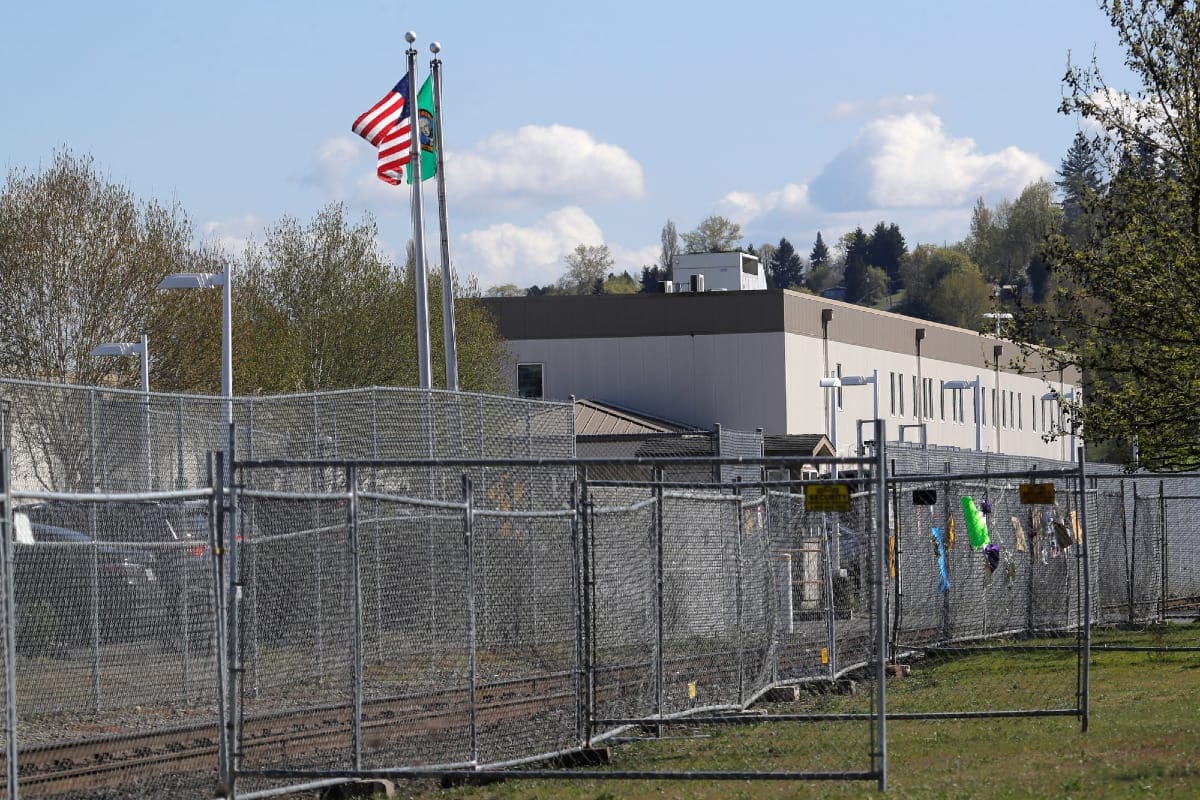
But instead of meeting his case manager, Castillo was met in the waiting room by three Immigration and Customs Enforcement officers. They questioned him briefly about his travel before telling him that he “wouldn’t be going anywhere” because they were taking him to the detention center in Tacoma. Then they handcuffed him without explaining why.
“I was trying to follow the rules,” Castillo told InvestigateWest by phone. “I don’t understand why they took me when all I wanted to do was to travel with my wife.”
ICE later claimed in court filings that Castillo had missed nine check-ins on a phone app, SmartLink, that the agency uses to monitor asylum seekers who are out of detention. But Castillo says the missed check-ins were due to malfunctions on the app and that he never missed any of his in-person appointments.
He ultimately spent 11 months at an ICE detention center in Tacoma, Washington, where he was stabbed multiple times with a pencil by another detainee, according to court documents. A federal judge released him last month, finding the government wasn’t justified in holding him for so long. In addition to Castillo, Washington federal courts last year found at least 16 people with pending asylum claims were held at the Tacoma detention center without being afforded an opportunity to contest their detention at a bond hearing, according to an InvestigateWest review of federal court rulings.
 Rachel Spacek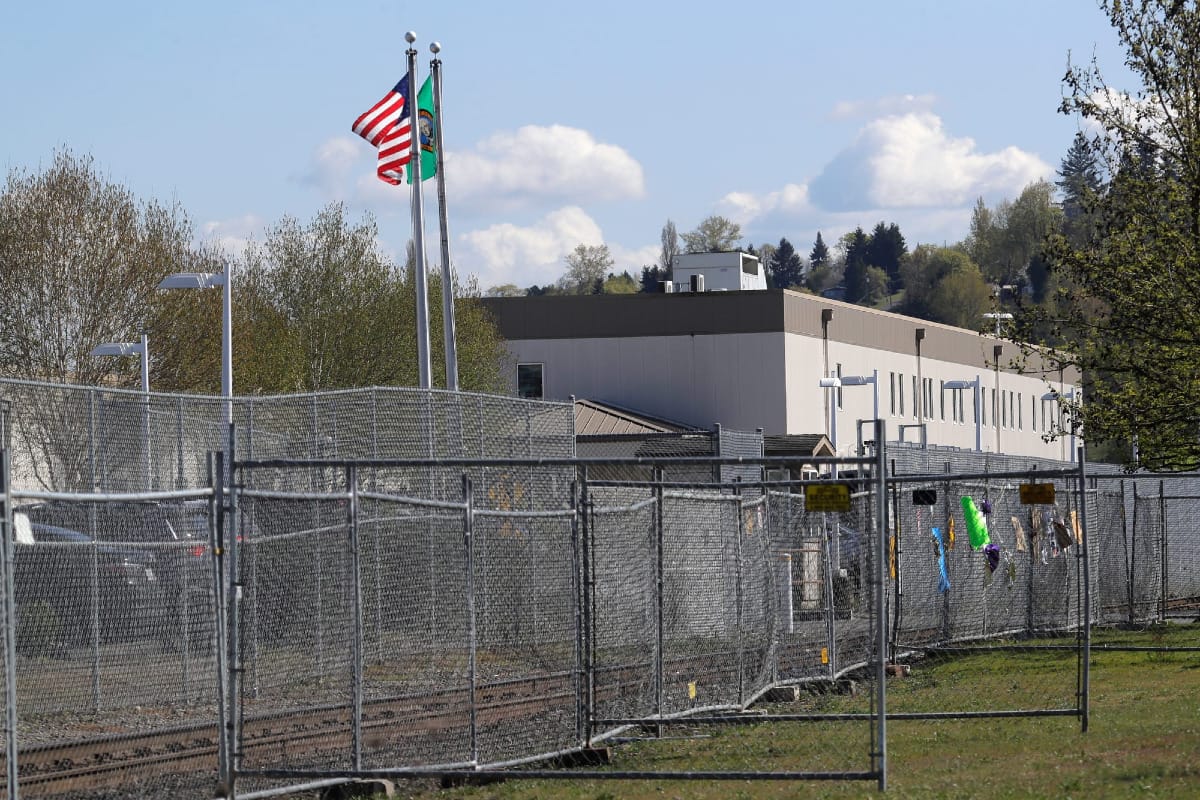
While the cases represent only those in detention who were able to successfully bring a lawsuit challenging their confinement, they highlight how asylum seekers fleeing government persecution, gang violence or war are being swept up in President Donald Trump’s mass deportation efforts under pretenses that often later don’t hold up in court.
Castillo described the Northwest Detention Center in Tacoma as a “really, really awful place.” Detention also made pursuing his asylum claims harder since he had a limited number of phone calls and it was hard to collect the evidence to prove his need for asylum.
Immigration attorneys, like Jennifer Ibañez Whitlock, senior policy counsel of the National Immigration Law Center, say they've seen detention derail what would otherwise be straightforward asylum cases — and even push people to give up their cases to avoid lengthy stays in detention centers.
“People are going into their check-ins saying that they are ‘trying to do it the right way,’” Whitlock said. “But what the president and the Department of Homeland Security is doing is punishing the fact that they came to the U.S. at all asking for asylum.”
When someone enters the United States, claims asylum and has their case enter into immigration court, they’re afforded temporary protections and can’t be deported until their asylum case has either been granted or denied. But ICE can legally detain people with pending asylum claims if they have a criminal record, or if agents believe they may not show up for court proceedings or are a danger to the community.
Under previous administrations, immigration attorneys say that unless an asylum seeker had committed a serious crime, they would typically face an initial detention upon entry — sometimes for up to two weeks — and then be released while they waited for their case to be decided. People released to live in the community are required to regularly check-in with immigration authorities through the SmartLink app, which prompts them to appear on video calls and upload weekly photos of themselves from several angles to verify their identity and that their location is within the boundaries of the address ICE has on file. Asylum seekers are also typically required to attend in-person visits with their case manager.
But in Washington and across the country, ICE is now increasingly detaining asylum seekers again for allegedly missing required appointments — without providing evidence in a growing number of cases, according to lawyers and a review of federal court rulings.
Immigration attorneys say ICE is increasingly justifying detainments by claiming asylum seekers have violated terms of the Intensive Supervision Appearance program. The supervision program is aimed at avoiding detention and providing immigrants with another avenue to remain in contact with immigration authorities while their case proceeds.
“There's already been a determination by ICE that this person can be at their liberty in the community while they pursue their case,” said Jordan Cunnings, legal director with Innovation Law Lab, an immigration law firm in Portland representing several asylum seekers in their lawsuits challenging their detention. “The new administration is using people's regularly scheduled check-ins with ICE as a way to find and detain people quickly.”
The detentions come as the Trump administration has moved to severely restrict asylum cases, halting a program to admit new refugees and pausing all decisions on certain asylum cases not yet in immigration court. The administration has also proposed a rule to restrict work permits for asylum seekers.
Among the asylum seekers who were detained in Washington and ultimately released from the detention center last year: a man who said he fled Russia out of fear that he would be persecuted for refusing to participate in Russia’s invasion of Ukraine; a former career public servant who fled violence in Afghanistan with his wife and child, and who had authorization to work as a supermarket cashier and Uber driver; and a Venezuelan man with a U.S. citizen son, who was previously released by ICE and then detained because of his tattoos.
Aaron Korthuis, an attorney with the Northwest Immigrant Rights Project who represents detained undocumented immigrants pro bono, said ICE has also justified detentions over alleged failures to submit photos through the Smartlink app at specific times or missing video calls with case managers. It’s easy for people to miss the photo submissions and calls because the application is slow and “buggy,” he said. Those missed check-ins were previously not the sole reason to detain someone seeking asylum, Korthuis said, as ICE usually allowed an asylum seeker to explain why they missed a check-in and excused minor violations.
But that looks to be changing, Korthuis said. Last year, an asylum seeker from Afghanistan said he was assured by ICE that two missed check-ins would not count against him. The man said one absence was because the agency had double-booked him for appointments at the same date and time, and the second was because he was hospitalized for a heart arrhythmia, he wrote in court documents.
Instead, he was detained at work two months after the hospitalization by ICE agents, who said he had missed check-ins and was deemed a “flight risk.”
When he later challenged the legality of his detention, ICE said the man also failed to tell immigration officials that he had moved to Portland, Oregon, from California, where he was initially detained. They also said he failed to complete another check-in on his phone app that required him to upload multiple photos of himself to verify his location and identity, which he denied.
ICE agents did not provide the court with any documents showing the man had missed immigration appointments, U.S. District Judge Kymberly K. Evanson said in her ruling granting the petition and releasing the man from detention.
In total, he was held at the Northwest Detention Center for 41 days.
“The Government appears to have settled on a theory that Petitioner's release was revoked because he violated the conditions of his release, the only ‘evidence’ of the revocation or the violations they submit is the declaration of a deportation officer, Gabriel Arambula,” Evanson wrote. “Arambula did not attach any records to the declaration, nor is any ICE system identified specifically.”
Other asylum seekers, like Castillo, told Washington federal courts that they were not aware of any alleged supervision violations until they were detained. In court documents, Castillo said he had missed check-ins on the app because it had “malfunctioned” but that his case manager told him that he was meeting all of the conditions of his supervision.
Castillo also said that when he was detained, his Smartlink account was deleted, erasing all of the data about his check-in history, messages and other information that he had been uploading to the app for a year. But since his account was closed, there is no way to access its records.
Korthuis said a number of his clients have also seen their accounts closed when they were detained. Previously, case managers would acknowledge a person’s reason for missing a check-in and excuse the violation in the app.
“I think the violations certainly do occur, but they often occur within a context,” Korthuis said. “And ICE never provides that context to the court or in their own decision. Usually because it's such a minor thing, it doesn't indicate that someone's now going to run away or is a danger to the community, which are the factors that ought to govern whether someone should be re-detained or not.”
Courts have also called out immigration authorities for failing to back up other claims used to detain asylum seekers.
One asylum seeker from Venezuela, Harrinson Jose Osuna Benitez, sought asylum in the U.S. in September 2024 because he feared torture and prosecution by his government. He was a tattoo artist in Venezuela and has many tattoos of his own, according to his court petition. When he arrived at the U.S. border in Texas with his partner, ICE agents asked him about his tattoos and determined he had no criminal history before releasing him and his partner on parole.
The couple moved to Portland shortly after. In December, after a complicated pregnancy and child birth, Osuna Benitez’s partner gave birth to a baby boy, according to his court petition.
Over the next year, Osuna Benitez continued to attend appointments at the Portland Immigration Court, until ICE agents detained him when he showed up for a Nov. 17, 2025, appointment.
He spent two months in ICE detention, during which his partner and child struggled financially because he was the “primary breadwinner” of the family, court documents said. Ultimately, ICE revealed in court that they detained Benitez because of his tattoos. U.S. Magistrate Judge Brian Tsuchida found that unjustified, since they had previously released him into the U.S. knowing about his tattoos.
Tsuchida said Osuna Benitez’s compliance with ICE’s requirements had been “exemplary” and criticized the agency’s lack of evidence for detaining him.
“Respondents appear to have performed no investigation into the tattoos, even though Petitioner told Respondents he was not associated with a gang association, is a professional tattoo artist, and has no criminal history,” he wrote in his ruling releasing the man from detention. “Respondents revoked Petitioner's parole and detained him solely on the possibility that he might be affiliated with a gang based upon tattoos that are not even described.”
 Rachel Spacek
In response to questions about why ICE is detaining asylum seekers in the region, DHS spokesperson Christine Cuttita said in an email that “a pending asylum case does NOT confer any type of legal status in the United States.” Cuttita said asylum seekers can be detained at a port of entry while the government looks into their claims. “If their claims are found to be valid, they will be granted relief. If they are found to not be valid, they are swiftly removed.”
“[U.S. Citizenship and Immigration Services’] top priority remains the screening and vetting of all aliens seeking to come, live, or work in the United States. President Trump and [then] Secretary Noem have given USCIS the ability to use all tools in our toolbox to ensure that the integrity of the immigration system is upheld, fraud is uncovered and expeditiously addressed, and illegal aliens are removed from the country,” Cuttita said. She did not respond to follow-up questions about individuals who were detained over missed check-ins after being released on parole.
The Northwest Detention Center took a huge toll on Castillo. The food was “horrible,” and detainees often went days without going outside, he said. He had gotten so used to drinking the heavily chlorinated water at the facility that it shocked him when he took a sip from a bottle that his wife brought him after he was released. Castillo had trouble sleeping on the thin mattress, he said, because the toilet in his cell continuously made loud rushing noises, and there were people talking and screaming all night.
“Sleep was a challenge, really I didn’t sleep in there, I only rested,” Castillo said.
Castillo was also stabbed by another detainee with a pencil while he was in detention, according to court documents. The Department of Homeland Security acknowledged the incident in comments provided to Newsweek. He was given antibiotics, a tetanus shot, bandages and pain medication. His wife, Karri, who is a U.S. citizen, requested that he be sent to the emergency room, but he wasn’t.
Castillo’s asylum case was also sped up while he was detained. Before his detention, Castillo was expecting his asylum claims would be heard in April 2027. After his detainment in March 2025, the hearing was moved up to July, just four months later.
“Once he was detained it was impossible to find an attorney who would help him without charging an arm and a leg,” Karri Castillo said. She said she was quoted $10,000 from one attorney for just an initial phone call with Wilfredo, who goes by Will.
Without an attorney, he also struggled to build his asylum case inside the detention center. The first attorney his wife found said they would represent him in the asylum case but stopped responding to their emails and phone calls, she said. The couple was then on their own and tried to collect photos and evidence of Will Castillo’s abuse back in Venezuela, but it was difficult to make international calls from inside detention and his wife does not speak Spanish and struggled to communicate with his brother in Venezuela.
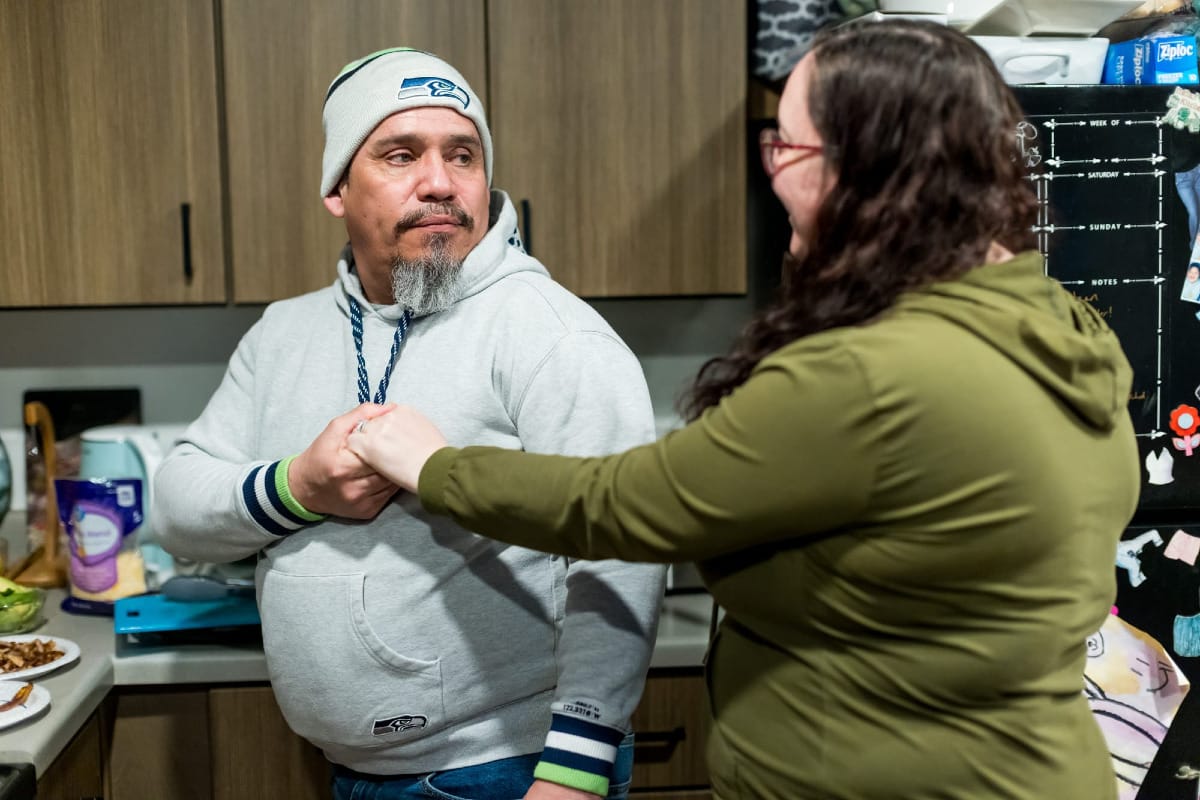
Eventually Castillo successfully petitioned a federal court for his release, but his future in the United States remains uncertain.
While he was in detention, Castillo’s asylum case was denied by an immigration judge, who instead found that, under the United Nations Convention Against Torture, Castillo cannot be sent back to Venezuela because he is likely to face torture there. Under the temporary legal status granted by the immigration court, Castillo is allowed to live in the U.S. and can apply for a work permit, but it does not bar ICE from removing him to a third country if he is detained again.
According to court documents, ICE officials then sought to deport Castillo to Mexico, but hadn’t obtained any travel documents or permission from Mexican officials. A federal public defender in Seattle later filed a lawsuit challenging his detention. In her decision, the judge said Castillo had already spent months in detention and ICE could not keep holding him when his deportation was unlikely to occur in the "foreseeable future.”
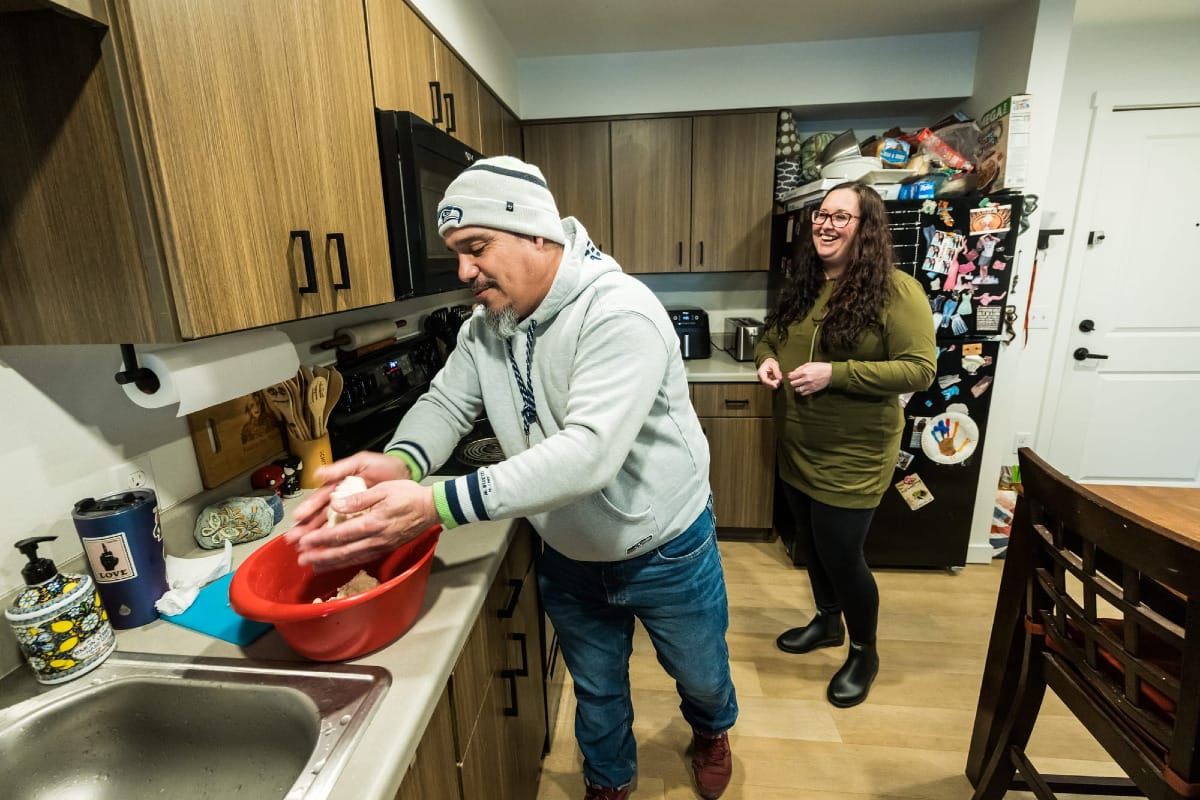
Since his release, Will and Karri Castillo are relieved to get back to their normal lives with their three kids, attending her son’s soccer games and listening to music together — a blend of love songs, heavy metal and rock. The couple cooks together every night they can, usually making arepas, a common Venezuelan corn cake stuffed with meat, cheese or eggs, or something Italian, from Karri’s side of the family.
They had fallen in love quickly, within six months of his move to Washington. The couple met at a Walmart, in the produce section. Will asked for Karri’s phone number and had texted her before she even left the store. They bonded over being “introverted extroverts” and shared their cultures through food and stories, Karri said, calling him “her person.” To cheer him up in detention, during their video calls Karri would play music in the bathroom and sing along.
It’s been over a month since Will Castillo was released from detention. He still feels anxious when he leaves his house and is always looking over his shoulder.
“I don’t want to see a vehicle following behind me,” he said. “And sometimes I feel nervous if I stay too long in the store because I feel like people are looking at me. I don’t want to go back there — it is not a place for good people.”
He’s also unsure what is next for his legal case, but wants to draw attention to the poor conditions he faced in detention and roadblocks it presented for his asylum case.
“We are trying to just try to do everything right, and we are easy targets for ICE,” he said. “We are vulnerable.”
The story you just read is only possible because readers like you support our mission to uncover truths that matter. If you value this reporting, help us continue producing high-impact investigations that drive real-world change. Your donation today ensures we can keep asking tough questions and bringing critical issues to light. Join us — because fearless, independent journalism depends on you!
— Jacob H. Fries, executive director
DonateCancel anytime.

In 2025, Washington federal courts granted petitions challenging detention more than half the time


Many undocumented immigrants arrested at an Idaho racetrack are being detained in Nevada and other states, making it harder for attorneys and family to find them

Share your story with InvestigateWest reporter Rachel Spacek

The independent probe will look into “systemic failures” detailed in InvestigateWest series

School leaders received numerous reports that former high school English teacher Curtis Johnston was “dating” a student but failed to intervene, complaint says

The proposal would expand the definition of illegal sexual contact between prison staff and an inmate to include kissing, groping

Washington is one of 12 states without enforceable state standards or oversight — that won’t change in 2026
Subscribe to our weekly newsletters and never miss an investigation.