

‘I was trying to follow the rules:’ WA asylum seekers detained over questionable violations
Recent court rulings show how ICE is citing missed immigration check-ins — often without evidence — to detain asylum seekers
Recent court rulings show how ICE is citing missed immigration check-ins — often without evidence — to detain asylum seekers

The independent probe will look into “systemic failures” detailed in InvestigateWest series

School leaders received numerous reports that former high school English teacher Curtis Johnston was “dating” a student but failed to intervene, complaint says

If patients can’t say anything nice, some doctor paperwork mandates, they can’t say anything at all

On Google Reviews, the assessments of Spokane’s self-described “world renowned” plastic surgeon Cameron Chesnut are stellar. The dermatologist-turned-facial-plastic surgeon has a 4.8 out of 5: Of the 204 reviews, 188 are 5 stars — and most of the less positive reviews are from a handful of people he never operated on.
But that image of perfection appears to be an artificial construction. This month, a patient on Reddit wrote that, before their surgery at Chesnut’s clinic, they had to sign a non-disclosure agreement — or NDA — banning them from writing “any negative reviews online” or even mentioning “the existence of the NDA itself.”
InvestigateWest spoke to multiple former patients who confirmed that Chesnut has asked some patients to sign NDAs. Chesnut did not respond to repeated interview requests. However, he bragged in a 2023 Instagram video that, unlike some surgeons, he did not give patients NDAs.
Beyond violating Google’s rules, blanket negative-review bans like this have been against federal law since Congress passed the Consumer Review Fairness Act in 2016.
Arthur Caplan, a professor of bioethics at New York University’s medical school, worries that violations of this law continue because violators know there’s a good chance they can get away with it.
“They know they’re not supposed to require some kind of NDA. They know that the public needs to be able to speak freely,” Caplan said of the ongoing violators of these laws. “They also know enforcement is rare.”
The Federal Trade Commission and state attorneys general have gone after relatively few offenders over the past decade.
Earlier this month, InvestigateWest published an investigation examining the relative lack of oversight in the fast-growing world of cosmetic surgery. When doctors use non-disclosure agreements, they can further obscure what little oversight exists, gagging even the influence of word of mouth.
 Daniel Walters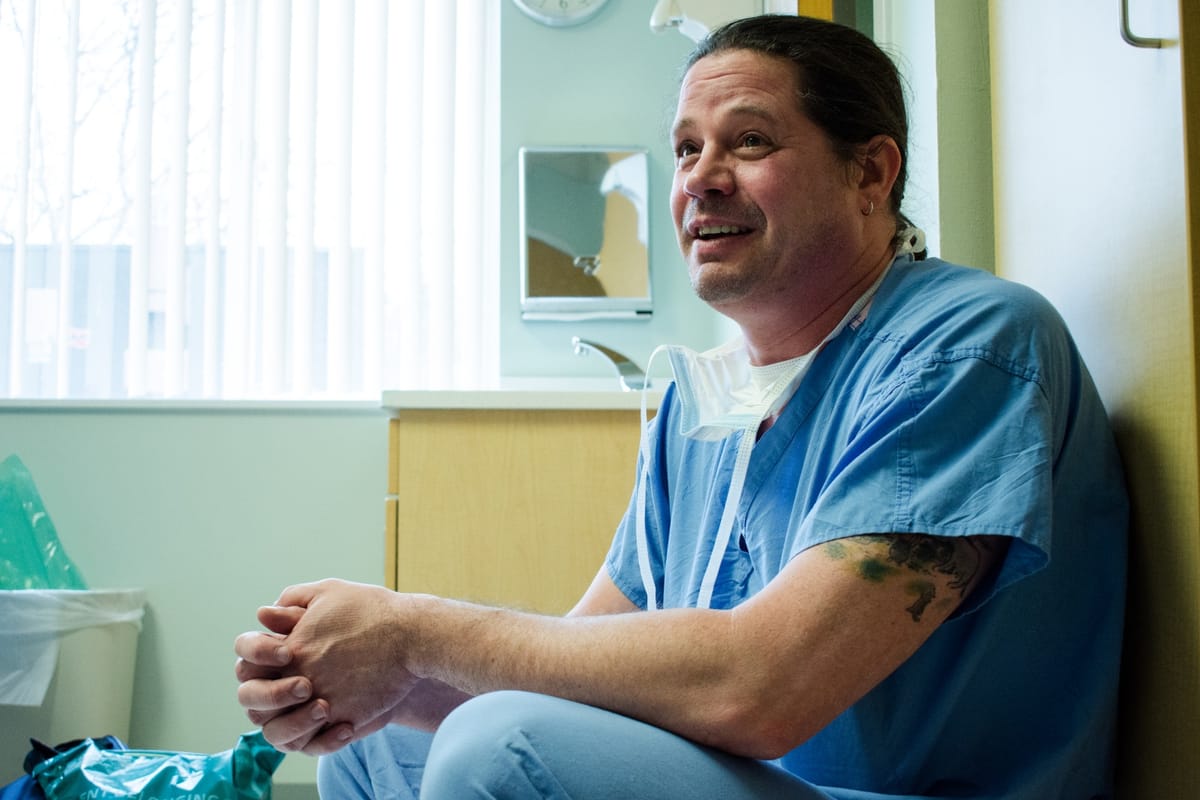
Caplan compares it to a pre-nup before a wedding and patients should consider it a potential red flag about a doctor’s quality. In other contexts, he points out, this kind of practice would be absurd.
“What if I said in an emergency room, ‘You can’t come in here unless you agree to not talk about whatever happened here?’” Caplan said.
Today, these kinds of pre-surgery NDAs are not something that any professional association advocates for, said Scott Hollenbeck, former president of the American Society of Plastic Surgeons, a professional group that represents the vast majority of board-certified plastic surgeons in the country.
“To tell a patient that they should not speak about you after surgery, that's not part of a trusting doctor-patient relationship,” said Hollenbeck. But he knows it still happens. The incentive for cosmetic surgeons to try to control their image is incredibly strong.
Some cosmetic surgeons in particular rely on the whims of social media to recruit patients, boost their credibility and heighten their fame. The bigger the demand, the more they can charge. But the fear for many lingers that a good surgeon could be ruined by unfairly bad online reviews, whether from a never-satisfied perfectionist patient or a cynical influencer who wields the threat of a nasty Yelp review like an extortionist.
So almost as soon as online review sites were invented, there were incentives for surgeons to game the system.
In 1996, Congress had passed a law that made it illegal for doctors to reveal a patient’s private medical information. But organizations like Medical Justice, a group that helps doctors manage their online reputation, complained that those restrictions made it difficult for doctors to respond to unfair attacks online.
"Any negative commentary was a one-sided debate,” Medical Justice CEO Jeffrey Segal wrote in a blog post last year. “And doctors were becoming human pinatas.”
In the early 2000s, Medical Justice began to recommend doctors embed anti-review clauses in their contracts. Some simply forbade patients from leaving negative reviews online. Others were more creative — patients had to agree to hand over the copyright of any reviews to the doctor, allowing doctors to send sites like Yelp targeted copyright takedown requests for any reviews they disliked.
According to Santa Clara University School of Law professor Eric Goldman, a leading academic studying the topic, by the time Medical Justice stopped recommending these anti-review clauses in 2011, as many as 2,000 health care providers had used their contracts to gag roughly a million patients.
The tactic soon infected other industries. Similar non-disparagement clauses popped up to ban negative reviews for apartments, vacation rentals and pet sitters. When an online retailer sent a debt collector to hound a customer who refused to pay the fine for leaving a bad review — damaging the customer’s credit score — the controversy led to Congress passing the Consumer Review Fairness Act. The 2016 law made it illegal for businesses to put anti-review clauses into their contracts unless they gave their customers a meaningful chance to negotiate.
If it hadn’t been for that legislation, Goldman told InvestigateWest, these anti-review contracts would be absolutely everywhere. Businesses would feel they needed them to compete with competitors already using them. By that measure, Goldman sees the act as a major success. Still, it’s nearly impossible for observers to know how widespread the law is being violated.
"There's no database, there's no reporting mechanism, and certainly, if you were to send out a survey, I don't think you would get clear answers on that,” said Hollenbeck, the former president of the plastic surgery society.
Responsibility for enforcing these rules was left to the Federal Trade Commission and state attorneys general. The Federal Trade Commission, Goldman said, has gone after a few businesses for these illegal non-disclosure agreements, but typically only businesses who’ve broken other laws.
Washington is one of the few states where the state Attorney General’s Office has aggressively gone after some businesses that have tried to ban their clientele from leaving negative reviews, like the pet store chain Puppyland. And in 2024, the attorney general made an example of Seattle-area cosmetic surgeon Javad Sajan. Sajan’s Allure Esthetic clinics illegally banned negative reviews, generated fake customer profiles to leave positive reviews and photo-edited extra hair on the after-surgery photos of a hair-plug patient, then-Attorney General Bob Ferguson charged.
A judge ruled that Allure’s NDAs violated federal law. Allure settled with the state, agreeing to pay restitution to 21,000 customers who’d signed the illegal agreements.
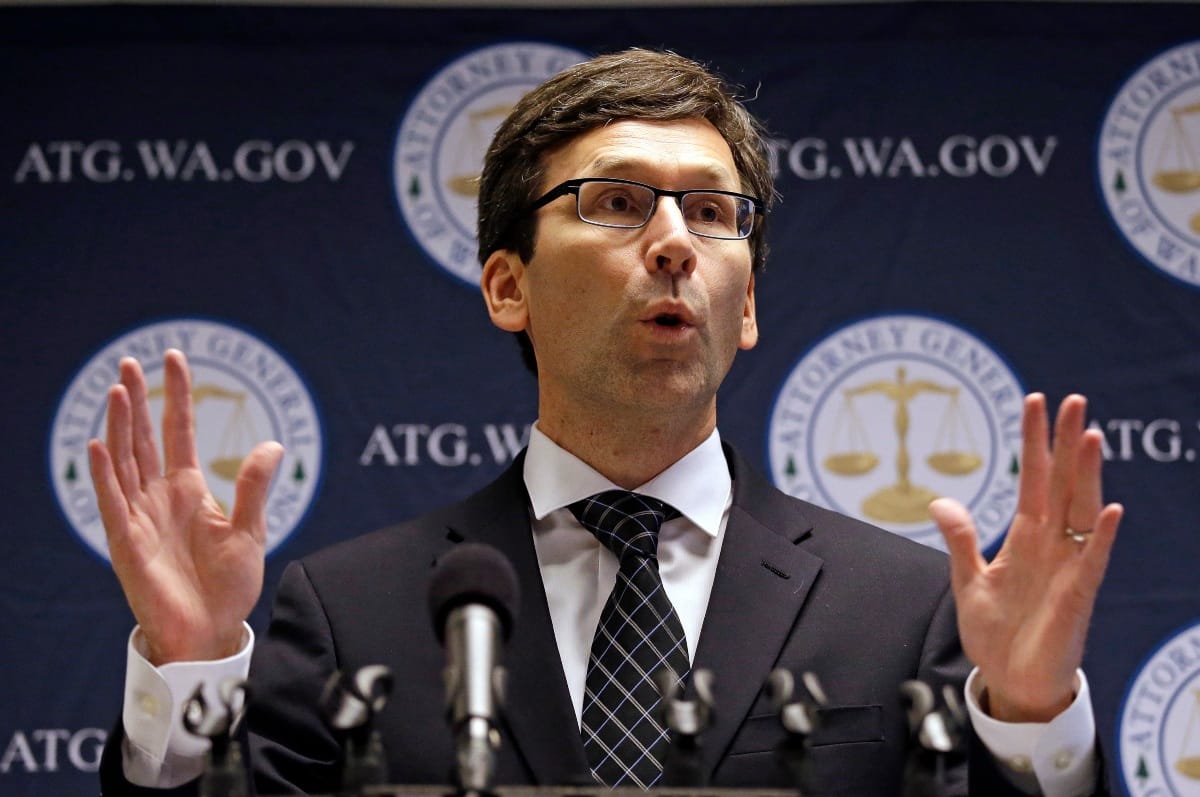
Seann Colgan, an assistant attorney general with Washington state's Consumer Protection Division, said that the Attorney General’s Office is currently investigating two other potential violators of the Consumer Review Fairness Act — including one in the medical field.
But he also said that the state gets thousands of complaints a month from consumers on a wide variety of issues. Most are handled individually by the attorney general’s dispute-resolution program. Only a few accusations, depending on how “widespread the conduct was, how many Washingtonians were affected, and how egregious it was,” are enough to spark state litigation, Colgan said.
The relative lack of enforcement nationwide frustrates medical ethics advocates like Caplan.
“At the state level, they have bigger fish to fry than taking cases about unsatisfied customers in things like plastic surgery,” Caplan said.
But making such a law easier to enforce can have downstream consequences, too. California was one of the first states to ban contracts that gag patients and customers, giving private attorneys the right to bring cases against businesses that violate the rules. But Goldman said that just created incentives for waves of lawyers to go “popping their head into businesses, looking for gotchas in the terms of service” and bringing shocking numbers of petty lawsuits.
Loubna, a Brooklyn-based 34-year-old who asked her last name not be used to avoid professional repercussions, walked into her New York plastic surgery appointment this year to fix her deviated septum — she’s a snorer — and get a rhinoplasty. But right before her surgery, when she had already undressed, she was asked to sign a non-disclosure agreement out of nowhere.
It appeared to restrict her ability to sue if something went wrong, ban her from making any disparaging comments about the surgeon and forbid her from even making an attempt to contact any of the surgeon’s other patients. She refused to sign, she said, and potentially risking the $24,000 she’d pre-paid for the surgery, she got dressed and walked out.
“The question is how normalized this practice is,” Loubna said. “How many women out there got bad results and weren’t able to post about it because of this NDA?”
But a representative for the doctor, New York plastic surgeon Edward Kwak, stressed it was an innocent office mistake — the form had only been used a few times for patients who were unhappy with a previous surgery and willing to agree to silence in exchange for a free refund or a free revision. It’s a legal and much more common way for surgeons to convince frustrated patients to keep quiet.
“I have no problem with such agreements,” Segal with Medical Justice said after reviewing the contract. “The vast majority of patients don't have a problem with it either.”
But several other experts expressed unease with these negotiated post-procedure kinds of deals: While many individual patients will be more than happy to delete a bad review in exchange for getting their money back, that can ultimately protect a bad doctor’s reputation in the same way as an illegal NDA could.
“I view those as an absolute distortion of the information eco-system,” said Goldman.
Washington state passed a law in 2022 banning employers from including non-disparagement clauses concerning harassment or sexual assault settlements with their employees. But Goldman said he’s baffled that there has not been a push to ban non-disparagement clauses more broadly.
Loubna, meanwhile, believes that patients have a duty to speak out if, for instance, a cosmetic surgeon botches a face lift, to prevent other patients from the same fate.
“They took your face from you,” Loubna said, “and they took your voice.”

The story you just read is only possible because readers like you support our mission to uncover truths that matter. If you value this reporting, help us continue producing high-impact investigations that drive real-world change. Your donation today ensures we can keep asking tough questions and bringing critical issues to light. Join us — because fearless, independent journalism depends on you!
— Jacob H. Fries, executive director
DonateCancel anytime.

Advocates say boosting insurance pay would help expand programs for vulnerable pregnant people


Recent court rulings show how ICE is citing missed immigration check-ins — often without evidence — to detain asylum seekers

The independent probe will look into “systemic failures” detailed in InvestigateWest series

School leaders received numerous reports that former high school English teacher Curtis Johnston was “dating” a student but failed to intervene, complaint says

The proposal would expand the definition of illegal sexual contact between prison staff and an inmate to include kissing, groping
Subscribe to our weekly newsletters and never miss an investigation.